
Destination Guides
Accessible Madeira Destination Guide
Verified September 2026
Madeira is a Portuguese archipelago in the Atlantic Ocean, known for its dramatic mountains, subtropical gardens, coastal views, levada routes and mild climate.
The main island can be rewarding for disabled travellers, but accessibility varies considerably. Madeira’s steep terrain, mountainous roads, steps and uneven surfaces make careful planning essential.
Funchal generally offers the widest selection of accessible accommodation, adapted transport, medical services and visitor facilities. Travelling elsewhere on the island may require an adapted vehicle, private driver or organised accessible excursion.
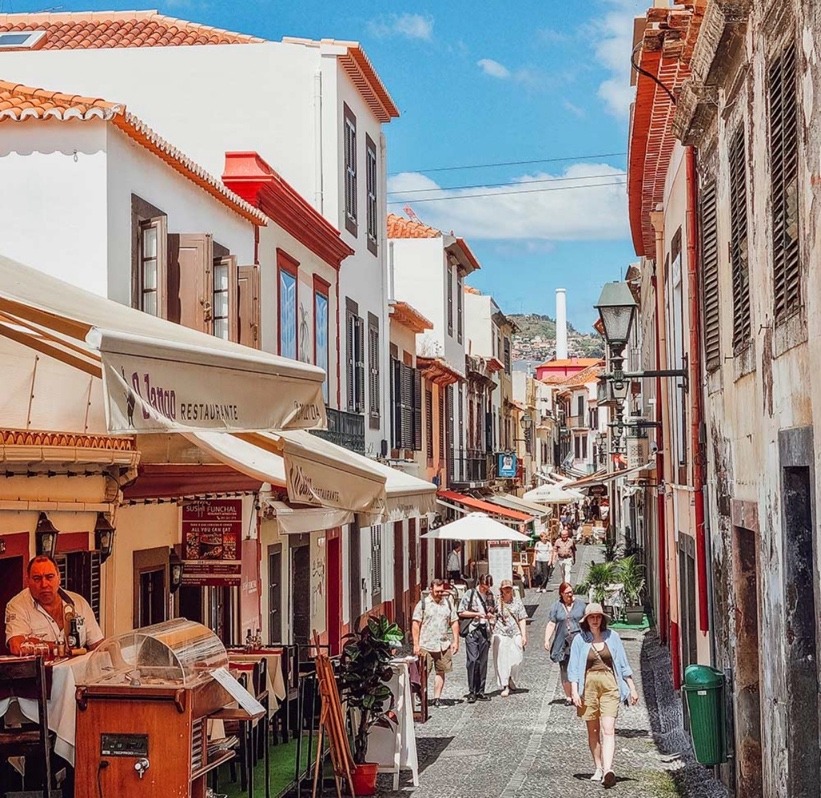
Is Madeira suitable for disabled travellers?
Madeira Tourism describes the archipelago as becoming increasingly accessible, with adapted accommodation, transport, attractions and mobility-equipment hire available. However, facilities differ between locations, and “accessible” does not mean suitable for every visitor.
Visitors may encounter:
- Very steep streets and pavements
- Sharp gradients
- Uneven, cobbled or slippery surfaces
- Steps in older areas
- Mountain roads with tight bends
- Attractions spread across several levels
- Limited wheelchair access at natural locations
- Long distances within gardens
- Rapidly changing mountain weather
- Fewer accessible transport options outside Funchal
Wheelchair and mobility-scooter users should check the complete route to an attraction, not only the accessibility of the attraction itself.
People with fatigue, chronic pain, breathing difficulties or balance problems should include additional rest time and avoid planning too many activities in one day.
Getting to Madeira
Madeira Airport
Madeira Airport—also known as Cristiano Ronaldo Madeira International Airport—is near Santa Cruz, approximately 20 kilometres from central Funchal.
Airport assistance
Madeira Airport operates the MyWay assistance service for disabled passengers and people with reduced mobility.
Assistance may include:
- Help through check-in and security
- Support at passport control
- Escort through the terminal
- Assistance during boarding and disembarkation
- Mobility equipment within the airport
- Assistance between the aircraft seat and terminal
- Help during a connecting journey
MyWay assistance must be requested through the airline or travel agent when booking, or no later than 48 hours before the published departure time.
Passengers departing from Madeira should report to a designated MyWay meeting point when they arrive at the airport. Guide dogs are permitted inside the terminal, but arrangements for carriage on the aircraft must be made directly with the airline.
Tell the airline:
- What assistance you require
- Whether you can walk or use steps
- Whether you can transfer independently
- Whether you require an aisle chair
- Whether you need assistance to your aircraft seat
- The dimensions and weight of your mobility equipment
- The equipment’s battery type and removal instructions
- Whether you are carrying medical equipment
- Whether you need assistance with baggage
Ask when and where your wheelchair or mobility aid will be returned after landing.
Travelling from Madeira Airport
Accessible transfer
A pre-booked wheelchair-accessible transfer is often the most practical option, particularly for travellers using a large wheelchair, powered wheelchair or mobility scooter.
Before booking, confirm:
- Whether the vehicle has a ramp or passenger lift
- Maximum wheelchair dimensions and weight
- Whether you can remain in your wheelchair
- Wheelchair restraint arrangements
- Seating for companions
- Space for luggage and medical equipment
- Whether the driver can provide assistance
- The exact drop-off point at your accommodation
- Whether a mobility scooter can be carried
Obtain written confirmation that the correct vehicle will be supplied.
Aerobus
The Aerobus operates between the airport and Funchal, but passengers should not assume that every vehicle or stop will meet their requirements.
Check:
- Whether the scheduled vehicle has a ramp or lift
- Wheelchair and mobility-scooter policies
- Availability of a designated wheelchair space
- Assistance with luggage
- Accessibility of the chosen stop
- Distance and gradient between the stop and accommodation
Taxis
A standard taxi may not accommodate a passenger who needs to remain in their wheelchair. Book an adapted taxi in advance rather than relying on the airport taxi queue.
Madeira Tourism lists adapted taxi, public transport and specialist transport services for passengers with reduced mobility.
Getting around Madeira
Public buses
Madeira’s public bus services operate through the regional SIGA network. Operators currently listed include:
- Horários do Funchal
- SIGA Rodoeste
- CAM
Horários do Funchal operates many urban services, while other operators cover different parts of the island.
Accessibility can differ between vehicles, routes and stops. A bus may have a ramp while the surrounding pavement or bus stop remains unsuitable.
Before travelling, confirm:
- Whether an adapted vehicle operates the service
- Wheelchair or mobility-scooter acceptance
- Maximum equipment dimensions and weight
- Ramp or lift availability
- Accessibility of both stops
- Whether assistance is available
- Whether advance notice is required
Use the official SIGA website to check routes, timetables, service notices and current operator contact details.
Transport disruption
Timetables may change, and services can be affected by:
- Strikes
- Road closures
- Severe weather
- Festivals
- Sporting events
- Local traffic restrictions
Check SIGA and the relevant operator’s official notices shortly before travelling. If an accessible vehicle is essential, confirm it directly rather than relying only on the published timetable.
Accessible taxis and private drivers
An accessible taxi or private tour may be the easiest way to explore different parts of Madeira.
This can be particularly helpful for:
- Wheelchair users
- Travellers unable to climb coach steps
- People needing regular rest breaks
- Visitors carrying oxygen or medical equipment
- People unable to walk from distant parking areas
- Travellers who require a flexible itinerary
Confirm whether the driver has experience assisting disabled passengers and whether the itinerary can be changed if weather or access conditions become unsuitable.
Hiring a car
Hiring a car can offer flexibility, but Madeira’s roads can be steep, narrow and winding. Some routes include tunnels, sharp bends and limited parking.
Consider:
- Automatic transmission
- Hand controls or other adaptations
- Vehicle transfer height
- Space for mobility equipment
- Accessible parking near attractions
- Confidence driving on steep roads
- Whether another passenger can assist with equipment
Madeira’s official tourism information advises that roads can be steep, narrow and sharply curved, particularly in mountainous areas.
Mobility-equipment hire
Wheelchairs, walking aids and mobility scooters can be hired from specialist providers.
Reserve equipment before travelling and confirm:
- Seat width
- Maximum user weight
- Battery range
- Stability on steep gradients
- Delivery and collection
- Breakdown support
- Charger compatibility
- Insurance and damage arrangements
Madeira Tourism provides information about local mobility-equipment hire.
Madeira’s terrain
Madeira is a volcanic and mountainous island. Even within Funchal, roads can become extremely steep over a short distance.
A location described as “five minutes away” may involve:
- A steep uphill route
- Steps
- Uneven paving
- A road without a continuous pavement
- A difficult return journey
- A gradient unsuitable for some mobility scooters
Helpful precautions include:
- Check the entire route on a map
- Ask the hotel about surrounding gradients
- Use accessible transport for uphill journeys
- Avoid relying solely on walking-time estimates
- Check your wheelchair or scooter’s gradient limit
- Carry a portable charger if appropriate
- Identify shaded rest stops
- Avoid steep paving during wet weather
Manual wheelchair users may require assistance on some routes.
Where to stay
Funchal
Funchal offers the largest selection of hotels, restaurants, medical services, transport and accessible attractions.
However, the city rises steeply away from the waterfront. A centrally located hotel is not necessarily surrounded by level routes.
Lido and São Martinho
The Lido and São Martinho areas may suit travellers looking for:
- Seafront promenades
- Larger and more modern hotels
- Access to bathing complexes
- Restaurants and shops nearby
- Flatter routes in selected areas
The land rises steeply behind parts of the hotel zone, so the immediate surroundings must still be checked.
Central Funchal
Central Funchal can provide convenient access to the seafront, Avenida Arriaga, shops and restaurants.
Some surrounding streets are cobbled, sloping or busy. Ask about the exact route between the accommodation and the seafront.
Outside Funchal
Areas such as Câmara de Lobos, Machico, Calheta, Santa Cruz and Porto Moniz may provide a quieter experience. However, accessible transport, medical services and step-free restaurants may be more limited.
Confirm the accommodation and transport arrangements before booking.
Questions to ask your accommodation
Do not rely only on an “accessible room” symbol. Request measurements and current photographs.
Confirm:
- Step-free access from the drop-off point
- Gradient of the entrance
- Automatic or lightweight entrance doors
- Step-free reception access
- Lift dimensions and weight limit
- Bedroom doorway width
- Clear turning space
- Bed height
- Space beside and underneath the bed
- Bathroom doorway width
- Level-access or roll-in shower
- Shower-seat type
- Grab-rail positions
- Toilet height and transfer space
- Emergency pull cord or alarm
- Balcony threshold
- Accessible swimming-pool entry
- Accessibility of restaurants and terraces
- Mobility-equipment charging and storage
- Emergency-evacuation arrangements
Ask the accommodation to confirm the allocated room in writing shortly before arrival.
Accessible attractions and experiences
Funchal seafront
The seafront is one of the more manageable areas for many disabled visitors, although temporary works, paving and individual gradients can still cause difficulties.
The promenade provides access to cafés, gardens, the marina and views across the harbour.
Allow extra time when cruise ships are in port because central areas may become crowded.
Avenida Arriaga and the Municipal Garden
Avenida Arriaga is a central area with gardens, cafés and public spaces. It may provide a gentler introduction to Funchal than the steeper streets further inland.
Confirm the accessibility of individual cafés, toilets and buildings before entering.
Funchal Cable Car
The Funchal Cable Car connects Funchal’s Old Town with Monte. The journey takes approximately 15 minutes and covers a height difference of around 560 metres.
Madeira Tourism includes the cable car within its adapted-transport information, but passengers should still confirm:
- Step-free access to both terminals
- Cabin-door width
- Maximum wheelchair or scooter dimensions
- Whether boarding can be slowed or stopped
- Whether the passenger can remain in their wheelchair
- Staff assistance
- Accessibility after arriving in Monte
The cable-car journey may be accessible while the visitor’s intended attraction at the top is more difficult.
Monte Palace Tropical Garden
Monte Palace is a large garden situated on a hillside above Funchal. Its size, gradients, steps and outdoor surfaces may make parts of it challenging.
Do not assume that the whole garden is step-free. Ask:
- Which routes are wheelchair accessible
- Whether steep slopes can be avoided
- Whether adapted transport operates inside
- Where accessible toilets are located
- Whether wheelchairs can be hired
- Whether there are regular seats
- Which entrance provides the easiest access
A partial visit may be more realistic for people with fatigue or limited mobility.
Madeira Botanical Garden
The Madeira Botanical Garden is another hillside attraction with paths spread across different levels.
Before visiting, confirm:
- Step-free areas
- Path gradients and surfaces
- Accessible toilet provision
- Rest areas and seating
- Lift or adapted-transport availability
- Access between the entrance and main displays
Mercado dos Lavradores
Funchal’s Farmers’ Market is a colourful and popular attraction, but it can become busy and noisy. Accessibility may differ between levels and individual stalls.
Visitors with sensory, mobility or balance-related needs may prefer to arrive early.
CR7 Museum
The CR7 Museum is close to the Funchal waterfront. Contact the museum before visiting to confirm its entrance, internal access, accessible toilets and companion arrangements.
Cabo Girão
Cabo Girão is a popular viewpoint with a glass viewing platform.
Before visiting, check:
- The route from parking to the viewpoint
- Gradients and surfaces
- Accessible toilet availability
- Crowd levels
- Suitability for mobility scooters
- Whether advance booking is required
The exposed height and glass floor may be uncomfortable for people affected by vertigo, anxiety, balance conditions or sensory sensitivities.
Câmara de Lobos
Câmara de Lobos is a popular harbour destination. Some waterfront areas may be manageable, but surrounding streets can be steep and uneven.
Arrange a suitable drop-off point and confirm the return route before leaving the vehicle.
Santana
Santana is known for its traditional triangular houses. Accessibility differs between individual buildings and visitor areas.
Check parking, step-free routes and toilet facilities before travelling.
Porto Moniz
Porto Moniz is famous for its volcanic pools. Natural rock areas should not be assumed accessible, even where the wider attraction has visitor facilities.
Ask about:
- Step-free entrance
- Pool-entry equipment
- Changing facilities
- Accessible toilets and showers
- Lifeguard assistance
- Surface conditions
- Seasonal closures
- Sea and weather conditions
Paredão Viewpoint
Madeira Tourism states that part of the Paredão Viewpoint is accessible to people with reduced mobility.
Access is not described as complete, so confirm the route from the parking area, gradients, surfaces and any barriers before travelling.
Accessible swimming and bathing
Madeira’s coastline is mainly rocky. Many bathing areas use pools, platforms, ladders or steps rather than sandy beaches.
Lido Bathing Complex
Funchal’s Lido Bathing Complex has lifts, ramps and amphibious chairs for people with reduced mobility.
Confirm the availability of equipment, transfer assistance and whether an amphibious chair must be reserved.
Ponta Gorda Bathing Complex
Ponta Gorda is identified by Madeira Tourism as accessible to visitors with reduced mobility.
Ask for specific information about pool entry, changing facilities, accessible toilets and staff assistance.
Barreirinha Bathing Complex
Barreirinha has ramps and a lift providing access to the bathing area.
Access to the sea itself should be confirmed separately, particularly if a hoist or amphibious chair is required.
Accessibility equipment may be seasonal or unavailable during poor weather or unsuitable sea conditions.
Levadas and nature trails
Madeira’s levadas and mountain walks are among the island’s best-known attractions, but most should not be assumed to be wheelchair accessible.
Potential barriers include:
- Narrow paths
- Unprotected drops
- Steps and rocky sections
- Tunnels
- Wet or slippery surfaces
- Steep approaches
- Limited accessible parking
- No accessible toilets
- Rapid weather changes
- Temporary trail closures
Before attempting any route:
- Check its official open or closed status
- Obtain current route information
- Confirm distance and gradients
- Check whether there are tunnels
- Ask whether the route suits your mobility equipment
- Check the weather at the trail’s elevation
- Travel with appropriate support
- Follow all closure notices and barriers
PR 9.1—A Path for Everyone
PR 9.1—Levada do Caldeirão Verde: A Path for Everyone—runs for almost two kilometres between Queimadas and Pico das Pedras Forest Parks.
Madeira Tourism states that it has been designed to give people with motor and visual disabilities an opportunity to experience the natural surroundings.
Visitors should still confirm:
- Current route conditions
- Surface type
- Gradients
- Accessible parking
- Toilet availability
- Suitability for their wheelchair or mobility equipment
- Whether support or assistance is required
It should not be described as suitable for every wheelchair user without an individual access check.
Madeira Tourism also lists companies providing wheelchair-accessible sightseeing, transfers and selected outdoor experiences.
Food and drink
Accessibility varies considerably between restaurants. Older establishments may have entrance steps, narrow interiors or toilets on another floor.
Before booking, ask:
- Is the entrance completely step-free?
- Is there an accessible toilet?
- Is the toilet on the same level?
- Is there sufficient space around the table?
- Can a wheelchair user remain in their own chair?
- Is a quieter table available?
- Can dietary requirements and allergies be accommodated?
- Is outdoor seating accessible without steps?
Restaurants in modern hotels and shopping centres may offer more predictable access, but facilities should still be confirmed.
Sensory and hidden-disability considerations
Funchal can become crowded when cruise ships are in port and during festivals or Christmas celebrations.
Helpful strategies may include:
- Visit popular attractions early
- Avoid the busiest market periods
- Carry noise-reducing headphones
- Download tickets and maps
- Use a communication card
- Request a quiet waiting area
- Schedule regular breaks
- Avoid combining several busy attractions
- Explain hidden needs to tour operators
- Ask for additional boarding time
Mountain roads, tunnels and cable cars may be difficult for people affected by vertigo, motion sickness, enclosed spaces or anxiety.
Fatigue and chronic-illness planning
Madeira’s gradients, heat and journeys between attractions can use more energy than expected.
Consider:
- Planning one main activity per half-day
- Using taxis for uphill journeys
- Resting after arriving at the airport
- Staying close to essential facilities
- Booking flexible excursions
- Carrying water and medication
- Avoiding long waits in direct sunlight
- Scheduling a recovery day after an island tour
- Keeping an indoor alternative available
- Returning to the hotel during the hottest part of the day
Do not base the itinerary on how many attractions a non-disabled visitor might complete.
Weather considerations
Madeira has a mild subtropical climate, but weather can differ significantly between the coast and mountains.
Funchal may be warm and sunny while higher areas are cold, wet, windy or covered by cloud.
During hot weather:
- Carry water
- Protect medication and batteries from heat
- Use cooling equipment
- Take regular shaded breaks
- Avoid the hottest part of the day
- Monitor heat-sensitive medical conditions
During wet or windy weather:
- Avoid slippery slopes
- Check cable-car operations
- Reconsider exposed viewpoints
- Confirm whether trails are open
- Allow additional transfer time
- Have an accessible indoor alternative
Suggested accessible three-day itinerary
Day one: Central Funchal
Morning
Explore a manageable section of the seafront, Avenida Arriaga and the Municipal Garden.
Lunch
Choose a pre-checked step-free restaurant with an accessible toilet.
Afternoon
Visit one centrally located attraction or return to the hotel for a rest.
Day two: Accessible island tour
Pre-book an adapted vehicle and experienced driver.
Possible stops could include:
- Câmara de Lobos harbour
- An accessible viewpoint
- Cabo Girão, subject to confirmed access
- A suitable coastal restaurant
Do not try to include too many stops. Confirm toilets and access at every location.
Day three: Lido and Funchal waterfront
Morning
Visit the Lido or Ponta Gorda Bathing Complex, subject to confirmed access and equipment availability.
Afternoon
Rest at the hotel or enjoy a short section of the seafront promenade.
Alternative
Use the Funchal Cable Car if the cabin, terminals and intended arrangements at Monte have been confirmed as suitable.
Emergency and healthcare information
The emergency number in Portugal is 112 for ambulance, police and fire services.
Madeira Airport has a medical facility staffed by qualified nurses, providing healthcare and pre-hospital emergency assistance.
GHIC and EHIC
Visitors from the UK should carry a valid UK Global Health Insurance Card—GHIC—or eligible European Health Insurance Card—EHIC to access medically necessary state-provided healthcare in Portugal.
A GHIC or EHIC does not replace comprehensive travel insurance. It may not cover:
- Private medical treatment
- Medical repatriation
- Additional accommodation
- Changes to travel arrangements
- Every healthcare charge
UK government guidance confirms that a GHIC or eligible EHIC is required for medically necessary state healthcare during a temporary visit to Portugal.
Before travelling:
- Arrange comprehensive travel insurance
- Declare existing medical conditions
- Carry a current medication list
- Keep medication in its original packaging
- Carry prescriptions or medical letters where appropriate
- Record allergies and medical conditions
- Save the accommodation address
- Identify nearby pharmacies
- Check the location of an appropriate medical facility
- Carry emergency contact details
Before travelling to Madeira
☐ Request airport assistance at least 48 hours before departure
☐ Confirm the airline’s mobility-equipment procedures
☐ Pre-book an adapted airport transfer
☐ Obtain written confirmation of the hotel room and bathroom
☐ Check gradients around the accommodation
☐ Reserve mobility equipment if required
☐ Confirm adapted transport for excursions
☐ Check every attraction’s entrance and toilet facilities
☐ Verify bathing equipment before visiting
☐ Check trail and weather conditions
☐ Check SIGA and operator disruption notices
☐ Save maps and tickets offline
☐ Carry a valid GHIC or eligible EHIC
☐ Carry medication and emergency information
☐ Arrange comprehensive travel insurance
☐ Prepare alternative activities for poor weather
Official information and useful links
- Madeira Tourism: Accessibility
- Madeira Tourism: Adapted Transport
- Madeira Tourism: Accessible Tourism Companies
- Madeira Airport: MyWay Assistance
- SIGA Madeira: Public Transport, Timetables and Service Notices
- Madeira Tourism: PR 9.1—A Path for Everyone
- GOV.UK: Portugal Health and Travel Advice
These official sources were checked during the preparation of this guide. Individual access arrangements and services can change, so readers should recheck essential information directly before travelling.
Final accessibility reminder
Accessibility arrangements, opening times and equipment can change. Weather, road closures, temporary works, broken lifts, unavailable ramps or altered routes may affect an otherwise accessible visit.
Always confirm essential arrangements directly with the airline, accommodation, transport provider, tour operator and attraction before booking and again shortly before travelling.
The word “accessible” does not guarantee that a location will meet every person’s individual requirements.
AccessibleTravelling.com™
Travel with Confidence™
Information verified September 2026
Accessible Guide to Marseille
Overall accessibility
Marseille is mixed for accessibility. It has official “tourism and disability” resources, accessible hotels and restaurants listed by the city, and accessible transport options across the wider metropolitan network. At the same time, some of its most famous areas are old, hilly, narrow, or steep, so Marseille is usually easier when you choose your base carefully and do not rely on the oldest districts for everyday movement.
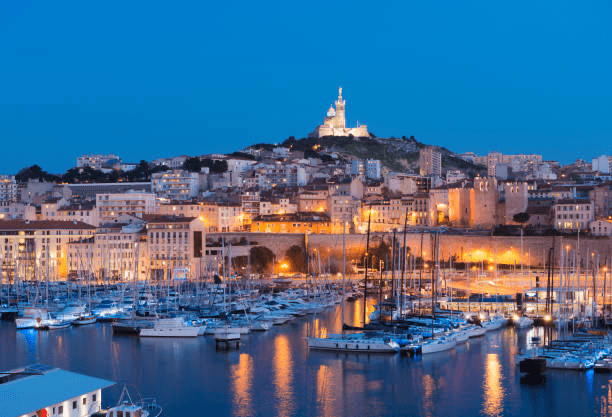
Roads, pavements, and what the city feels like in practice
The easiest zone for many wheelchair users is usually around the Old Port / Vieux-Port and the flatter seafront-facing parts of the city. Marseille’s tourism office repeatedly uses these central areas as practical access points, and the tourist office itself is next to Vieux-Port metro and served by numerous wheelchair-accessible buses.
The hardest area is usually Le Panier, Marseille’s oldest district. Marseille Tourism describes it as full of small, narrow, and steep streets, and another official page describes wandering its narrow streets as part of the experience. That makes it one of the least forgiving areas for wheelchair users, people with balance problems, and travellers with fatigue or sensory overload.
Another challenging point is Notre-Dame de la Garde. Marseille Tourism says the site itself is accessible, but for wheelchair users it recommends a personal vehicle, taxi, or adapted taxi. That is a strong sign that the approach is the issue, even though the site itself is accessible once you get there.
Honest road verdict
Best for easier movement:
- Vieux-Port / Old Port
- flatter central areas near major transit
- some seafront promenades and beach zones
Harder:
- Le Panier
- hillier areas
- routes that depend on stairs, slopes, or long pushes uphill
That overall picture comes directly from Marseille’s official district descriptions and accessibility guidance.
Public transport accessibility
The Aix-Marseille-Provence Metropolis has an official accessible transportation page covering metropolitan networks and specialised services, including Mobimétropole and Accessibus. It also states that since 2023, companions of people with disabilities who hold a Mobility Inclusion Card can travel free on metropolitan networks with the accompanying person card.
Marseille Tourism’s public transport page confirms the city uses metro, bus, tram and ferries as the main ways of moving around the city. For accessibility planning, that means Marseille is easier when you stay close to a good transport corridor rather than trying to walk everywhere.
Airport accessibility
Marseille Provence Airport lists PHMR / disabled person and reduced mobility among its useful services. Onet, which handles assistance at the airport, says more than 83,945 passengers with reduced mobility or disabilities were assisted there in 2023.
For invisible disabilities, I could not find a Marseille Airport page clearly stating that it runs its own sunflower-lanyard or hidden-disability badge scheme. So the safest wording is this: Marseille Airport clearly offers PRM/PHMR assistance, and Air France says its staff are trained to recognize the official Hidden Disabilities Sunflower, but the airline also states that wearing it does not entitle the passenger to priority access at security.
Best areas to stay
Best overall: Vieux-Port / central waterfront
This is usually the strongest all-round base because it is central, easier to navigate than Le Panier, and well connected to public transport.
Good practical option: Saint-Charles / station side
Useful if rail access matters, especially with an accessible hotel close to the station, but it can feel more functional than scenic.
Good if beach access matters: Prado / southern seafront side
This area works well if you want easier access to beach districts and larger roads, and it includes hotels with published accessibility features. Marseille’s tourism pages also note beaches and southern seafront areas as important parts of the city’s visitor experience.
Harder base: Le Panier
Atmospheric, but the narrow and steep streets make it the most difficult of the main tourist areas.
Hotels with published accessibility features
These are safer choices because accessibility is published either by the hotel brand itself or by Marseille’s own tourism office.
AC Hotel Marseille Prado Vélodrome
Marriott says the property has elevators and accessible rooms, and its hotel information page links to accessible room types.
InterContinental Marseille – Hotel Dieu
IHG says it has wheelchair-accessible rooms, accessible routes, grab bars, tall toilets, adequate turning space in bathrooms, handheld showers, and accessible bathroom controls.
Hôtel Marseille Centre Gare Saint-Charles (Accor)
Accor lists it as a wheelchair accessible hotel and says it has 4 rooms for people with reduced mobility.
Marseille Tourism also maintains an official accessible hotels directory for properties that either have the Tourisme & Handicap label or an adapted room for disabled guests.
Hotel booking advice
Even in Marseille, do not rely on the word accessible alone. Ask:
- is the entrance fully step-free?
- is the shower truly roll-in or does it have a lip?
- what is the bathroom turning space?
- what is the door width?
- can I have a quiet room away from the street or lift?
That is especially important here because Marseille ranges from wide seafront areas to much older, tighter districts.
Restaurants for wheelchair users
Marseille Tourism has an official page for accessible restaurants in Marseille, based on accessibility criteria and the Tourisme & Handicap mark. That is one of the best starting points because it is city-curated rather than just user-tagged.
TheFork also currently lists wheelchair-accessible restaurants in Marseille, including names such as:
- Boccascena
- Basilic & Co Marseille République
- La Brasserie des Terrasses – Fruits de Mer & Poissons
- Le Comptoir des Docks
- Isteria
- Daymé Opéra
Best dining areas
For easier access, I would usually prioritise:
- Vieux-Port
- larger central boulevards
- modern dockside or waterfront areas
- hotel restaurants with published access features
I would be more careful in Le Panier, where the route to the restaurant can be harder than the restaurant itself because of the narrow, steep streets. That is an inference from the official district description plus Marseille’s accessibility pages.
Invisible disabilities: what Marseille is like
Marseille can work well for many travellers with invisible disabilities, but it depends heavily on where you stay. The city can be:
- loud
- busy
- visually intense
- tiring in the old quarters
- easier along the waterfront and in broader streets
For travellers with autism, PTSD, chronic fatigue, fibromyalgia, migraine, or anxiety, the best strategy is usually to stay near Vieux-Port or another flatter, well-connected district, use transport rather than over-walking, and avoid relying on steep historic neighborhoods.
At the airport, PRM/PHMR support is officially available. If you travel with Air France and use the official sunflower lanyard, the airline says staff are trained to recognize it, but it is not a priority-security entitlement.
Beaches and outdoor access
Marseille is also a seaside destination, and the tourism office highlights beaches that are easy to reach by public transport. Regional tourism information also notes that Marseille’s private beaches often include accessibility for disabled visitors, and some local beach information specifically describes the South Prado / David beach area as fully accessible to disabled people. I would still verify exact beach access details before travel, because beach equipment and seasonal services can change.
My honest verdict
Marseille is more accessible than its steepest, oldest image suggests, but it is not a simple city for wheelchair users if you stay in the wrong area. The safest formula is:
stay near Vieux-Port, the station, or Prado/seafront areas; avoid making Le Panier your everyday base; use accessible transport; and confirm hotel and restaurant access directly before booking.
I can also turn this into the same website article + quick checklist format as your Naples, Palma, and Barcelona guides.
🌍 Accessible Marseille Guide (Website Article Version)
Overview of Accessibility in Marseille
Marseille offers mixed accessibility.
- Some areas are flat, modern, and manageable
- Others are steep, narrow, and challenging
- Accessibility depends heavily on where you stay and how you move around
👉 Marseille can work well for accessible travel, but planning is essential.
🚧 Roads, Pavements & Real Conditions
✅ Best Areas for Wheelchair Access
1. Vieux-Port (Old Port)
- Flatter terrain
- Wide walkways in many areas
- Central location
👉 One of the easiest areas for wheelchair users and low-energy travel
2. Seafront / Prado / Beach Areas
- Larger roads
- More modern layouts
- Easier access compared to historic districts
3. Main Boulevards & Transport Routes
- Better pavements
- Easier crossings
- More predictable movement
⚠️ More Challenging Areas
Le Panier (Old Town)
- Narrow streets
- Steep inclines
- Uneven surfaces
👉 One of the most difficult areas for:
- Wheelchair users
- Mobility impairments
- Fatigue and balance issues
Notre-Dame de la Garde (Hilltop Landmark)
- Site itself accessible
- BUT steep access route
👉 Recommended:
- Taxi or adapted transport
Honest Street Verdict
✔ Some flat, accessible zones
❗ Significant hills and old streets in parts
👉 Marseille is not consistently accessible street-by-street
🏨 Best Areas to Stay
⭐ Best Overall: Vieux-Port
- Central
- Easier terrain
- Good transport connections
⭐ Good Alternative: Prado / Seafront
- Flatter
- More modern
- Better for relaxed travel
⭐ Practical Option: Saint-Charles (Station Area)
- Strong transport links
- Accessible hotels available
⚠️ Harder Area: Le Panier
- Beautiful but difficult terrain
- Not ideal for accessibility
🚇 Transport Accessibility
Marseille has:
- Metro
- Buses
- Trams
- Ferries
👉 Accessible transport services are available across the network
- Special services like Accessibus / Mobimétropole support disabled passengers
- Companions may travel free with eligible disability cards
👉 Using transport is often easier than walking long distances
✈️ Airport Accessibility
Marseille Provence Airport provides:
- PRM (Passenger with Reduced Mobility) assistance
- Help with navigation, boarding, and transfers
👉 Over 83,000+ passengers assisted annually
🧠 Invisible Disabilities
- Sunflower lanyards may be recognised by airlines/staff
- BUT:
- Do NOT guarantee priority lanes
- Do NOT replace assistance
👉 Always request support in advance if needed
🏨 Accessible Hotels (Verified Types)
Reliable Options
- InterContinental Marseille – Hotel Dieu
- AC Hotel Marseille Prado Vélodrome
- Novotel Marseille Centre Vieux Port
- Staycity Aparthotels Vieux Port
- greet Hotel Marseille Centre Saint-Charles
👉 Many hotels offer:
- Wheelchair-accessible rooms
- Lift access
- Adapted bathrooms
⚠️ Important Reality
Some hotels:
- May not be fully accessible
- May only have limited adapted rooms
👉 Example: Some older buildings cannot fully adapt for mobility access
✔ Always Ask Before Booking
- Step-free entrance?
- Roll-in shower?
- Door width?
- Turning space?
- Quiet room available?
🍽️ Accessible Restaurants (General Guidance)
Marseille provides official accessible restaurant listings via tourism resources.
👉 Restaurants may be labelled accessible if they meet certain criteria
✅ Best Areas for Accessible Dining
- Vieux-Port
- Waterfront areas
- Modern districts
- Hotel restaurants
⚠️ Areas to Be Careful
- Le Panier
- Narrow historic streets
👉 The route to the restaurant is often the biggest challenge
🧠 Invisible Disabilities (Essential Guidance)
Marseille can be:
- Loud
- Busy
- Visually intense
- Physically tiring
👍 Suitable For
- Anxiety (with planning)
- Autism (in quieter areas)
- Chronic fatigue
- Fibromyalgia
⚠️ Challenges
- Hills and walking distances
- Crowded areas
- Heat and sensory overload
✔ Best Strategy
- Stay near Vieux-Port or seafront
- Use transport instead of long walks
- Avoid steep historic areas
- Plan rest time
🏖️ Beaches & Activities
- Some beaches are accessible
- Certain tours are designed for wheelchair users
- Adapted leisure activities are available
👉 Accessibility can vary depending on the location and season
⚠️ Key Risks to Be Aware Of
- Steep terrain in many areas
- Narrow historic streets
- Inconsistent accessibility
- “Accessible” varies between venues
Marseille is:
✔ Possible
✔ Rewarding
❗ Requires careful planning
Best Approach
- Stay: Vieux-Port or seafront
- Travel: Use transport networks
- Avoid: Steep historic areas for daily movement
✈️ Marseille Quick Checklist (Downloadable Version)
🏨 Before You Book
☐ Confirm step-free entrance
☐ Ask if shower is roll-in or step access
☐ Check door width (80cm+)
☐ Request quiet room
☐ Confirm lift access
📍 Choosing Location
☐ Vieux-Port (best option)
☐ Prado / seafront (excellent)
☐ Near transport hubs
☐ Avoid Le Panier
🚶 Getting Around
☐ Use metro, tram, or bus
☐ Avoid long uphill routes
☐ Plan routes in advance
☐ Use taxis where needed
🍽️ Eating Out
☐ Book ahead
☐ Ask about steps
☐ Choose accessible areas
☐ Avoid peak times
🧠 Invisible Disabilities Support
☐ Plan rest breaks
☐ Avoid busy areas where possible
☐ Request airport assistance if needed
☐ Carry comfort/support items
🚨 Emergency Preparation
☐ Save hotel details
☐ Know nearest hospital/pharmacy
☐ Keep medication accessible
☐ Carry documentation
👉 Marseille is about choosing the right location — not trying to do everything on foot https://www.marseille-tourisme.com/en/
Continue Planning Your Accessible Trip
- View accessible hotels in this destination
- Read the Accessible Accommodation Questions Checklist
- Read How to Choose the Right Accessible Destination
- Read Travel Insurance for Disabled Travellers
- View the Verification/Planning Services
Accessible Maui, Hawaii Guide
For Accessibletravelling.com | Verified 2026 accessibility information
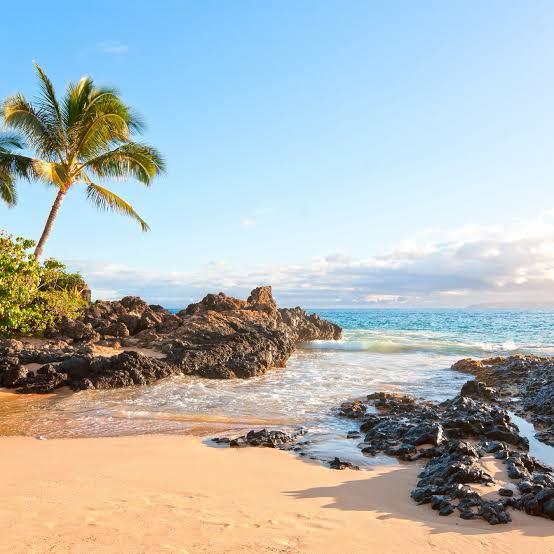
Accessibility Overview
Maui follows ADA standards, with best access along South/West Maui (Kihei, Wailea,
Lahaina) and more limited access in mountain/remote areas.
- South/West coast: Wide, smooth paved paths, flat promenades, and good curb ramps; most accessible zone
- Central Maui: Kahului/Wailuku fully adapted; Upcountry/Haleakalā/Road to Hana has steep slopes, narrow lanes, and uneven surfaces
- Beach access: Mobi‑Mats + free beach wheelchairs at Kamaole, Wailea, Makena, and Kaanapali; book ahead via county parks
- Parking: Valid ADA placard = free parking at all meters & county lots, no time limits; van‑accessible bays at all main sites
- Facilities: Changing Places‑style restrooms at OGG Airport, Maui Ocean Centre, and major resorts; accessible toilets at beaches, parks, and malls
- Assistance Dogs: Welcome everywhere; relief areas at airport, beach parks, and resort grounds
- Sensory Support: Hearing loops, quiet hours, large‑print guides at Maui Ocean Center, Iao Valley, and cultural centers
- Note: Road to Hana is narrow, winding, and bumpy — not recommended for power chairs; Haleakalā summit has extreme altitude changes
Best Time to Visit
Top pick for low energy & comfort: April–May & September–November
• Mild 24–29°C (75–84°F); lower humidity, fewer crowds, less heat fatigue
• Whale watching possible late April / early December
Good alternative: December–March — calm seas, peak whale season; busier & pricier
Avoid: June–August — hottest, most humid, highest UV, more rain showers; fatigue risk
high
Airport Accessibility Summary
Kahului Airport (OGG) — main gateway
- Fully ADA‑compliant; ramps, lifts, tactile paths, Braille signage throughout
- Free assistance: Book 48hrs early via airline or call OGG Access: +1 (808) 872‑3830
- TSA Cares: +1 (855) 787‑2227; TTY available; service animal relief areas pre/post‑security
- Accessible shuttles, taxis, and rideshares available curbside
Alternative
- Kapalua Airport (JHM): Smaller, West Maui; limited flights, fully accessible
Local Transportation
Maui Bus
• Low‑floor, ramped buses; wheelchair securement; $1 fare; Route 10/20 connect Kahului ↔ Kihei ↔ Wailea ↔ Kaanapali
• Maui Paratransit: Curb‑to‑curb service; book +1 (808) 249‑2985; apply 7 days ahead
Taxis & Ride‑Share
• Licensed accessible vans available; no extra fee
• Uber WAV / Lyft Access: limited supply — book 24hrs in advance
Car Hire
• Adapted vehicles with hand controls available; book 2+ weeks early
Tours
• Whale‑watching, snorkel cruises: select operators have ramp boarding — confirm wheelchair space before booking
3 Accessible Hotels with Roll‑In Showers
All verified: roll‑in showers, grab bars, wide doors ≥36”, emergency pull cords, step‑free
entry.
1. Wailea Beach Resort – Marriott
• Prime South Maui oceanfront, flat grounds
• ADA rooms with full roll‑in showers, transfer bench, handheld wand
• Accessible pool with lift, beach mat access, beach wheelchairs, valet parking,
vibrating alarms
2. The Westin Maui Resort & Spa, Kaanapali
• West Maui beachfront, wide paved paths
• Mobility‑adapted rooms with spacious roll‑in wet rooms, lowered fixtures
• Multiple pools with lifts, accessible dining, free resort shuttle, service‑dog friendly
3. Hyatt Regency Maui Resort & Spa
• Kaanapali Beach, fully ADA‑upgraded
• Verified roll‑in showers, visual fire alarms, ample turning space
• Accessible oceanfront dining, pool hoists, on‑site beach wheelchair loan
Browse Accessible Hotels
Booking.com
TripAdvisor.com
Hotels.com
Accessible Things to Do
• Maui Ocean Center: Fully step‑free, lifts, underwater viewing, quiet hours, free companion entry
• Iao Valley State Monument: Paved accessible path to main viewpoint; wide, flat, benches
• Wailea Beach Path: 3‑mile paved coastal trail, flat, scenic, frequent rest stops
• Kamaole Beach Parks: Mobi‑Mats, accessible restrooms, lifeguards
• Whale Watching Tours: December–April; select accessible vessels — book early
• Maui Tropical Plantation: Wide paved paths, tram tour accessible, flat terrain
Browse Accessible Things to do
https://getyourguide.stay22.com/accessibletravelling/iKiLQBLrj2
Condition‑Specific Travel Tips
Multiple Sclerosis (MS)
- Heat/sun sensitivity: Visit Apr–May / Sep–Nov; use cooling towels, wide‑brim hat, SPF 50+, stay indoors 11am–3pm
- Fatigue: Limit 2–3 stops/day; use resort shuttles/taxis; avoid long drives
- Mobility: Stick to South/West coast; use beach wheelchairs; avoid unpaved trails
- Medication: Keep in insulated cool bag; carry prescriptions + doctor’s letter; hand‑carry only
Bipolar & Schizophrenia
- Routine: Stick to fixed meal/sleep times; keep meds in original bottles + travel letter
- Sensory overload: Visit attractions early; avoid crowded sunset events; request quiet room
- Triggers: Bright sun, heat, altitude can affect mood — stay hydrated, rest often
- Safety: Share itinerary; save emergency contacts; avoid isolated areas alone
Immunocompromised
- Best timing: Apr–May / Sep–Nov — less rain, fewer mosquitoes, lower UV
- Precautions: Hand sanitizer, mask indoors/busy areas; avoid standing water/mosquito zones
- Food/water: Bottled water only; fully cooked meals; avoid raw fish if high risk
- Health prep: Inactivated vaccines only; carry CDC travel sheet; request deep‑cleaned rooms
Accessibility Challenges
- Geography: Mountainous/volcanic terrain; Haleakalā = thin air + steep slopes; Road to
- Hana difficult for wheelchairs
- Soft sand: Only accessible via mats or beach wheelchairs
- Heat & UV: Intense year‑round — major fatigue/symptom trigger
- Limited accessible transport: Book WAV/tours well ahead
- Remote areas: Cell service spotty; plan routes carefully
Emergency & Useful Accessibility Numbers
• Emergency: 911 | TTY: +1 (800) 955‑8771
• Maui Paratransit: +1 (808) 249‑2985
• Kahului Airport Access: +1 (808) 872‑3830
• Maui County ADA Coordinator: +1 (808) 270‑7890
• Maui Ocean Center Access: +1 (808) 270‑7000
• US Mental Health Lifeline: 988
Useful Accessibility Resources
• Maui County Access Guide: Official ADA listings
• WheelchairTravel.org: Detailed Maui resort/beach reviews
• AccessAble: Room‑by‑room accessibility details
• CDC Travelers’ Health: Hawaii health advice
Verified June 2026 against Maui County ADA, Hawaii DOT, and official resort/attraction sources.
Continue Planning Your Accessible Trip
- View accessible hotels in this destination
- Read the Accessible Accommodation Questions Checklist
- Read How to Choose the Right Accessible Destination
- Read Travel Insurance for Disabled Travellers
- View the Verification/Planning Services
Ultimate Guide to Accessible Miami
Greater Miami is a highly inclusive destination featuring flat terrain, accessible public transit, and specialized beach programs. This comprehensive guide combines all the logistics, dining, lodging, and activities you need for a seamless, accessible trip.
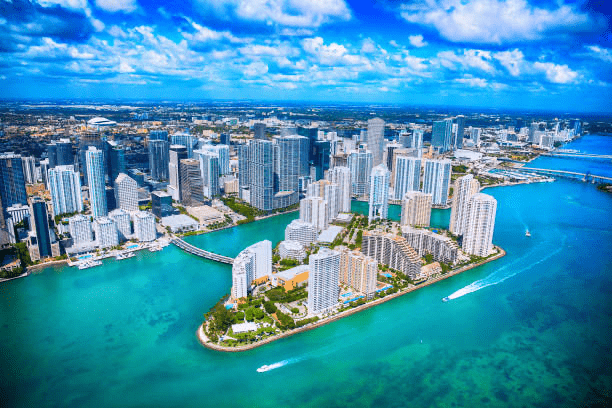
🗺️ Terrain & Getting Around
The Terrain
Miami is exceptionally flat. Tourist hubs like South Beach, Downtown, and Brickell feature smooth, well-paved sidewalks with wide curb cuts and modern ADA ramps.
Public Transit
- City Trolleys: The Miami Beach Trolley and City of Miami Trolley systems are 100% wheelchair accessible, feature low-floor boarding with ramps, and are completely free to ride.
- Trains & Movers: The elevated Metromover (looping Downtown and Brickell) and the Metorail are free or low-cost, offering level boarding platforms and elevator access at all stations.
Taxis & Rideshares
- On-Demand WAVs: Wheelchair Accessible Vehicles (WAVs) can be requested directly through the Uber and Lyft apps (“Uber WAV” or “Lyft Access”).
- Pro-Tip: Wait times for rideshare WAVs can spike during peak cruise ship disembarkation windows (7:00 AM – 11:00 AM).
🚢 PortMiami Logistics & Proximity
PortMiami is highly optimised for travellers with mobility impairments. It sits just 5 to 15 minutes from Downtown/Brickell and 15 to 20 minutes from South Beach.
Arriving at the Port
- Direct Tunnel Route: Taxis and shuttles utilise the PortMiami Tunnel, a direct, toll-free bypass that avoids downtown street congestion.
- Curbside Drop-off: Instruct your driver to pull up directly to your terminal’s street-level doors. Porters will meet you at the curb to handle your checked luggage.
Accessible Transfers
- Private WAV Shuttles: Specialised providers like Call the Care offer pre-booked vans equipped with hydraulic lifts or ramps for direct airport or hotel transfers.
- Cruise Line Shuttles: Operators like Royal Caribbean and MSC Cruises provide lift-equipped buses from Miami International Airport (MIA). You must request these at least 30 days prior to sailing.
Parking & Terminal Boarding
- ADA Parking: Every terminal garage reserves accessible spaces on the levels closest to elevators and pedestrian walkways. Compliant shuttle buses run regularly to ferry passengers from outer lots.
- Pier Assistance: Inside the terminal, head to the designated Wheelchair Assistance Waiting Area. A port staff member will check you in via tablet and escort you through security directly to the ship’s gangway, where the ship’s crew will take over.
🏖️ Beach Wheelchair Rentals & Sand Access
Miami Beach offers unique, free public accommodation programs alongside full-service private rentals.
Free City-Provided Chair Loans
The City of Miami Beach Government provides free beach wheelchairs equipped with balloon tires to float across loose sand.
- Pickup Locations:
1. Beach Patrol Headquarters: 1001 Ocean Drive (at 10th Street)
2. South Pointe Park Beach Patrol: Inside South Pointe Park - Available Models: Both manual (requires a companion to push) and motorized (joystick-controlled) options are available.
- How to Borrow: Handled on a first-come, first-served basis. You must leave a refundable deposit item of value (e.g., driver’s license, passport, or your personal wheelchair) with the lifeguard or Beach Patrol staff.
- Hours: 9:00 AM to 6:00 PM (Feb–Oct) and 9:00 AM to 4:30 PM (Nov–Jan). Call ahead to verify at +1 (305) 673-7714.
- Water Use: Manual chairs are structurally safe to enter the ocean up to 6 inches deep.
Private Deliveries
If you need a dedicated chair kept at your resort, these companies deliver directly to your hotel bell desk:
- Scootaround Miami: Delivers standard scooters and heavy-duty manual wheelchairs.
- Special Needs at Sea Miami: Specializes in mobility setups delivered directly to hotel rooms or cruise ship staterooms.
- Cloud of Goods Beach Wheelchairs: An online marketplace for daily or weekly all-terrain beach wheelchair rentals.
Mobi-Mats
The city maintains hard-surface, slip-resistant Mobi-Mats at various access points along Ocean Drive. These allow standard personal wheelchairs to easily roll past the dunes onto the firmer sand closer to the water.
🎭 Top Accessible Things to Do
Miami Beach Beachwalk
Hiking area
OpenMiami Beach, FL, United States
A scenic, 7-mile wide paved pathway running flat along the Atlantic coast, completely free of stairs.
Vizcaya Museum & Gardens
Art museum
ClosedMiami, FL, United States
This stunning historic estate features accessible ramps, paved garden pathways, and complimentary wheelchairs to borrow at the ticket booth.
Pérez Art Museum Miami
Art museum
ClosedMiami, FL, United States
A fully modern, ADA-compliant museum in Downtown featuring sweeping elevators, ramps, and tactile exhibits.
Zoo Miami
Zoo
ClosedMiami, FL, United States
Entirely paved and flat. Safari trams offer wheelchair spaces, and motorised scooters are available for rent at the front gate.
Browse Accessible things to do in Miami
https://getyourguide.stay22.com/accessibletravelling/iKiLQBLrj2
🍽️ Accessible Dining
Bayside Marketplace
4.5
(78.6K)
Shopping mall, ClosedMiami, FL, United States
An open-air waterfront shopping and dining plaza next to the port. It features complete elevator access, wide boardwalks, and flat thresholds into all restaurants.
Smith & Wollensky – Miami Beach
Miami Beach, FL, United States
Located at the tip of South Pointe Park. It provides step-free dining layouts and accessible outdoor seating with views of the cruise ships moving through the channel.
🏨 Hotels with Roll-In Showers
The following highly rated properties feature dedicated ADA rooms with roll-in showers, wide entryways, and pool lifts:
| Hotel | Location | Key Accessibility Features |
|---|---|---|
| Loews Miami Beach Hotel | South Beach | Roll-in showers, pool lifts, direct ramped access to the Beachwalk. |
| EAST Miami | Brickell | Modern ADA rooms, roll-in showers, level access to Brickell City Centre shopping. |
| Hyatt Centric Brickell Miami | Brickell | Closest to the port tunnel; excellent roll-in shower layouts and spacious floor plans. |
| 1 Hotel South Beach | South Beach | Eco-luxury design, wide bedroom pathways, roll-in showers, and pool lifts. |
Continue Planning Your Accessible Trip
- View accessible hotels in this destination
- Read the Accessible Accommodation Questions Checklist
- Read How to Choose the Right Accessible Destination
- Read Travel Insurance for Disabled Travellers
- View the Verification/Planning Services
♿ Full In‑Depth Accessible Destination Guide – Munich, Germany
Note: Links provided – full content not currently accessible / unsupported page type where marked; booking‑style link loads but requires destination/dates input; activity link shows general listings not Munich‑specific.
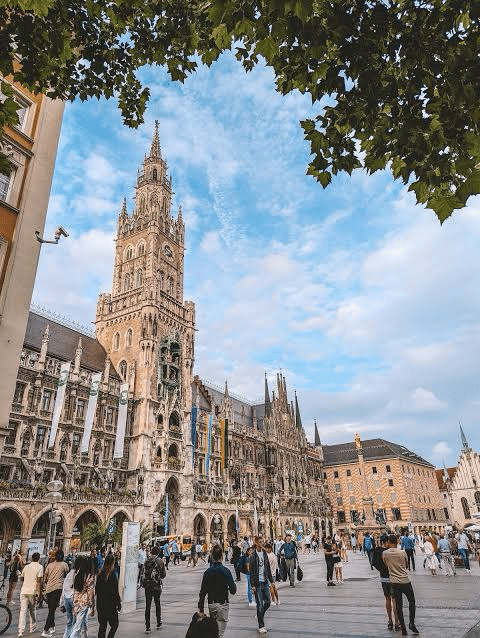
📍 Full Accessibility Overview
Munich – “City with Heart” – is largely flat, systematically planned, and widely recognised as one of Germany’s most accessible major cities, with consistent Reisen für Alle standards and extensive upgrades for major events. Wide, smooth pavements dominate main streets; tactile paving is almost universal; signage clear and bilingual. Only historic‑district side‑lanes, some market‑area cobbles and gentle gradients near the Isar River create variations. Best base zones: Altstadt / Marienplatz / Hauptbahnhof / Schwabing / Ostbahnhof / Olympiapark vicinity.
✈️ Airport Information
- Main hub: Munich Airport (MUC), ~30 km northeast – fully modern, step‑free, free PRM assistance – book ≥ 48 hrs via airline or airport desk
Facilities: lifts everywhere, accessible toilets, Changing Places unit at MAC Level 03, designated security lane, Blue Badge parking bays, help points + visual/tactile guidance
Connections: S‑Bahn S1 & S8 low‑floor → city centre ~40 min every 10-15 min; Airport Express Bus also runs; accessible taxis available – pre‑book for wheelchair‑lift vehicles
- Low‑emission zone applies – display required sticker if driving in central area
🚌 Public Transport
- MVV network – excellent rating: ~ 95 % U‑Bahn stations fully accessible with lifts; ~ 90 % S‑Bahn stations adapted; ALL trams & city buses low‑floor / kneeling / ramp‑equipped with marked spaces & audio‑visual announcements
Assistance: free Begleitservice / mobility escort + station ramp support – request ≥ 24 hrs ahead via MVV / Deutsche Bahn
Planning: use MVV App with real‑time lift‑status filter + barrier‑free route finder – critical for reliability
Fares: severe‑disability holders often travel FREE within zone M / extended network with valid German/equivalent ID; CityTourCard covers all zones + discounts
Taxis: standard cream cars fit folders only; special blue‑marked Universal Design taxis with built‑in ramps – book ≥ 24 hrs ahead
Top Accessible Attractions & Experiences
Marienplatz & Neues Rathaus: fully flat, wide-open square; ramped access; designated viewing spots for Glockenspiel – 11 am, noon, 5 pm in summer
Munich Residenz: main ramped entry, lifts connect floors, most galleries usable, adapted toilets + audioguides
Schloss Nymphenburg: top‑rated accessible palace & park – wide ramp, lifts, electric shuttle vehicles in grounds, paved trails
- Deutsches Museum: world‑famous science/tech hub – fully adapted, wide aisles, lifts, accessible children’s zone
- Olympiapark: 100 % barrier‑free recreation area – smooth paths, lift to stadium roof & Olympic Tower deck, accessible boat hire
- Englischer Garten: one of Europe’s largest urban parks – mostly paved/level routes, accessible beer gardens, hire points near entrances
- BMW Welt: purpose‑built modern exhibition – wide ramp circulation, lifts, adapted tours & parking
Oktoberfest / Theresienwiese: designated seating platforms, ramped tent entries, accessible toilets – best via North Entrance + early arrival
- Pinakothek Art Complex: Alte / Neue / Moderne – all step‑free entry, lifts, wide doors
📌 Browse Accessible Things to Do
getyourguide.com
Hotels Verified – Reisen für Alle certified, Roll‑in / Wet‑Room Showers, ≥ 150 cm Turning Circle, Grab Rails, ≥ 80 cm Doors & Lifts
DO & CO Hotel München (Altstadt): premium central, fully adapted layout, spacious wet‑rooms
Premier Inn München City (Zentrum): reliable chain, exact verified specs including large roll‑in space
Adina Apartment Hotel (Ostbahnhof): spacious with kitchenettes, step‑free access
Hotel Brunnenhof City Center: budget‑friendly near Hauptbahnhof
The Charles Hotel: luxury suite‑level access + spa facilities
💡 Booking note: Always state “roll‑in shower / ebenerdige Dusche” + confirm certification + parking access + route gradient.
🏨 Browse Accessible Hotels
booking.com
expedia.com
tripadvisor.com
hotels.com
🏖️ Accessible Beaches
- Munich is inland – no natural seaside beaches within city limits. However, many lakeside bathing areas nearby (Lake Starnberg, Ammersee, Chiemsee ~ 30–60 min away) offer ramped water access, wide paths, accessible changing rooms – check local lake authority / Tourismus Bayern details for specific sites.
🚻 Accessible Toilets
- Standard German RADAR‑style Euro Key system covers most public accessible units – obtain before travel
-Changing Places facilities available at major hubs: Munich Airport MAC level 03, Hauptbahnhof, Marienplatz station, Olympiapark, large museums & shopping centres
- Accessible facilities marked clearly with blue signage + tactile direction boards across central network
🛠️ Equipment Hire
- Mobility scooters & manual/power wheelchairs: multiple specialist suppliers serve visitors – hotel delivery standard; book ≥ 48 hrs ahead especially during Oktoberfest / fair season
- Smaller aids: limited loan at major attractions for on‑site use only
- Lake/beach mobility: arrange directly at respective lake facilities – not stocked in‑city
🚗 Accessible Car Hire
- Major chains – Avis / Europcar / Sixt / Enterprise / Hertz + specialists like Cloud of Goods – operate at airport & city locations with adapted vehicles (hand‑controls, ramp/lift minivans)
- Critical: book 2–4 weeks in advance & specify exact dimensions / load space / tie‑down needs
Blue Badge fully valid in Germany system + low‑emission zone permit rules apply if driving in centre
🅿️ Accessible Parking
Blue Badge recognition applies nationally: designated bays in all main multi‑storeys, Park & Ride + marked street spaces – many locations offer FREE parking or reduced rates
Geo‑portal Munich online map shows exact bay locations + gradients – highly useful pre‑planning tool
- Always display badge + clock disc where required
🆘 Emergency Information
- 112 – universal emergency number (works all over Germany/EU – police / fire / ambulance)
Local support: Munich Barrierefrei office / Tourist Information centres for access‑related help
🌤️ Weather
- Alpine‑influenced continental climate: distinct seasons – mild warm summers + cool crisp winters
- Summer (Jun–Aug): 18–25 °C – longer days but Oktoberfest / peak events bring crowds
- Winter (Dec–Feb): ‑2 to +5 °C – short days, occasional snow/ice – maintained routes safe but sidewalks need care
- Spring/autumn balanced mild temperatures + reliable pavement conditions
📅 Best Time to Visit
✅ May – June & September – early October: IDEAL – mild temperatures, smoother movement, shorter queues, best balance for parks + city sights
⚠️ Mid‑Sep – early Oct: Oktoberfest – excellent facilities exist BUT extreme crowding & longer distances between accessible zones
⚠️ Nov – Feb: shorter hours + slippery risk – still manageable if well‑equipped
💷 Costs Overview
- Attractions: most major museums / palaces charge standard admission + FREE or reduced‑price CARER ticket widely available – carry proof of disability need
Transport: free travel for eligible holders + CityTourCard good value for visitors
Parking: many Blue Badge spots FREE in public areas / Park & Ride
- Accommodation: accessible rooms often same price – book early for best availability
💡 Practical Tips
Pre‑plan every leg: use MVV App lift‑status + barrier‑free filter + Munich Accessibility Geo‑Portal map – lift outages do happen
- Pre‑book EVERY service: airport PRM / station escort / accessible taxis / hire equipment / specific roll‑in rooms – do not rely on walk‑up
- Pack Euro Key + Blue Badge documents + comfortable footwear + rain gear – essential for independent movement
- Avoid peak hours (7–9 am / 5–7 pm): crowding reduces effective space on platforms & trains
Respect historic surface zones: stick to main streets when paving is rough/cobbled
Accessible Mykonos
Navigating Mykonos requires careful planning due to its rocky, hilly terrain and historic, cobblestone streets. For fully accessible transit and tours, rely on Vantastic Transporters or Mykonos Transfer, both offering adapted, ramp-equipped minibuses.
Terrain Overview
Mykonos is characterized by steep, rugged cliffs and deeply uneven terrain. Mykonos Town (Chora) features narrow, labyrinthine cobblestone pathways. While these are beautifully quaint, they include many steep steps and uneven surfaces that require maneuvering and can be tricky for wheelchair users or those with mobility issues.
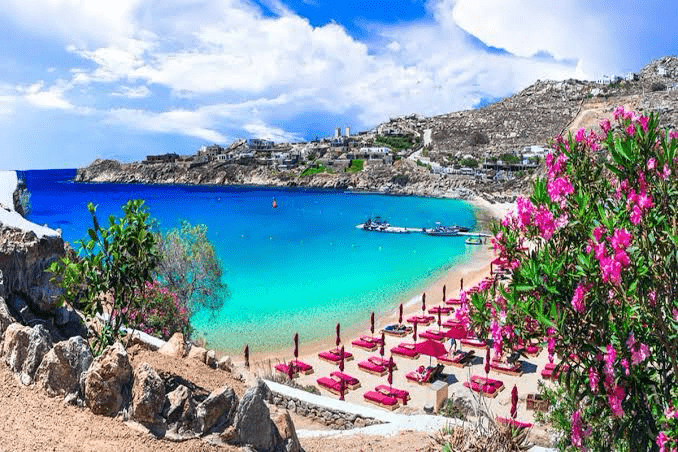
Verified Accessible Hotels
Many luxury resorts in Mykonos are built into the steep cliff sides, which unfortunately rules out accessibility. However, several properties offer step-free access, elevators, and roll-in showers:
- Koukoumi Vegan Boutique Hotel: Located in Ano Mera, this is the island’s only 100% ADA-compliant hotel. It features roll-in showers, lowered sinks, tactile elevator buttons, and accessible common areas.
- Koukoumi Vegan Boutique Hotel
- Mykonos Blanc Hotel: Located on Ornos Beach, this property features paved level approaches and excellent flat paths from the parking lot to the beachfront loungers.
- Mykonos Ammos Hotel: Also situated on the sands of Ornos Beach, this hotel features designated accessible rooms with wide doors and roll-in showers.
Browse Hotels in Mykonos
Transportation Logistics
- Accessible Minibuses: Because standard island taxis are rarely wheelchair-accessible, book private transfers in advance. MC Transfer Services and Mykonos Transfer operate fleets of luxury, ramp-equipped vans for airport/port pickups and island tours.
- SeaBus (Water Taxi): The Mykonos SeaBus water taxi connects the New Port to the Old Port seamlessly. Their vessels are equipped with wheelchair access, making it a great way to skip hilly walks when moving from the cruise docks into town.
Accessible Things to Do
- Ornos & Psarou Beaches: Unlike the rocky, wilder beaches in the north, the southern beaches (Ornos and Psarou) offer flat paved promenades. You can call ahead to beachfront restaurants like Mykonos Blanc to reserve a boardwalk sunbed, granting full access to restaurant facilities and service.
- Ano Mera Village: The central village of Ano Mera is much flatter and wider than Mykonos Town. You can easily navigate the main square and enjoy accessible tavernas.
- The Old Port Waterfront: The path stretching along the Old Port waterfront is flat, paved, and allows you to enjoy the sea breeze, see the local fishing boats, and access Little Venice with fewer obstacles than navigating the inner town.
Zanna Van Dijk
Browse things to do in Mykonos
https://getyourguide.stay22.com/accessibletravelling/iKiLQBLrj2
Useful Booking Links
- Browse a broader directory of accessible-friendly properties via Booking.com Mykonos.
- Plan your sea transfers by reviewing the fleet accessibility on Mykonos Seabus.
Continue Planning Your Accessible Trip
- View accessible hotels in this destination
- Read the Accessible Accommodation Questions Checklist
- Read How to Choose the Right Accessible Destination
- Read Travel Insurance for Disabled Travellers
- View the Verification/Planning Services
Accessible Travelling Guide to Naples
A Realistic Guide for Disabled Travellers Visiting Naples by Cruise Ship
Naples is not a quiet, polished or perfectly organised city.
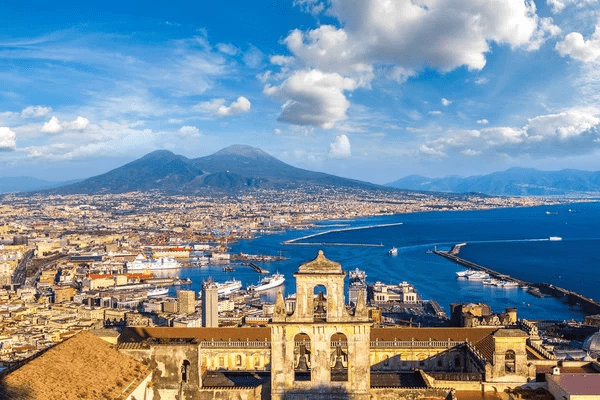
It is loud, fast, emotional, historic, crowded and completely alive. From the moment you arrive, Naples feels like a city that does not slow down for anyone. Scooters move quickly through narrow streets, people gather outside cafés, traffic seems to have its own rhythm, and Mount Vesuvius sits in the background as a constant reminder that this is one of the most dramatic cities in Europe.
For disabled travellers, Naples can feel exciting and exhausting at the same time.
This is not a destination where you should expect smooth pavements, quiet streets or perfect accessibility. The historic centre is beautiful, but it can also be difficult, with uneven ground, crowds, narrow pavements and busy crossings.
But Naples is also one of the most rewarding Mediterranean cruise ports because the city is so close to the ship. The cruise port is close to central Naples, with sources commonly describing the city centre as around a 10-minute walk from the terminal area.
Arriving in Naples by Cruise Ship
One of Naples’ biggest advantages is that you do not feel trapped in an isolated port.
You can step off the ship and almost immediately begin to feel the city around you. This matters enormously for travellers with reduced mobility, fibromyalgia, chronic pain, fatigue conditions or limited walking tolerance.
Every long shuttle, transfer queue or complicated connection takes energy before the day has even started. Naples reduces some of that pressure because the port is so close to the main city area.
For many cruise passengers, this means Naples can be enjoyed in different ways. You might choose a short, gentle visit into the city, a private taxi tour, a hop-on hop-off bus, a seafront route, or simply a scenic meal with views rather than a full-day excursion.
That flexibility is important.
Naples is not a city where everyone needs to “do everything” to have a good day.
The Honest Accessibility Reality
Naples is accessible in parts but challenging in others.
The biggest difficulties are likely to be the old streets, uneven surfaces, crowds, scooters, kerbs and the pace of the city. The historic centre is part of what makes Naples so special, but older streets are rarely easy for wheelchair users, mobility scooter users or anyone who struggles with pain and fatigue.
This is where expectations matter.
Naples is not necessarily impossible.
But it does require planning, pacing and a willingness to use transport when needed.
For travellers with fluctuating mobility, Naples may be best experienced in sections rather than as one long walking day. A short visit, followed by a rest, may be far more enjoyable than trying to push through the whole city.
Getting Around Naples
Transport choices can completely change your experience of Naples.
There are hop-on hop-off sightseeing buses operating in the city, with City Sightseeing Naples advertising two routes: a historic route and a panoramic route. Some Naples sightseeing information says wheelchair accessibility may be available on selected or modern buses, but this should always be confirmed directly before relying on it.
For many disabled travellers, a private taxi or accessible vehicle tour may be the most realistic option. This can help you see more of Naples without using all your energy on pavements, crossings and crowds.
If travelling by air, Naples Airport states that passengers with disabilities or reduced mobility can transport two mobility aids free of charge, and electric wheelchair users should notify the airline at least 48 hours before flying.
What Naples Feels Like as a Disabled Traveller
Naples can be overwhelming at first.
It is a city of movement. There are scooters, cars, street vendors, tourists, locals, noise and colour everywhere. For some travellers, especially those with sensory sensitivities, anxiety or fatigue-related conditions, this can become tiring very quickly.
But Naples also has warmth.
It does not feel like a city designed purely for tourists. It feels real. People live loudly here. They eat, talk, drive, shop and argue with passion. That authenticity is part of what makes Naples unforgettable.
The key is not to fight the city.
The key is to work with it.
Use transport. Take breaks. Choose one or two priorities. Avoid trying to copy a standard fast-paced sightseeing itinerary if your body cannot manage it.
Suggested Accessible-Friendly Ways to Experience Naples
Browse Get Your Guide
For a gentler Naples day, consider starting with the waterfront or a scenic route rather than diving straight into the busiest historic streets.
The seafront areas can feel more open than the tight lanes of the old town, and they offer beautiful views across the Bay of Naples towards Vesuvius. A café stop, a short scenic route and a relaxed meal can still feel like a proper Naples experience without exhausting yourself.
A taxi tour can also work well if you want to see the city from different viewpoints. This may be especially useful for travellers with fibromyalgia, chronic fatigue, pain conditions or limited walking distance.
If you want to visit Pompeii, Capri, Sorrento or the Amalfi Coast from Naples, treat those as separate planning decisions. They can be wonderful, but they are not automatically easy accessible excursions. Ferries, steps, crowds, distances, cobbles and vehicle access all need checking carefully before booking.
Fatigue, Heat and Pacing
Naples can be hot, intense and physically draining.
Heat can make pain, swelling, dizziness, fatigue and brain fog worse. Crowds can make everything feel harder. Even a short walk can become tiring if the pavements are uneven or the streets are busy.
This is why pacing matters.
A successful accessible day in Naples might look like this: leave the ship slowly, take a taxi or sightseeing bus, enjoy one main area, stop for lunch, take photographs, rest often, and return before you are completely exhausted.
That is not “missing out.”
That is travelling wisely.
Is Naples Worth Visiting as a Disabled Traveller?
Yes — but with realistic expectations.
Naples is not the easiest accessible city. It can be chaotic, uneven and tiring. But it is also unforgettable.
It has atmosphere, history, food, views, culture and energy that you simply cannot recreate anywhere else.
For disabled travellers, Naples is best approached as a real-world accessibility destination rather than a perfectly accessible one. It rewards flexibility, patience and pacing.
You may not be able to do everything.
But you can still experience Naples.
And sometimes, one carefully planned, manageable experience is far better than an exhausting day trying to do too much.
Quick Accessibility Overview
Naples may suit cruise passengers, travellers with fluctuating mobility, people who can use taxis or sightseeing transport, and those who enjoy lively, authentic cities.
Naples may be difficult for travellers who need very smooth surfaces, quiet environments, step-free certainty everywhere, or a full day of independent wheelchair travel through historic streets.
Final Thoughts
Naples is messy, dramatic, beautiful and intense.
It is not polished perfection.
It is real Italy.
For accessible travellers, that means preparation is essential. But with the right plan, Naples can still be a powerful and memorable part of a Mediterranean cruise.
This guide is based on real travel observations and current publicly available accessibility information. Accessibility can change depending on crowds, weather, transport providers, staffing and individual needs. Always verify access directly before travelling.
Continue Planning Your Accessible Trip
- View accessible hotels in this destination
- Read the Accessible Accommodation Questions Checklist
- Read How to Choose the Right Accessible Destination
- Read Travel Insurance for Disabled Travellers
- View the Verification/Planning Services
Accessible New Orleans, Louisiana Guide
For Accessibletravelling.com | Verified 2026 accessibility information
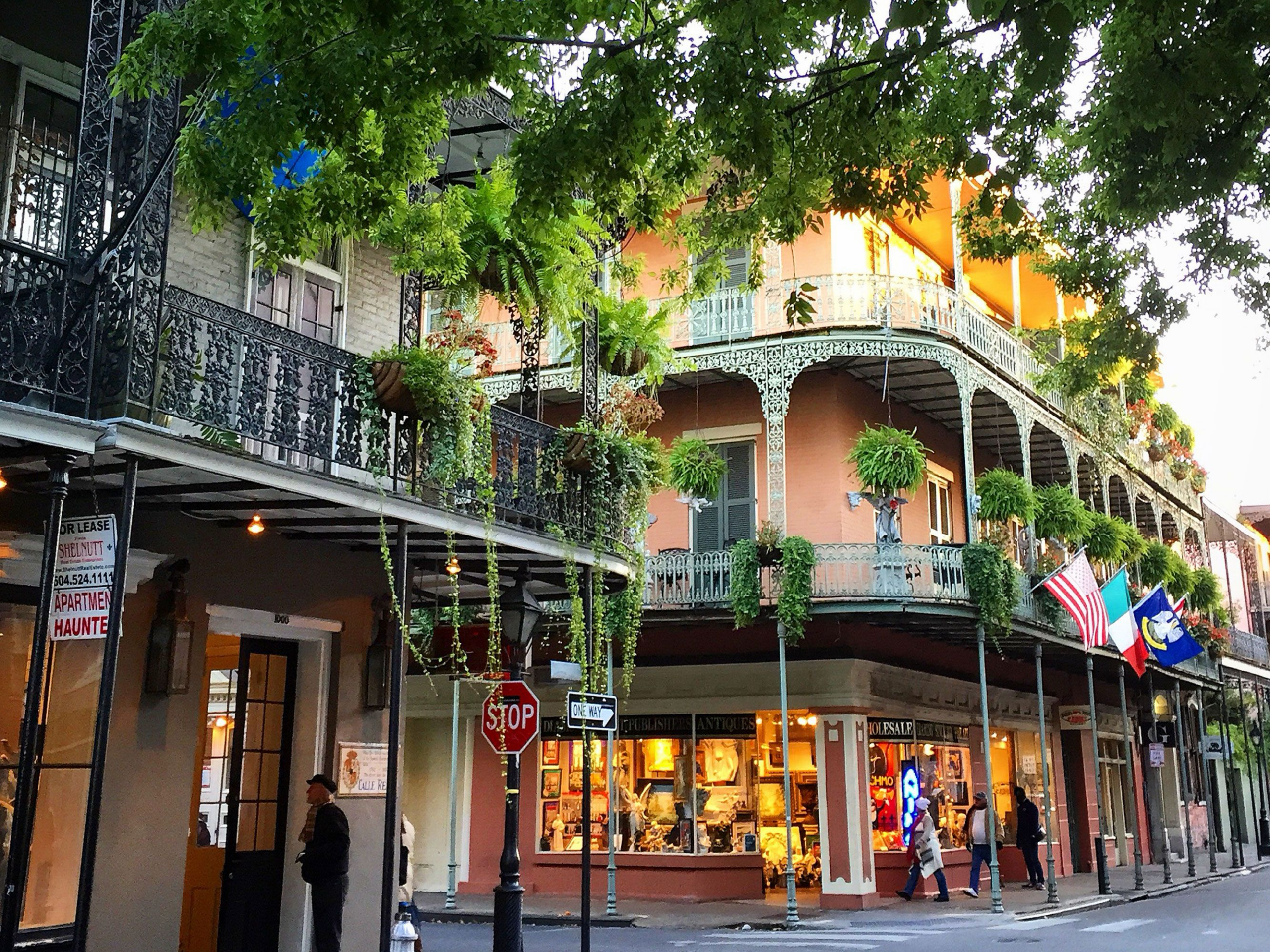
📌 Accessibility Overview
New Orleans follows full ADA standards, with ongoing upgrades, though historic areas bring unique challenges.
- French Quarter: Wide main streets; many side lanes have cobblestones, uneven paving, and raised curbs; use Royal/Decatur St for smoothest access
- Downtown/Convention Center: Fully modern, flat, wide pavements, curb ramps everywhere
- Parking: ADA placard = free parking at meters & city garages, no time limits; marked bays near attractions
- Facilities: Changing Places-style restrooms at MSY Airport, Convention Center, National WWII Museum; accessible toilets at Jackson Square, French Market, and major hotels
- Assistance Dogs: Welcome everywhere; relief areas at airport, parks, and along the riverfront
- Sensory Support: Hearing loops, quiet hours, large-print guides at museums, aquarium, and select venues
- Note: Bourbon Street is crowded & uneven; visit early morning or use parallel Royal Street
📅 Best Time to Visit
Top pick for low energy & comfort: November–April
• Mild 15–24°C (59–75°F); low humidity, minimal heat fatigue, fewer crowds
Good alternative: May & early June — warm, less rain; go early/late
Avoid: July–September — extreme heat/humidity, thunderstorms, hurricane risk, high fatigue; Mardi Gras (Feb) extremely crowded
✈️ Airport Accessibility Summary
Louis Armstrong New Orleans International (MSY)
- Fully ADA-compliant, ramps/lifts, tactile paths, Braille signage throughout
- Free assistance: Book 48hrs early via airline or call MSY Access: +1 (504) 303‑7500
- TSA Cares: +1 (855) 787‑2227; TTY available; service animal relief areas pre/post‑security
- Accessible taxis, shuttles, and ride-shares right outside arrivals
🚆 Local Transportation
🚌 RTA Buses & Streetcars
- All buses: Low‑floor, ramped, wheelchair securement; $1.25 fare
- Streetcars: Canal St & Riverfront lines fully accessible; St Charles line older, limited access — confirm before boarding
- Paratransit: LIFT: Curb‑to‑curb service; book +1 (504) 248‑3900; apply 7 days ahead
🚕 Taxis & Ride‑Share
- Licensed accessible vans available; no extra charge
- Uber WAV / Lyft Access: book 24hrs in advance; limited supply
🚤 River Cruises
- Steamboat Natchez & harbor cruises: ramp boarding, wheelchair spaces — request when booking
🏨 3 Accessible Hotels with Roll‑In Showers
All verified: roll‑in showers, grab bars, wide doors ≥36”, emergency cords, step‑free access.
1. The Roosevelt New Orleans (Waldorf Astoria)
- Central CBD, 10 mins from French Quarter
- ADA rooms with full roll‑in showers, transfer bench, handheld wand
- Step‑free entry, accessible pool, dining, vibrating alarms, hearing kits
2. Hyatt Place New Orleans / Convention Center
- Near riverfront & streetcar lines
- Spacious mobility rooms with roll‑in wet rooms, lowered fixtures, strobe alarms
- Free breakfast, accessible parking, quiet rooms, service‑dog friendly
3. Royal Sonesta New Orleans
- Bourbon Street location
- Verified roll‑in showers, wide turning space, visual fire alarms
- Accessible pool, on‑site dining, valet parking, close to Jackson Square
Browse Accessible Hotels
Booking.com
Tripadvisor.com
Hotels.com
🎡 Accessible Things to Do
- National WWII Museum: Fully step‑free, lifts, wide aisles, loan wheelchairs, quiet sessions
- Jackson Square: Level access, paved paths, accessible viewing; visit early
- French Market: Wide main aisles, accessible restrooms, flat terrain
- Audubon Aquarium: Ramp access, underwater viewing, sensory‑friendly visits
- Riverfront Walk: Flat, paved, benches, connects French Quarter to Convention Center
- Steamboat Natchez: Accessible deck tours, wheelchair spaces available
Browse Accessible Things to do
https://getyourguide.stay22.com/accessibletravelling/iKiLQBLrj2
🩺 Condition‑Specific Travel Tips
🧠 Multiple Sclerosis (MS)
- Heat sensitivity: Visit Nov–Apr; pack cooling vest/neck wraps; stay indoors 11am–4pm
- Fatigue: Limit 2–3 activities/day; use streetcars/taxis instead of walking cobblestones
- Mobility: Stick to Royal/Decatur St; avoid Bourbon St crowds; hotels have roll‑in showers
- Medication: Keep in cool bag; carry prescriptions + doctor’s letter; hand‑carry only
🧠 Bipolar & Schizophrenia
- Routine stability: Stick to fixed meal/sleep times; keep meds in original bottles + travel letter
- Sensory overload: Avoid crowded Bourbon Street evenings/Mardi Gras; visit museums early
- Mood triggers: Heat/humidity can worsen symptoms — stay in AC, drink electrolytes
- Safety: Share itinerary; save emergency contacts; request quiet room away from street noise
🛡️ Immunocompromised
- Best timing: Nov–Apr — less humidity, fewer mosquitoes, cooler air
- Precautions: Hand sanitizer; mask indoors/busy areas; avoid standing water
- Food/water: Bottled water; choose fully cooked seafood/meals; avoid buffets
- Health prep: Inactivated vaccines only; carry CDC travel sheet; request sanitized rooms
⚠️ Accessibility Challenges
- Historic surfaces: Cobblestones & uneven brick in Quarter — bumpy for power chairs
- Heat & humidity: Major fatigue/symptom trigger May–Oct
- Crowds: Mardi Gras, festivals, evenings on Bourbon St make navigation hard
- Hurricane season: June–Nov; check weather & flexible cancellation policies
- Limited accessible rides: Book WAV vehicles 24hrs ahead
📞 Emergency & Useful Accessibility Numbers
- Emergency: 911 | TTY: +1 (800) 955‑8771
- RTA LIFT Paratransit: +1 (504) 248‑3900
- MSY Airport Access: +1 (504) 303‑7500
- City ADA Office: +1 (504) 658‑4020
- National WWII Museum Access: +1 (504) 528‑1944
- US Mental Health Lifeline: 988
📚 Useful Accessibility Resources
- New Orleans Official Access Guide: City‑verified routes & venues
- AccessAble: Room‑by‑room hotel/attraction reviews
- WheelchairTravel.org: Detailed Quarter & city accessibility reports
- CDC Travelers’ Health: Health advice for Louisiana visitors
✅ Verified June 2026 against City of New Orleans ADA, MSY Airport, RTA, and official venue sources.
Continue Planning Your Accessible Trip
- View accessible hotels in this destination
- Read the Accessible Accommodation Questions Checklist
- Read How to Choose the Right Accessible Destination
- Read Travel Insurance for Disabled Travellers
- View the Verification/Planning Services
Accessible New York Travel Guide
New York can be a brilliant accessible city break, but it needs planning. The city has flat areas, excellent accessible buses, many accessible attractions and a good choice of hotels with roll-in showers — but the subway is still inconsistent, pavements can be crowded, and lift outages can disrupt plans.
Terrain and getting around
Manhattan is mostly paved and fairly flat, especially Midtown, Times Square, Chelsea, the Financial District and waterfront areas. The biggest challenges are crowds, cracked pavements, kerb cuts blocked by traffic, steep subway entrances and long walking distances between attractions.
Central Park is beautiful but not equally accessible everywhere. Some routes are smooth and suitable for wheelchairs or mobility scooters, while others have slopes, uneven surfaces and more natural terrain. The Central Park Conservancy has an access map specifically for visitors with limited mobility.
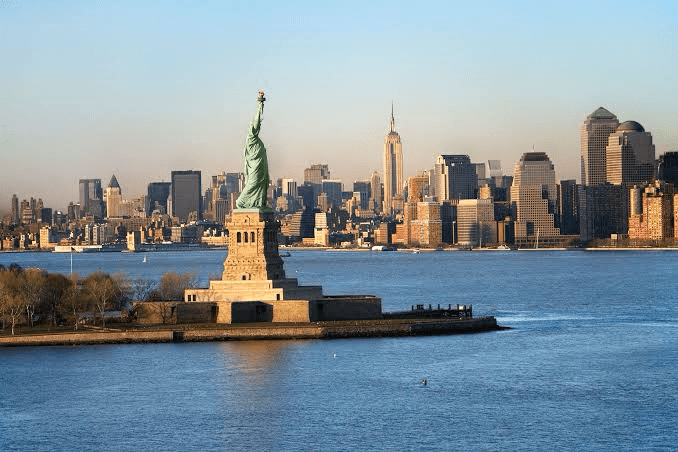
Best accessible areas to stay
For a first visit, I would usually suggest:
Times Square / Midtown — best for theatres, Empire State Building, Fifth Avenue, transport links and shorter taxi journeys.
Chelsea / NoMad / Flatiron — good for restaurants, High Line, Madison Square Park and a slightly calmer base.
Lower Manhattan / Financial District — good for One World Trade Center, 9/11 Memorial, Battery Park, Statue of Liberty ferries and waterfront routes.
Accessible hotels with roll-in showers
Always email the hotel before booking and ask for written confirmation of the exact room type, roll-in shower, shower seat, grab rails, toilet layout, bed height and lift access.
Good options to check include:
Virgin Hotels New York, NoMad — lists accessible rooms with roll-in showers, wider entrances and lowered amenities.
Loews Regency New York, Upper East Side — lists a mobility/hearing accessible room with roll-in shower, grab bars, handheld shower and fixed seat.
Hyatt House New York/Chelsea — has an accessible studio kitchen suite with queen bed and roll-in shower.
The Time New York, Times Square area — lists accessible rooms and suites with wet-room style roll-in showers.
Hampton Inn Manhattan/Times Square South — lists accessible roll-in shower room types, including queen, king and some suite options.
Hilton Garden Inn New York/Manhattan-Chelsea — lists king and double mobility accessible rooms with roll-in showers.
New York Hilton Midtown — lists mobility accessible rooms with roll-in showers, including two-double and family suite options.
Moxy NYC East Village — lists mobility accessible queen rooms with roll-in showers.
Staypineapple Midtown New York — lists a Glamour King Mobility Accessible room with roll-in shower.
The George Manhattan, Tapestry Collection by Hilton — lists two-queen mobility accessible rooms with roll-in showers in Harlem.
Browse Hotels in New York
https://booking.stay22.com/accessibletravelling/trpzlJyRRv
https://tripadvisor.stay22.com/accessibletravelling/_Qxxv5vxCt
https://hotelscom.stay22.com/accessibletravelling/bGT679Qw2v
Accessible transport
New York buses are one of the most useful options for disabled travellers. Accessible Travel NYC notes that MTA buses are wheelchair accessible, while the subway is not fully accessible.
The subway can work for some journeys, but you must check accessible stations and elevator status before each trip. The MTA has an accessible travel guide and live accessibility information but lift outages can still affect plans.
Access-A-Ride is NYC’s paratransit service for eligible disabled passengers who cannot use buses or subways. It operates 24 hours a day, year-round, with fares the same as buses and subways.
Wheelchair accessible taxis are available, but they are not always immediate, so allow extra time, especially after shows, at airports or during bad weather.
Accessible things to do
Empire State Building — wheelchair accessible entrance, ramps, accessible restrooms on the 86th floor, lowered viewing walls and service dogs allowed.
Statue of Liberty and Ellis Island — Liberty Island grounds are wheelchair accessible, and official guidance recommends bringing your own mobility device because distances and queues can be tiring.
The Metropolitan Museum of Art — wheelchair accessible, with manual wheelchairs available on a first-come, first-served basis at the 81st Street entrance.
Central Park — suitable in planned sections, especially using the official access map. Avoid assuming all scenic routes are step-free or smooth.
World Trade Center / Oculus — every level of the Oculus can be reached by elevator, but some routes require elevator transfers.
9/11 Memorial & Museum, Times Square, Broadway, High Line, Hudson Yards, Bryant Park and waterfront promenades are also good options to research for accessible routes, seating, toilets and step-free entrances.
Browse things to do in New York
Big Bus Tours
https://bigbustours.tpo.li/kzbkCrmW
Get Your Guide
https://getyourguide.stay22.com/accessibletravelling/nC52kWvdpx
Useful websites
NYC Tourism Accessible NYC: official visitor accessibility information.
https://www.nyc.gov/site/fdny/about/overview/accessibility.page
MTA Accessibility and elevator status: essential for subway planning.
Access-A-Ride: paratransit information.
Central Park Access Map: useful for planning step-free routes.
Accessible Travel NYC: local disabled traveller accessibility information.
Statue of Liberty accessibility: official mobility information.
Important note
Accessible room details can change, and hotel booking sites are not always specific enough. Before booking, email the hotel directly and ask for photos of the exact bathroom and written confirmation that the room has a true roll-in shower.
Continue Planning Your Accessible Trip
- View accessible hotels in this destination
- Read the Accessible Accommodation Questions Checklist
- Read How to Choose the Right Accessible Destination
- Read Travel Insurance for Disabled Travellers
- View the Verification/Planning Services
Accessible Travelling Guide to Palermo
A Realistic Guide for Disabled Travellers Visiting Palermo by Cruise Ship
There are some destinations that immediately feel organised, polished and easy to navigate.
Palermo is not one of them.
The moment you arrive in Palermo, you are surrounded by noise, movement, traffic, market stalls, scooters, people and energy coming from every direction at once. It is loud, busy and chaotic — yet somehow, that chaos becomes part of its charm.
For disabled travellers, Palermo can feel both exciting and intimidating at the same time.
This is not a city built around modern accessibility standards. Pavements can be uneven, some streets are crowded, and navigating the city independently may feel exhausting at times, especially during busy cruise days or in high temperatures.
But Palermo also offers something many highly polished tourist destinations do not.
It feels real.
It feels alive.
And with the right expectations, pacing and planning, it can become one of the most memorable ports on a Mediterranean cruise.
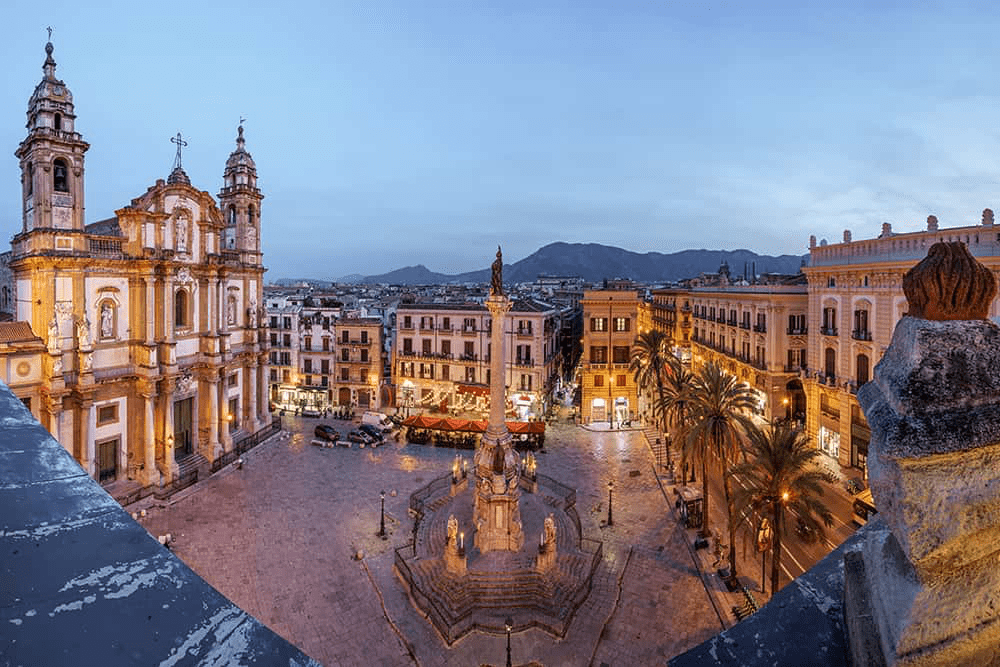
Arriving in Palermo by Cruise Ship
One of the biggest advantages of visiting Palermo as a cruise passenger is the location of the port itself.
Unlike some ports where disabled travellers are immediately faced with lengthy shuttle transfers or industrial dock areas, Palermo places you surprisingly close to the city centre. Within a relatively short distance of leaving the ship, you are already stepping into the atmosphere of Sicily.
For travellers with:
- Fibromyalgia
- Chronic pain conditions
- Reduced mobility
- Fatigue-related illnesses
- Mobility aid users
…this makes a significant difference.
Every additional transfer, queue and long walk slowly drains energy throughout the day. Palermo removes some of that pressure by allowing easier access directly from the cruise terminal area.
Outside the port there are usually:
- Taxis
- Local excursion operators
- Hop-on hop-off buses
- Scenic tourist trains
- Sightseeing transport options
The area can feel busy and slightly overwhelming at first, but it is generally manageable with patience and pacing.
Accessibility in Palermo – The Honest Reality
Accessibility in Palermo is mixed.
Some areas are surprisingly manageable while others can become difficult very quickly.
This is not a destination where you should expect:
- Perfect dropped curbs
- Smooth pavements everywhere
- Modern accessible infrastructure
- Quiet pedestrian spaces
Instead, Palermo is a city that often requires adaptation.
And that is an important distinction.
Accessible travel is not always about finding destinations that are perfectly accessible. Sometimes it is about understanding how to experience a destination safely and realistically despite its limitations.
For many disabled travellers, Palermo falls firmly into that category.
It may be challenging at times, but it is not necessarily impossible.
The key is slowing down and approaching the city differently.
Why Transport Choices Matter in Palermo
One of the most important lessons in Palermo is understanding how valuable transport can become for conserving energy.
Trying to walk continuously around the city in Mediterranean heat, busy crowds and uneven streets can quickly become exhausting — particularly for travellers managing fluctuating conditions such as fibromyalgia or chronic fatigue. Taking a private taxi tour around Palermo turned out to be one of the best accessibility decisions of the day.
Rather than struggling to reach every attraction independently, the taxi allowed us to experience far more of the city without completely draining energy levels.
For many disabled travellers, this balance is incredibly important.
There is often a fine line between:
- Enjoying a destination
- Overdoing it
- And spending the following day recovering
Using transport strategically can completely transform the experience.
Palermo Markets – Incredible but Intense
The famous Palermo markets are one of the city’s highlights.
They are loud, colourful, crowded and overflowing with atmosphere.
Fresh seafood sits beside pasta stalls, local produce, spices and traditional Sicilian Street food while traders shout across busy walkways packed with tourists and locals alike.
It feels authentic rather than manufactured for tourism.
However, from an accessibility perspective, the markets can also become overwhelming.
For travellers with:
- Sensory sensitivities
- Fatigue conditions
- Heat intolerance
- Wheelchairs or mobility aids
- Anxiety in crowded environments
…the intensity of Palermo may feel exhausting after prolonged periods.
This does not mean you cannot enjoy the experience.
It simply means pacing becomes essential.
Sometimes shorter visits, quieter side streets or simply sitting nearby and absorbing the atmosphere may be far more enjoyable than trying to push through crowded areas for hours.
Accessible Sightseeing in Palermo
One of the most positive surprises in Palermo was the visible presence of accessible sightseeing transport.
Several of the sightseeing buses and tourist road trains appeared to include wheelchair spaces or accessible boarding options, which can make a huge difference in a city like this.
Because the reality is simple:
Palermo is not an easy full-day walking city for many disabled travellers.
The combination of:
- Heat
- Crowds
- Uneven surfaces
- Traffic
- Hills in some areas
- Constant stimulation
…can become physically and mentally draining very quickly.
Accessible transport allows travellers to experience much more of the city while conserving energy and reducing physical strain.
And sometimes that difference is what makes a destination accessible in practice rather than simply in theory.
Heat, Fatigue and Mediterranean Travel
Mediterranean travel often looks glamorous online.
The reality for disabled travellers can be very different.
Heat can worsen:
- Pain levels
- Fatigue
- Dizziness
- Mobility issues
- Sensory overload
- Swelling and inflammation
Palermo highlighted the importance of listening to your body rather than trying to keep pace with everyone else around you.
There is absolutely nothing wrong with:
- Taking regular breaks
- Returning to the ship early
- Using taxis more often
- Sitting in shaded cafés
- Choosing shorter outings
- Prioritising comfort over pressure
Accessible travel should never become a test of endurance.
The goal is not simply to “manage” a destination.
The goal is to experience it in a way that remains safe, enjoyable and sustainable for your own body and health.
Is Palermo Worth Visiting as a Disabled Traveller?
Honestly — yes.
Not because it is perfectly accessible.
But because it offers something genuinely memorable.
Palermo is vibrant, historic, emotional, chaotic and full of life. It feels completely different from many polished tourist destinations, and that authenticity is part of what makes it special.
Will there be accessibility challenges? Almost certainly.
But with realistic expectations, careful pacing and flexible planning, Palermo can still become an incredible experience for many disabled travellers.
Sometimes accessible travel is not about waiting for the perfect destination.
Sometimes it is about discovering how to experience extraordinary places in a way that works for you.
And Palermo, despite all its imperfections, is absolutely an extraordinary place.
Browse things to do in Palermo
https://getyourguide.stay22.com/accessibletravelling/iKiLQBLrj2
Quick Accessibility Overview
Palermo May Suit:
✔ Cruise passengers
✔ Travellers with fluctuating mobility
✔ Manual wheelchair users with support
✔ Slow-paced sightseeing
✔ Travellers comfortable using taxis or transport
✔ People wanting authentic cultural experiences
Palermo May Be Difficult For:
⚠ Full-day independent wheelchair exploration
⚠ Severe sensory sensitivities
⚠ Travellers unable to tolerate crowds or heat
⚠ Those expecting fully modern accessibility infrastructure
Final Thoughts
Palermo will not suit every traveller.
But for those willing to slow down, adapt expectations and experience the city at their own pace, it offers something unforgettable.
Not polished perfection.
But real Sicily.
And sometimes, that is even better.
Browse accessible Hotels in Palermo
Accessible Hotels in Palermo
Here are some Palermo hotel options that are commonly mentioned for accessibility, lift access, step-free entry or disabled-friendly facilities. As always in Italy, I would strongly recommend directly confirming:
- Roll-in shower availability
- Shower chair availability
- Lift size
- Door widths
- Step-free entrance
- Accessible room photos
before booking.
Hotels Close to the Port & Historic Centre
- Hotel NH Palermo — Often recommended for accessible stays, with good waterfront location and easier access around the Foro Italico area.
- Grand Hotel Piazza Borsa — Central location in the historic area with lift access and accessible room options reported.
- Hotel Porta Felice — Popular location near the seafront and old town, often considered easier for cruise passengers.
- Palazzo Brunaccini — Boutique-style hotel with lift access and central location.
More Traditional Hotels with Accessibility Features
- Mercure Palermo Centro
- Best Western Ai Cavalieri Hotel
- Hotel Principe di Villafranca
- Hotel Garibaldi
Seafront / Relaxed Area Options
- Splendid Hotel la Torre — Seafront location in Mondello area.
- La Marsa Vacances — Resort-style option outside the busy centre.
For more accessible Palermo hotel research, these accessibility-focused resources may help:
https://booking.stay22.com/accessibletravelling/trpzlJyRRv
https://tripadvisor.stay22.com/accessibletravelling/_Qxxv5vxCt
These hotels and accessibility resources are commonly referenced in accessible travel listings and reviews for Palermo.
This guide is based on real travel experiences and observations. Accessibility can vary depending on crowds, weather, season, transport providers and individual needs. Always verify accessibility directly before travelling.
Continue Planning Your Accessible Trip
- View accessible hotels in this destination
- Read the Accessible Accommodation Questions Checklist
- Read How to Choose the Right Accessible Destination
- Read Travel Insurance for Disabled Travellers
- View the Verification/Planning Services
Accessible Palma, Majorca
Palma de Mallorca offers excellent accessibility for visitors with reduced mobility, including adapted beaches with amphibious chairs, flat promenade areas, and accessible attractions. Many areas, particularly around the city center and main tourist spots, are well-equipped with ramps and accessible services for a 2026 trip.
Accessible Areas
- Old Town (Casco Antiguo): Flat, paved areas near the Cathedral, including Parc de la Mar, offer scenic, barrier-free routes.
- Passeig del Born: A wide, tree-lined avenue that is largely accessible, offering many cafes and shops.
- Playa de Palma: A 3-mile-long promenade connecting the city to sandy, developed areas with numerous accessible bars and restaurants.
Accessible Beaches with Assisted Bathing
These beaches feature wooden boardwalks, ramps, adapted restrooms, and shaded areas:
- Playa de Cala Major: Excellent choice near the city with trained staff and amphibious chairs.
- Playa de Can Pere Antoni: Located close to the center, offering ramp access and adapted services.
- Playa de Ciutat Jardí: Features adapted facilities and and a gentle slope into the water.
- Playa de Palma (Balneario 7 & 15): Well-equipped with, and offering, specialised services.
Browse Accommodation in Palma
Top-rated accessible accommodation in Palma includes Meliá Palma Bay, Nakar Hotel, and Hotel Victoria Gran Meliá, which offer step-free access, adapted rooms with roll-in showers, and easy proximity to the promenade. Search TripAdviser and Booking.com to explore more options.
https://booking.stay22.com/accessibletravelling/trpzlJyRRv
https://tripadvisor.stay22.com/accessibletravelling/_Qxxv5vxCt
Top Accessible Hotels in Palma de Mallorca
- Meliá Palma Bay (1): Highly rated, located near the beach/promenade, with excellent wheelchair accessibility.
- Nakar Hotel (3): Modern hotel in the center with top-notch accessible facilities.
- Meliá Palma Marina (2): Offers spacious rooms and close to the marina.
- Hotel Victoria Gran Meliá (4): Known for spacious, renovated rooms and great views.
- HM Jaime III (10): Located in the heart of the city’s commercial district.
- Es Princep (16): Luxury option near the old town.
Key Accessible Features to Look For
- Mobility Focus: Look for hotels with adapted bathrooms, roll-in showers, grab rails, and wheelchair-accessible lifts.
- Location: The Palma Promenade/Marina area is ideal for flat, easy walking, while Old Town hotels offer central access but might have steep, narrow streets.
- Transport: Many hotels are near the airport with easy transport options, such as the Travelmyth Recommended hotels with accessible transport links.
Browse Accessible Accommodation in Palma
https://booking.stay22.com/accessibletravelling/trpzlJyRRv
https://tripadvisor.stay22.com/accessibletravelling/_Qxxv5vxCt
Accessible Restaurants in Palma
- Quina Creu: A highly-rated, wheelchair-accessible restaurant in the center offering international cuisine.
- Cuit by Miquel Calent: Located in the Nakar Hotel, this restaurant offers panoramic views and accessible, modern Spanish cuisine.
- El Fogón de Saby: Mediterranean dining known for its accessibility and, in the area of, Plaza de Cort.
- Beatnik Restaurant & Bar: Trendy, accessible international spot near the marina.
Accessible Transport & Activities
- City Sightseeing Bus: A wheelchair-accessible way to tour major landmarks including the Cathedral and Bellver Castle.
- Handisport Mallorca: Provides adaptive water sports like sailing and kayaking.
- Soller Train: Accessible train service for scenic tours.
Best Things To Do in Palma, Majorca
Palma is one of the easiest and most enjoyable parts of Majorca for accessible travel because it combines beaches, promenades, historic sights, cafés, shopping, waterfront walks and cultural attractions in a relatively compact area. It works particularly well for travellers who need slower pacing, regular rest stops, shorter distances or accessible taxi transport.
The biggest positives are:
- Long flat promenade areas
- Good café and restaurant culture
- Accessible buses and taxis
- Modern marina and waterfront areas
- Relaxed sightseeing options
- Mix of indoor and outdoor attractions
The biggest challenges are:
- Summer heat
- Crowds in peak season
- Some cobbled streets in the Old Town
- Slopes in certain areas
- Variable accessibility in older buildings
- Beach sand access depending on location
Best Areas To Explore
Palma Waterfront & Promenades
The waterfront is one of the best parts of Palma for disabled travellers. Large sections are flat, wide and easy to navigate.
Best promenade areas:
- Parc de la Mar
- Paseo Marítimo
- Portixol promenade
- Molinar promenade
These areas are particularly good for:
- Wheelchair users
- Mobility scooter users
- Travellers with fatigue or chronic pain
- Walking stick users
- Slower-paced sightseeing
- Visual rest from crowded Old Town streets
The Portixol to Molinar route is especially popular because it combines sea views, cafés, flatter terrain and a calmer atmosphere than the centre of Palma.
Palma Cathedral (La Seu)
Catedral-Basílica de Santa María de Mallorca
This is Palma’s most famous landmark and one of the most beautiful cathedrals in Spain. It overlooks the waterfront and is particularly impressive at sunset and in the evening when illuminated.
Accessibility notes:
- The surrounding promenade area is mostly flat
- Easier than many historic European cathedrals
- Can become crowded during cruise ship days
- Early mornings are usually quieter
- The terraces involve stairs and are not suitable for many mobility-impaired travellers
The area around the cathedral is excellent for gentle sightseeing without needing to walk long distances.
Bellver Castle
Castillo de Bellver
Bellver Castle offers panoramic views over Palma and the marina.
Important things to know:
- The road up is steep
- Taxis are strongly recommended
- Some internal areas may be difficult for wheelchair users
- The outside viewpoints are often worth visiting even if you do not fully explore inside
This is better suited to travellers comfortable with some uneven surfaces or partial accessibility.
Palma Aquarium
Palma Aquàrium
One of the easiest indoor attractions in Palma and ideal for:
- Hot weather days
- Families
- Mixed mobility groups
- Fatigue days
- Slower-paced sightseeing
Why many travellers like it:
- Lifts and ramps
- Seating areas throughout
- Air conditioning
- Mostly level flooring
- Accessible toilets
- Easy taxi access
This is often one of the safest “low energy” activity choices in Palma.
Beaches Near Palma
Some of the more accessible beach areas include:
- Playa de Palma
- Cala Estancia
- Ciudad Jardín
- Can Pastilla
Depending on the season, some beaches may offer:
- Beach access ramps
- Adapted toilets
- Assistance services
- Flat promenade access
- Nearby cafés and taxis
Accessibility can vary throughout the year, especially outside peak summer months.
Boat Trips & Catamarans
Boat trips are one of Palma’s most popular activities. Many depart directly from the marina area.
Important accessibility advice:
- Boarding conditions vary greatly
- Some boats involve steep ramps or steps
- Accessible toilets are not guaranteed
- Sea conditions can affect boarding safety
Before booking, ask:
✔ Is wheelchair boarding possible?
✔ Is there step-free access?
✔ Are there accessible toilets onboard?
✔ Can staff assist with transfers?
✔ How stable is the boarding platform?
Sunset catamaran cruises are particularly popular.
Shopping & Café Areas
Best easier shopping areas:
- Passeig del Born
- Jaume III
- La Rambla
These areas are generally:
- Flatter
- Wider
- Easier to navigate
- Less uneven than parts of the Old Town
The Old Town itself is beautiful but can include:
- Cobbles
- Narrow pavements
- Older entrances
- Small cafés with steps
- Uneven surfaces
Relaxed Seafront Dining
Good areas for relaxed dining:
- Portixol
- Paseo Marítimo
- Cathedral waterfront
- Palma marina
These areas are often easier because:
- Larger outdoor seating areas
- More space between tables
- Better taxi access
- Flatter approaches
Taxis & Transport
Palma is generally quite taxi-friendly.
Things to know:
- Standard taxis are easy to find
- Adapted wheelchair taxis should be pre-booked
- Cruise port to city centre is usually a short ride
- Buses are generally low-floor accessible buses
For many disabled travellers, taxis are far easier and less tiring than trying to navigate buses in hot weather.
Day Trips From Palma
Popular day trips include:
- Sóller
- Port de Sóller
- Valldemossa
- Deià
- Alcúdia
Important accessibility note:
Many mountain villages in Majorca are beautiful but difficult due to:
- Steep hills
- Cobbles
- Narrow streets
- Steps
- Uneven pavements
Port de Sóller is usually one of the easier scenic options because it combines sea views with flatter promenade areas.
Best Sunset Areas
Best easier-access sunset spots:
- Parc de la Mar
- Palma marina
- Paseo Marítimo
- Portixol promenade
- Cathedral waterfront
Browse GetYourGuide for things to do
https://getyourguide.stay22.com/accessibletravelling/iKiLQBLrj2
Accessibility Reality Check
Palma is one of the more manageable Mediterranean city destinations for disabled travellers, but accessibility is still inconsistent.
You should never assume:
- A hotel room is fully accessible
- A restaurant toilet is accessible
- A boat trip is wheelchair-friendly
- Beaches have full access year-round
Always verify directly before booking.
Suggested Relaxed Accessible Day in Palma
Morning
Cathedral waterfront and Parc de la Mar
Lunch
Portixol promenade seafront cafés
Afternoon
Palma Aquarium OR relaxed marina area
Evening
Sunset along Paseo Marítimo
This keeps distances manageable and avoids excessive hills or unnecessary transport.
Continue Planning Your Accessible Trip
- View accessible hotels in this destination
- Read the Accessible Accommodation Questions Checklist
- Read How to Choose the Right Accessible Destination
- Read Travel Insurance for Disabled Travellers
- View the Verification/Planning Services
Accessible Paris
Navigating Paris is beautifully rewarding when you know exactly where to look. Maximize your trip planning by utilizing the Paris Tourist Office Accessibility Guide for official resources and the RATP Network Accessibility Tool for real-time transit status.
Terrain & Navigation
- Historic Geography: Central Paris features a relatively flat topography, but iconic hilly districts (like Montmartre) have steep inclines that can be challenging without motorized assistance.
- Sidewalks & Cobblestones: Cobblestones are ubiquitous, particularly in historic zones (e.g., Le Marais, Île de la Cité). Curbs are generally lowered near crossings, but older pathways can be uneven.

Accessible Accommodations
Many of Paris’s classic Haussmannian buildings have tiny, narrow elevators. Booking verified accessible rooms requires looking at modern properties or highly vetted historic ones.
- Mid-Range / Budget: ibis Styles Paris Gare Saint-Lazare or Motel One Paris-Porte Dorée (Both offer modern, step-free access and compliant roll-in showers).
- Luxury: Hotel Regina (near the Louvre) or The Peninsula Paris (near the Arc de Triomphe). Both feature spacious, fully-adapted suites and wide elevators.
- Tip: Always call or email the property directly after booking to confirm the exact doorway widths and grab-bar locations.
Browse Hotels in Paris
https://booking.stay22.com/accessibletravelling/trpzlJyRRv
https://tripadvisor.stay22.com/accessibletravelling/_Qxxv5vxCt
https://hotelscom.stay22.com/accessibletravelling/bGT679Qw2v
Transportation
- The Metro: Avoid this entirely if you have mobility aids. Aside from Line 14 and some newer stops, the classic Metro network is heavily stair dependent.
- Buses & Trams: Highly accessible. All buses feature low floors, a dedicated ramp at the middle door, and priority space for wheelchair users.
- RER (Regional Trains): RER A and B lines have good accessibility at central stations (e.g., Châtelet-Les Halles), complete with elevators and platform gaps.
- Accessible Taxis: G7 Access is the main fleet of wheelchair-accessible taxis in Paris. Book them directly via the official G7 app.
Verified Accessible Things to Do
- The Louvre: Completely accessible. Access is prioritized at the main Pyramid entrance. Elevators service all wings, and manual wheelchairs can be borrowed free of charge at the information desk.
- Eiffel Tower: The Esplanade and the pillars are entirely accessible. The elevators can take you up to the 1st and 2nd floors, though the very top summit is generally not recommended for evacuation safety reasons.
- Musée d’Orsay: Fully adapted with ramps, level access, and elevators. Wheelchairs are available for loan in the cloakroom.
- Seine River Cruises: Bateaux Parisiens offers wheelchair access, though you must alert the staff prior to arrival so they can deploy the boarding ramp.
- Parks and Gardens: The Jardin du Luxembourg and Jardin des Tuileries feature wide, paved, hard-packed gravel main pathways.
Browse things to do in Paris
https://getyourguide.stay22.com/accessibletravelling/iKiLQBLrj2
- Useful Links
Official City Info: Check out the Paris Je T’aime Inclusive Tourism Page for a database of certified Tourisme & Handicap locations. - Mobility Reviews: Read personal accessibility itineraries and advice on Wheelchair Travel – Paris.
- SNCF Assistance: For accessible regional trains across France, arrange assistance at the station using the SNCF Access Plus service.
Continue Planning Your Accessible Trip
- View accessible hotels in this destination
- Read the Accessible Accommodation Questions Checklist
- Read How to Choose the Right Accessible Destination
- Read Travel Insurance for Disabled Travellers
- View the Verification/Planning Services
Accessible Pisa
Pisa is much more than the Leaning Tower. It is a compact Tuscan city with riverside walks, historic streets, churches, museums, cafés and easy links to Florence, Lucca, Livorno and the Tuscan coast.
For accessible travel, Pisa is manageable but mixed. The main sightseeing area around the Leaning Tower is fairly easy, but the older streets can include uneven paving, narrow pavements, cobbles and kerbs.
Best For
Pisa is good for:
- wheelchair users who want a slower sightseeing day
- mobility scooter users
- travellers with fatigue or chronic pain
- cruise passengers visiting from Livorno
- people staying in Tuscany who want an easier day trip
- families or mixed mobility groups
It is not the easiest city if you want completely smooth pavements everywhere, but it is much easier than hillier Tuscan towns.
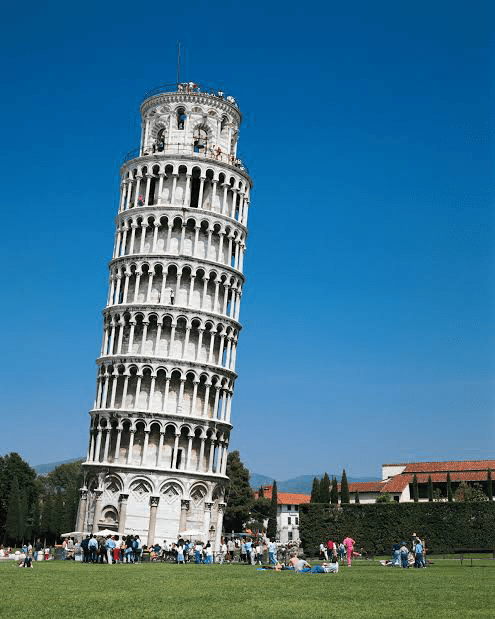
Terrain
Pisa is mostly flat because it sits on the Arno River plain. This makes it easier than places such as Siena, San Gimignano or many hill towns.
Expect:
- flat riverside areas
- wide open space around Piazza dei Miracoli
- some uneven pavements
- cobbled or stone streets in older areas
- kerbs and crossings that may vary
- narrower pavements away from the main sights
- hot exposed areas in summer
The easiest area is usually Piazza dei Miracoli, where the Leaning Tower, Cathedral, Baptistery and museums are located. Visit Tuscany notes that while the tower interior is not accessible for people with impaired mobility, the wider Piazza dei Miracoli remains enjoyable.
Main Areas to Visit
Piazza dei Miracoli
This is the main tourist area and the best place to start. It includes:
- Leaning Tower of Pisa
- Pisa Cathedral
- Baptistery
- Camposanto Monumentale
- Opera del Duomo Museum
- Sinopie Museum
The square is beautiful and open, with paved routes and grassed areas. It can be crowded, but it is still one of the easiest parts of Pisa for accessible sightseeing.
The tower climb itself has no lift and involves stairs, so many disabled travellers will enjoy the tower from the outside instead.
Pisa Cathedral
The cathedral is one of the most important buildings in Pisa and is well worth visiting even if you cannot climb the tower. It sits directly beside the tower and has impressive architecture, artwork and historic detail.
Accessibility can vary depending on entrances and temporary arrangements, so check on arrival which entrance is being used.
Baptistery
The Baptistery is another major landmark in the square. It is known for its acoustics and circular design. Access may be easier on the lower level than upper areas, so ask staff before entering if you need step-free routes.
Camposanto Monumentale
The Camposanto is a historic cemetery and cloistered monument beside the cathedral square. It can be a calmer option than the tower area and is worth considering if you want history without climbing.
Arno River Walk
The River Arno runs through Pisa and gives the city a softer, less crowded feel. The riverside areas are pleasant for a slower walk or wheelchair route.
Good for:
- gentle sightseeing
- photography
- rest stops
- avoiding the busiest crowds
- a slower accessible afternoon
Some pavements may be uneven, so choose routes carefully.
Borgo Stretto
Borgo Stretto is one of Pisa’s historic shopping and café streets. It has character, arcades, shops and places to stop, but it can be tighter and more uneven than the tower area.
Good for atmosphere but check individual shop and restaurant entrances.
Piazza dei Cavalieri
This historic square is quieter than Piazza dei Miracoli and has impressive buildings, including the Palazzo della Carovana. It is a good stop if you want to see more of Pisa beyond the tower.
Santa Maria della Spina
A small Gothic church near the Arno. It is beautiful from the outside and easy to include on a riverside route, but interior access should be checked locally.
Things to Do in Pisa
- Visit Piazza dei Miracoli slowly rather than rushing straight to the tower.
- Enjoy the Leaning Tower from ground level.
- Visit the Cathedral and Baptistery if access works for your needs.
- Take a gentle route along the Arno.
- Stop for coffee or gelato near Borgo Stretto.
- Visit Piazza dei Cavalieri for a quieter historic square.
- Use Pisa as a base for Lucca, Florence or the Tuscan coast.
Book an accessible guided tour if you want support with routes, transport and step-free planning.
Browse things to do in Pisa
https://getyourguide.stay22.com/accessibletravelling/iKiLQBLrj2
Taxis and Transport
Pisa is compact, but distances can still feel long in heat or with mobility needs. A taxi from Pisa Centrale station or Pisa Airport to Piazza dei Miracoli is often the easiest option.
Transport tips:
- use taxis for arrival and departure if carrying luggage
- pre-book wheelchair-accessible transport if needed
- do not assume all taxis can take wheelchairs
- ask your hotel to book suitable transport in advance
- allow extra time during cruise ship days and peak season
Public transport accessibility in Italy varies by city and vehicle age, even though newer vehicles are generally expected to be more accessible.
From Pisa Airport
Pisa Airport is very close to the city, which is one of Pisa’s biggest advantages. For many travellers, a taxi or pre-arranged transfer is the simplest way to reach the centre.
From Pisa Centrale Station
Pisa Centrale is the main railway station. The distance to the Leaning Tower area may be too far for some disabled travellers, especially in summer. A taxi is usually the easier option.
From Livorno Cruise Port
Pisa is a popular cruise excursion from Livorno. If visiting from a cruise ship, check:
- whether the coach has steps
- whether there is wheelchair storage
- how far the drop-off point is from the tower
- whether the guide walks quickly
- whether toilets are accessible
- how much free time is included
- whether the route includes cobbles or long-standing times
For disabled cruise passengers, a private accessible transfer may be easier than a standard group excursion.
Hotels in Pisa
If staying overnight, choose location carefully.
Best areas:
- near Piazza dei Miracoli if sightseeing is the priority
- near Pisa Centrale if arriving by train
- near the Arno for a quieter stay
- near the airport for early or late flights
When booking a hotel, ask:
- Is the entrance step-free?
- Is there a lift?
- Is the lift large enough for a wheelchair or scooter?
- Is there a roll-in shower?
- Is there a shower chair or fixed seat?
- Are there grab rails?
- What is the bed height?
- Is there space beside the bed for transfer?
- Can you send bathroom photos?
- Is breakfast step-free?
- Are there accessible toilets in public areas?
Many older Italian hotels are in historic buildings, so always verify before booking.
Browse Hotels in Pisa/Livorno
https://booking.stay22.com/accessibletravelling/trpzlJyRRv
https://tripadvisor.stay22.com/accessibletravelling/_Qxxv5vxCt
Food and Restaurants
Pisa has plenty of cafés, trattorias and casual restaurants, but accessibility varies.
Watch for:
- steps at entrances
- small toilets
- tight indoor seating
- outdoor tables on uneven paving
- narrow doorways
- busy streets around tourist areas
For easier dining, look for restaurants with outdoor space, level entrances and wider seating areas.
Suggested Accessible One-Day Pisa Itinerary
Morning:
- Arrive by taxi or accessible transfer
- Visit Piazza dei Miracoli
- See the Leaning Tower from outside
- Visit the Cathedral if accessible on the day
Lunch:
- Choose a nearby restaurant or café with level access
Afternoon:
- Visit Camposanto or the Opera del Duomo Museum
- Take a slow route toward Piazza dei Cavalieri
- Optional riverside stop near the Arno
Evening:
- Dinner near the river or return by taxi
Suggested Short Cruise Excursion
For cruise passengers from Livorno:
- Taxi or private transfer to Piazza dei Miracoli
- Photos and sightseeing around the tower
- Cathedral visit if suitable
- Coffee or gelato stop
- Optional short drive/walk to the Arno
- Return to ship with plenty of buffer time
Avoid trying to squeeze in too much if you have fatigue, pain, heat sensitivity or mobility needs.
Accessibility Reality Check
Pisa is easier than many Tuscan towns because it is mostly flat, but it is still a historic Italian city.
The main challenges are:
- uneven paving
- cobbles
- older buildings
- limited accessible toilets
- crowds near the tower
- summer heat
- restaurant access
- taxi availability
- tour groups moving quickly
The main positives are:
- compact centre
- flat terrain
- beautiful open square
- easy airport access
- good train connections
- excellent day-trip potential
- major sights close together
Final AccessibleTravelling.com Note
Pisa can be a very rewarding accessible destination, especially if treated as a slow, compact sightseeing day rather than a rushed tower-climbing visit. The best experience is often found by enjoying the Piazza dei Miracoli, the river, the cafés and the historic atmosphere at a comfortable pace.
Always check hotel, taxi, attraction and restaurant accessibility directly before booking, as access can change and individual needs vary.
Continue Planning Your Accessible Trip
- View accessible hotels in this destination
- Read the Accessible Accommodation Questions Checklist
- Read How to Choose the Right Accessible Destination
- Read Travel Insurance for Disabled Travellers
- View the Verification/Planning Services
Accessible Porto Destination Guide
Verified September 2026
Porto is a historic riverside city in northern Portugal, known for its colourful buildings, tiled churches, Port wine cellars and views across the River Douro.
Porto can be rewarding for disabled travellers, but careful planning is important. The historic centre has steep streets, cobbles, uneven paving and changes in level.
Accessibility varies considerably between attractions, restaurants and older buildings.
The official Accessible Porto programme provides accessible itineraries, tactile maps, Braille information and audio guides. However, inclusion in an official itinerary does not guarantee that a location will meet every visitor’s individual requirements.
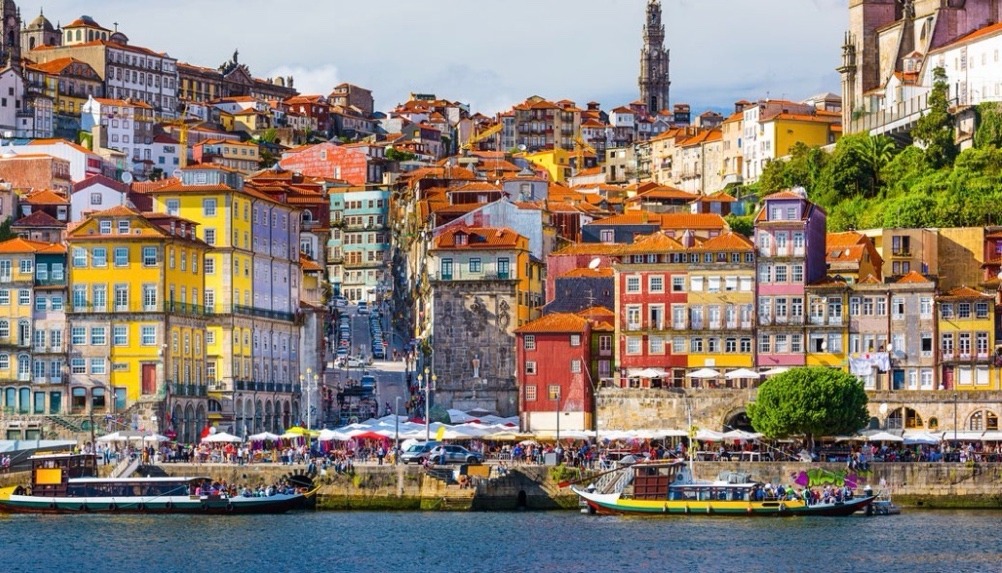
Is Porto suitable for disabled travellers?
Porto has made improvements to its public transport, airport assistance and visitor information. Many modern attractions and cultural buildings provide step-free access, but the city’s natural terrain remains one of its biggest accessibility challenges.
Visitors may encounter:
- Steep hills and long slopes
- Cobbled streets and uneven surfaces
- Narrow or obstructed pavements
- Steps at older shops, cafés and restaurants
- Limited accessible toilets in historic buildings
- Crowded streets around Ribeira and popular attractions
- Slippery paving during wet weather
Wheelchair and mobility-scooter users may find it easier to explore Porto by dividing the city into separate areas and using accessible transport between them.
People with fatigue, chronic pain, breathing difficulties or limited walking ability should allow extra time and include regular rest stops.
Getting to Porto
Porto Airport
Francisco Sá Carneiro Airport, commonly known as Porto Airport, is approximately 11 kilometres northwest of the city centre.
Airport assistance
Porto Airport operates the MyWay assistance service for disabled passengers and people with reduced mobility.
Assistance may include:
- Help through check-in and security
- Support at border control
- Assistance with boarding or leaving the aircraft
- Mobility equipment within the airport
- Help with baggage during the assisted journey
- Escort to or from the aircraft seat
Assistance should be requested through the airline or travel provider when booking, or no later than 48 hours before the scheduled departure time.
On arrival at the airport for a departing flight, passengers should locate a designated MyWay meeting point and use the telephone provided to announce their arrival. The airport also has lifts, moving walkways, signage and designated accessible parking spaces.
Always tell the airline about:
- Your mobility or communication needs
- Any wheelchair, scooter or walking aid
- Battery type and specifications
- Whether you can use aircraft steps
- Whether you can transfer independently
- Whether you need an aisle chair
- Assistance required at the aircraft seat
- Assistance needed when collecting baggage
Travelling from the airport
Metro
Porto Airport is connected to the city by Metro Line E.
Metro travel may be suitable for some wheelchair users and travellers with limited mobility but check the operating status of lifts and the accessibility of the stations needed before travelling.
Allow space between the train and platform and avoid peak periods where possible if you need additional boarding time or space for mobility equipment.
Accessible taxi or private transfer
A pre-booked accessible transfer may be more comfortable for travellers carrying medical equipment, using a large wheelchair or scooter, or staying in a steep part of the city.
Confirm in writing:
- Whether the vehicle has a ramp or passenger lift
- Maximum wheelchair dimensions and weight
- Whether you can remain in your wheelchair
- Wheelchair restraint arrangements
- Passenger seating and transfer requirements
- Space for luggage and mobility equipment
- The exact drop-off point at your accommodation
Do not assume that a standard taxi can carry an occupied wheelchair.
Getting around Porto
Metro
Porto’s Metro connects the airport, city centre, Casa da Música, Campanhã and several surrounding districts.
Although the network includes step-free features, individual lifts or escalators can be temporarily unavailable. Check your complete route before leaving and have an alternative plan.
Travellers with visual impairments should take particular care around platform edges and street-level tracks.
STCP buses
STCP operates Porto’s urban buses. The operator states that all vehicles have low floors, while approximately 66% have wheelchair ramps.
Wheelchair users should look for the universal accessibility symbol. Only identified accessible buses have the required wheelchair space and restraints. Normally, only one wheelchair or one open pushchair can be accommodated on each bus.
Some ramps are manual, while other vehicles have automatic ramps. STCP warns that a passenger may need to wait for the next bus if a ramp is not working. Assistance dogs are accepted under the operator’s stated conditions.
Historic trams
Porto’s traditional trams are historic vehicles. Steps, narrow entrances and limited interior space may make them unsuitable for many wheelchair users and people with restricted mobility.
Confirm the access arrangements before planning a journey. The modern Metro or an accessible taxi may be more practical.
Walking and wheeling
Porto should not be judged by distance alone. A short route on a map may involve a steep gradient, cobbles or steps.
Helpful precautions include:
- Check gradients and street surfaces in advance
- Use transport to travel between different districts
- Avoid rushing between timed bookings
- Plan downhill and uphill sections carefully
- Wear supportive, slip-resistant footwear
- Carry water and sun protection
- Add indoor rest stops
- Avoid steep areas during heavy rain
- Consider a portable charger for powered equipment
Manual wheelchair users may require assistance on some hills. Mobility-scooter users should check that their equipment is suitable for steep gradients, uneven surfaces and cobbles.
Where to stay
Recommended areas to consider
Boavista
Boavista contains wider streets, modern buildings and good transport connections. It may be easier to navigate than parts of the historic centre, although individual routes must still be checked.
Near Casa da Música
This area has Metro access and may suit travellers who want to avoid staying directly within the steepest historic streets.
Baixa and Avenida dos Aliados
This is a convenient central location for attractions and transport. However, nearby routes can include gradients and uneven paving.
Ribeira
Ribeira is atmospheric and close to the river, but it is not necessarily the easiest base for a disabled traveller. The area can be crowded, steep and uneven, and vehicle access may be limited.
Questions to ask your accommodation
Never rely only on the word “accessible.” Ask for measurements and photographs wherever possible.
Confirm:
- Step-free route from the street to reception
- Accessible drop-off point
- Door widths
- Lift dimensions and weight limit
- Step-free access to the bedroom
- Bed height and clearance underneath
- Space beside the bed
- Bathroom doorway width
- Level-access or roll-in shower
- Fixed or portable shower seat
- Position and height of grab rails
- Toilet height and transfer space
- Emergency alarm or pull cord
- Accessibility of breakfast and public areas
- Storage and charging for mobility equipment
- Procedures during an emergency evacuation
Ask the hotel to confirm the allocated room in writing before travelling.
Accessible attractions
Palácio da Bolsa
Palácio da Bolsa, or the Stock Exchange Palace, is one of Porto’s best-known historic buildings.
Visit Porto states that access for people with reduced mobility is through a side entrance. Contact the attraction before visiting to confirm the entrance location, lift access, accessible toilet provision and whether every part of the guided route is available.
Casa da Música
Casa da Música is a modern concert hall and architectural attraction in the Boavista district. Visit Porto lists physical accessibility, but visitors should confirm accessible seating, companion arrangements and the accessibility of a particular guided tour or performance when booking.
Serralves Museum, Villa and Park
The Serralves complex includes a contemporary art museum, Art Deco villa, cinema house and extensive park.
Some areas involve outdoor paths and considerable distances. Visitors should ask which routes are step-free and whether seating, accessible toilets or mobility equipment are available. Accessibility may differ between the museum, villa, park and Treetop Walk. Visit Porto identifies physical accessibility for the Serralves Villa.
Clérigos
The Clérigos Tower requires a substantial stair climb and will not be suitable for many people with mobility limitations.
An accessible multisensory experience has been provided for visitors who cannot climb the tower. Confirm its current availability and location before travelling.
Ribeira riverfront
The Ribeira waterfront provides views across the Douro towards Vila Nova de Gaia. Parts of the riverfront are relatively level, but surrounding streets may be steep, cobbled and busy.
Choose the arrival point carefully and check the return route. Accessible taxis may not be able to stop directly outside every property or attraction.
Luís I Bridge
The bridge has upper and lower crossings. Access conditions differ, and routes approaching the bridge may involve slopes, uneven surfaces or transport connections.
Check the complete approach and exit route rather than the bridge crossing alone. Travellers who are sensitive to heights, crowds or open edges may prefer to view the bridge from the riverfront.
São Bento Station
São Bento is famous for its tiled entrance hall. Visitors who want to see the tiles should confirm the step-free entrance and platform route required for their visit.
The station can become crowded, so a quieter time may be more comfortable for people with sensory, fatigue or balance-related needs.
Port wine cellars
Many Port wine attractions are across the river in Vila Nova de Gaia. Accessibility varies because some cellars are located in historic buildings or on sloping streets.
Before booking, ask about:
- Step-free entrance
- Lift access
- Gradients within the tour
- Seating during explanations and tastings
- Accessible toilets
- Lighting and noise levels
- Wheelchair access to every tour area
- Alcohol-free tasting alternatives
Accessible toilets
Accessible toilet availability varies throughout Porto. Modern museums, shopping centres, transport hubs and larger cultural venues are generally the most reliable places to look, but access should still be confirmed.
Do not assume that small cafés or historic attractions have an accessible toilet.
Useful planning steps include:
- Mark suitable toilets before leaving the hotel
- Use facilities when they are available
- Check whether a toilet requires staff assistance or a key
- Carry essential continence supplies
- Confirm whether a changing bench or hoist is required
- Identify a private place for medication or personal care
Standard accessible toilets should not be described as Changing Places facilities unless a full-sized changing bench, hoist and suitable space have been verified.
Eating and drinking
Porto has many restaurants, cafés and food markets, but older premises may have steps, narrow entrances or toilets on another floor.
Before booking, ask:
- Is the entrance completely step-free?
- Is there enough space around the table?
- Is an accessible toilet available on the same level?
- Can staff accommodate allergies or dietary requirements?
- Is there a quieter table?
- Can a wheelchair user remain seated in their own chair?
- Is outdoor seating reached without steps?
Visitors with fatigue or sensory needs may prefer an early lunch or dinner before the busiest period.
Sensory and hidden-disability considerations
Popular areas such as Ribeira, São Bento Station and the streets surrounding major attractions can become noisy and crowded.
Helpful strategies may include:
- Visit major attractions early
- Pre-book tickets where possible
- Carry noise-reducing headphones
- Download maps and tickets in advance
- Save Portuguese translations of important needs
- Build quiet breaks into the itinerary
- Carry a communication card
- Ask for a quieter waiting area
- Avoid planning too many attractions in one day
The official Accessible Porto project also offers tactile maps, Braille information and linked audio guides for selected itineraries.
Fatigue and chronic illness planning
Porto’s hills can make a seemingly short day physically demanding.
Consider:
- One main attraction per half-day
- A rest period after arrival
- Staying close to a Metro station
- Using taxis for uphill journeys
- Booking flexible or refundable tickets
- Carrying medication, water and cooling aids
- Planning indoor alternatives
- Returning to the hotel during the hottest part of the day
- Allowing a recovery day after a full excursion
Listen to your body and avoid basing the itinerary on what a non-disabled visitor might complete.
Weather considerations
Porto generally has warm summers and cooler, wetter winters.
During hot weather:
- Avoid exposed routes during the hottest part of the day
- Carry water and prescribed medication
- Protect medication and batteries from excessive heat
- Use shaded rest areas
- Watch for signs of heat-related illness
During wet weather:
- Cobbles and polished paving may become slippery
- Wheelchair braking distances may change
- Steep routes can become more difficult
- Have an indoor alternative available
Always check the short-range forecast before travelling.
Suggested accessible two-day itinerary
Day one: Boavista and Serralves
Morning
Visit Casa da Música or join a pre-arranged accessible tour.
Lunch
Choose a confirmed step-free restaurant in the Boavista area.
Afternoon
Travel by accessible transport to the Serralves complex. Select the museum, villa or a manageable part of the park rather than attempting every area.
Evening
Return to the hotel for a rest before dinner.
Day two: Historic Porto and the river
Morning
Visit the entrance hall at São Bento Station, followed by an accessible section of the city centre.
Lunch
Choose a pre-checked restaurant with a suitable toilet.
Afternoon
Travel to the Ribeira riverfront using the most suitable accessible route. If booked in advance, visit Palácio da Bolsa through its designated side entrance.
Important: Do not assume the route between every stop is step-free. Use accessible transport between locations where necessary.
Emergency and health information
The emergency number in Portugal is 112 for ambulance, police and fire services.
Before travelling:
- Arrange suitable travel insurance
- Carry a current medication list
- Keep medication in its original packaging
- Carry copies of prescriptions where appropriate
- Save your accommodation address
- Record emergency contact details
- Identify nearby pharmacies
- Check the location of an appropriate medical facility
- Carry details of allergies and medical conditions
- Take any valid health-entitlement documents, but do not use them as a replacement for travel insurance
Before travelling to Porto
☐ Request airport assistance at least 48 hours before departure
☐ Confirm how mobility equipment will be transported
☐ Obtain written confirmation of the hotel room and bathroom
☐ Check lift availability for essential Metro journeys
☐ Pre-book an accessible airport transfer if required
☐ Confirm attraction entrances and accessible toilets
☐ Check hills, cobbles and gradients on planned routes
☐ Save tickets and maps offline
☐ Carry emergency and medication information
☐ Arrange comprehensive travel insurance
☐ Check the weather and transport status
☐ Prepare alternative routes and indoor activities
Final accessibility reminder
Accessibility information, equipment and procedures can change. Temporary works, broken lifts, unavailable ramps or altered entrances may affect an otherwise accessible journey.
Always confirm essential arrangements directly with the airline, accommodation, transport provider and attraction before booking and again shortly before travelling.
The term “accessible” does not mean that a location will meet every person’s requirements.
AccessibleTravelling.com™
Travel with Confidence™
Information verified September 2026
Accessible Portofino Guide
Terrain Overview
Portofino is characterized by steep, rugged cliffs and uneven cobblestone surfaces. The central harbor (Piazza Martiri Dell’Olivetta) and the surrounding waterfront promenade are mostly flat, paved, and accessible. However, venturing beyond the harbor into the hills or accessing historic sites requires navigating steep inclines, uneven terrain, and narrow, historic sidewalks.
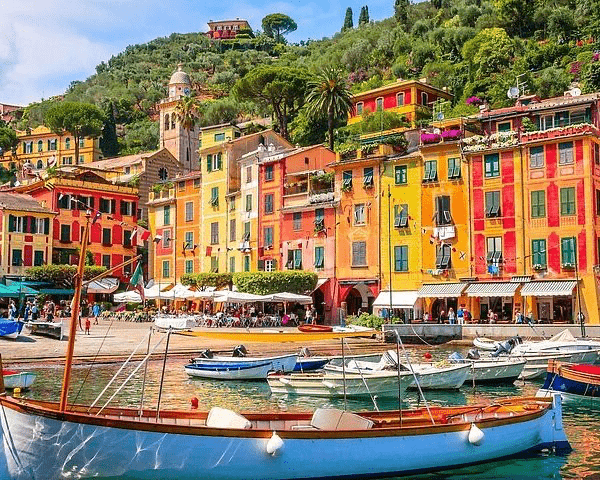
Verified Accessible Hotels
While historic Portofino proper has very few fully ADA-compliant historic buildings, the immediate surrounding towns are better equipped.
- Hotel Piccolo Portofino (Portofino): Located just a 5–10-minute walk to the main port. It offers accessible common areas, and some rooms can accommodate specific mobility needs.
- LHP Hotel Santa Margherita Palace & Spa (Santa Margherita Ligure): Located roughly 3.5 km away in the neighboring flat coastal town. Highly rated for its step-free access, elevator services, and modern accessible roll-in shower rooms.
- Eight Hotel Portofino (Portofino): Located right off Via Del Fondaco, this boutique property provides accessible facilities and an easier flat approach to parts of the town.
Browse Hotels in Portofino
Transportation
Navigating the region requires strategic planning:
- By Train & Local Bus: The closest major train station is in nearby Santa Margherita Ligure. From there, you can take local public buses (e.g., AMT lines) that handle manual wheelchairs and ECVs excellently, with ramps and designated securement areas.
- By Ferry: Public and private ferry services run along the coast, connecting Santa Margherita and Rapallo directly to Portofino. Many modern ferries have ramps, but gangplanks can be steep depending on the tides.
- Accessible Private Transfers: To tour the rugged coast or travel seamlessly from Genoa, book a vehicle via Disabled Accessible Travel or Accessible Italian Holiday. They provide adapted minivans with electronic lifts.
Accessible Things to Do
- The Piazzetta & Marina: The famous harbor is mostly flat. It is ideal for taking photos of the superyachts, enjoying authentic Italian gelato, and people-watching.
- Waterfront Roll in Santa Margherita Ligure: Because of the steep terrain in Portofino, most guided accessible tours combine Portofino with Santa Margherita Ligure. The waterfront promenade here is completely flat, wide, and perfect for strolling with sweeping views of the Gulf of Tigullio.
- Pesto Cooking Experiences: Book an accessible culinary experience in the Tigullio area where you can roll right into the kitchens to learn authentic Ligurian cooking.
- Castello Brown (Exterior & Garden): While reaching the very top of the castle involves steps and steep inclines, guided accessible van tours can drive you as close as possible to the upper paths, providing breathtaking views of the bay.
Browse Accessible things to do
https://getyourguide.stay22.com/accessibletravelling/iKiLQBLrj2
Accessible Portofino
https://share.google/jB3dkA7ymYdFABrQe
Continue Planning Your Accessible Trip
- View accessible hotels in this destination
- Read the Accessible Accommodation Questions Checklist
- Read How to Choose the Right Accessible Destination
- Read Travel Insurance for Disabled Travellers
- View the Verification/Planning Services
Accessible Prague
Prague offers surprisingly good accessibility for a historic European city. Utilise the Prague City Tourism Official Guide to plan routes, and pre-book verified accessible lodging at international chains through https://tripadvisor.stay22.com/accessibletravelling/_Qxxv5vxCt
Terrain & Navigation
Prague’s centuries-old charm brings some practical hurdles.
- Cobblestones: The city’s historic lanes are beautiful but can be bumpy. Manual wheelchair users may find long stretches tiring, while powered chairs might experience some jolting.
- Smooth Pavements: Flatter, accessible routes are more common in areas like Wenceslas Square and Prague 7 (Holešovice).
- Navigating: Use Mapy.cz, which highlights accessible, step-free routes, elevators, and ramps throughout the city.

Verified Accessible Hotels
For accessible stays, international chain hotels are a highly reliable bet, as they comply with strict global access standards.
- Hilton Prague Old Town: Offers fully roll-in showers, lowered sinks, and step-free access throughout the property.
- Grand Hotel Bohemia: A historic luxury property that has been updated with step-free entrances and designated wheelchair-accessible rooms.
- Vienna House Andel’s Prague: Located in the modern Andel district; it features fully accessible modern suites, wide doorways, and roll-in showers.
Browse Accessible Hotels in Prague
Transportation
Getting around Prague is relatively easy, provided you plan ahead.
- Metro: Most metro stations have elevators, though some older central stations (like Můstek) can be complex to navigate. Check the DPP Prague Public Transit Accessibility site for elevator status before departing.
- Trams: Many trams in the city are modern, low-floor vehicles, making it easy to roll on and off. However, verify that your specific tram stop is wheelchair-accessible.
- Accessible Taxis: Accessible, ramp-fitted vans (like Wheelchair Taxis Prague) can be arranged. It is highly recommended to pre-book these through your hotel concierge.
Accessible Things to Do
- Prague Castle & St. Vitus Cathedral: The castle complex has impressive accessibility features, including ramps, lifts, and accessible restrooms. cobblestone pathways require some navigation, but the main highlights are accessible.
- Old Town Square & Astronomical Clock: The Old Town Square is mostly flat and features smooth guiding pavements. The Old Town Hall itself offers step-free access and an elevator to the top of the tower for panoramic views.
- National Museum: Completely renovated in recent years, the main building is highly accessible with wide corridors, elevators, and ADA-compliant restrooms.
- Accessible Tours: Companies like Accessible Prague offer specialized, fully guided tours for wheelchair users and visually impaired travelers, including unique tactile and touchable exhibitions.
Browse Accessible Things to do
https://getyourguide.stay22.com/accessibletravelling/iKiLQBLrj2
Useful Links
- Prague Experience Accessibility Guide: An excellent breakdown of the city’s overall access.
- Wheelchair Travel Guide for Prague: Detailed tips on wheelchair transit and attraction accessibility.
Prague Experience +2
Continue Planning Your Accessible Trip
- View accessible hotels in this destination
- Read the Accessible Accommodation Questions Checklist
- Read How to Choose the Right Accessible Destination
- Read Travel Insurance for Disabled Travellers
- View the Verification/Planning Services
Accessible Rome
Navigating Rome’s ancient streets requires careful planning. Maximise your trip by using the Sage Traveling Accessible Rome Guide for route details, booking accessible airport transfers via the Sala Blu, and securing accessible sights via the Vatican Museums Accessibility portal.
🗺️ Terrain & City Layout
- The Cobblestone Challenge: The historic centre features irregular, uneven cobblestones (sanpietrini) which can cause a bumpy, jarring ride for wheelchair users and mobility scooters.
- The Seven Hills: Rome is built on hills. While some main tourist pathways are flat, others require navigating steep inclines.
- Sidewalks: Main streets feature wider, paved sidewalks. It is highly recommended to plan your routes along these rather than shortcuts through heavily cobblestoned alleys.
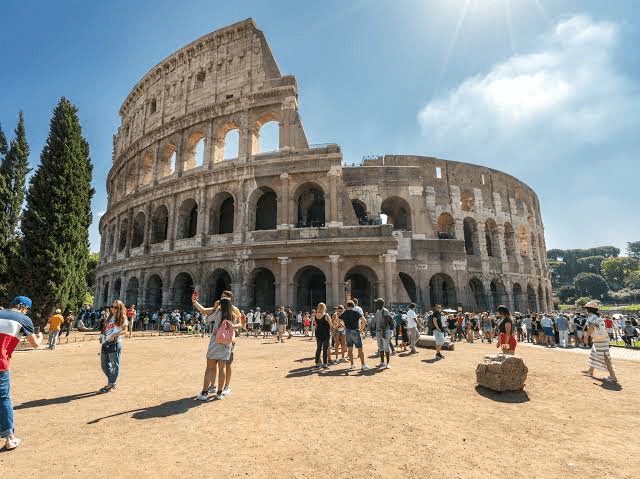
🚊 Transportation & Getting Around
- Airport Transit: Fiumicino (FCO) is platform-level but has wide gaps between the Leonardo Express train and the platform. The 35-minute Trenitalia ride to Roma Termini costs €14, but you must book free mobility assistance through Sala Blu 12 hours prior.
- RollWithASmile
- Metro: Accessibility is improving, but older stations pose challenges. Lines A and B have elevators, though they occasionally break down. Metro C is fully accessible.
- Buses/Trams: Look for the wheelchair symbol at stops. Ramps are standard on newer buses, but crowding and parked cars frequently block the boarding ramps.
- Taxis & Private Drivers: Standard public buses are tricky. Pre-booked wheelchair-accessible taxis (e.g., Cooperativa Samarcanda) are available. You can also use services like VemRentto hire and use mobility aids, which allows transit through Restricted Traffic Zones (ZTL).
- Hop-On Hop-Off Buses: The Big Bus Rome is an excellent, reliable option. Each bus includes a wheelchair ramp and a designated space onboard.
🏨 Verified Accessible Hotels
- Luxury: Hotel Artemide – Highly rated for its central location, barrier-free access, and modified walk-in showers.
- Mid-Range: Hotel Colosseum – A classic property offering specific roll-in shower rooms and elevator access to a great roof terrace.
- Budget-Friendly: The RomeHello– A modern hostel/hotel that is fully accessible, featuring step-free entrances, wide elevators, and adapted shared and private rooms.
Browse Hotels in Rome
🏛️ Accessible Things to Do
- The Colosseum & Roman Forum: The ground floor of the Colosseum is completely step-free and features ramps and accessible restrooms. The Roman Forum is also accessible, though you will need to map out your route to avoid steps.
- The Vatican Museums & Sistine Chapel: The Vatican provides step-free, ramped entry and free wheelchairs on a first-come, first-served basis. A specialised companion or carer also gains free entry with you.
- St. Peter’s Basilica: Skip the long general security lines and use the dedicated wheelchair ramp to access the elevators.
- City Golf Cart Tours: Consider a private golf cart tour (such as those offered through Romeing Tours), which provides a smooth, guided way to see the historic centre without navigating the grueling cobblestones.
Browse things to do in Rome
🔗 Useful Links & Resources
- Official State Railways: Request accessibility assistance via the RFI Sala Blu.
- Vatican Access Info: Check the Vatican Accessibility Page for booking museum tickets and contacting the accessible services department.
- Mobility Aid Rentals: Need to rent a scooter or wheelchair? Visit VemRent Rome to coordinate short-term rentals.
- Comprehensive Community Guides: For first-hand experiences, consult the Sage Traveling Rome Tips and the Wheelchair Travel Rome Guide.
Continue Planning Your Accessible Trip
- View accessible hotels in this destination
- Read the Accessible Accommodation Questions Checklist
- Read How to Choose the Right Accessible Destination
- Read Travel Insurance for Disabled Travellers
- View the Verification/Planning Services
Accessories Salzburg
Planning an accessible trip to Salzburg is highly achievable if you stick to the flat, river-level terrain of the city centre. Before planning your itinerary, review official accessibility resources and book guaranteed accessible stays using the Salzburg Tourism Barrier-Free Guide and verified options on Sage Traveling.
Terrain & Mobility Overview
Salzburg sits in a valley ringed by mountains, which means there are some steep hills and historic cobblestone streets in the Old Town (Altstadt).
- The Valley/River: The area along the Salzach River, Mirabell Gardens, and the main shopping streets (Getreidegasse) is mostly flat and highly navigable.
- The Slopes: The Hohensalzburg Fortress and Mönchsberg mountain sit high above the city. While you cannot easily wheel up the steep inclines, there are dedicated elevators.
- Obstacles: Be prepared for historic, uneven cobblestones in some squares and the Petersfriedhof cemetery.

Verified Accessible Hotels
Historic buildings can make accessibility in the Old Town tricky, but several premier spots cater well to wheelchair users and those with limited mobility.
- Luxury: Hotel Sacher Salzburg – Offers step-free entrances, spacious elevators, and fully accessible rooms with roll-in showers.
- Boutique: Goldener Hirsch – A highly historic luxury hotel near Getreidegasse that has adapted elevators and modified rooms for guests.
- Modern/Standard: H+ Hotel Salzburg – Located near the main train station (Hauptbahnhof); features excellent ADA-compliant rooms and smooth, flat access throughout.
Browse Hotels in Salzburg
Transportation
Public transport is generally very friendly to travellers with reduced mobility, but Old Town transit limitations require some planning.
- City Buses: All municipal buses (OBus) feature low-floor entry (kneeling buses) and dedicated wheelchair ramps/spaces.
- Main Station: The Hauptbahnhof is fully modernized with flat platforms, elevators, and tactile guiding systems.
- Taxis: Accessible vans can be arranged, but it is best to have your hotel call ahead. Alternatively, both Uber and Bolt operate in the city and can accommodate pre-scheduled or on-demand pickups.
Accessible Things to Do
Many of Salzburg’s world-class cultural attractions offer barrier-free access.
- Mirabell Palace & Gardens: The spectacular gardens feature wide, paved paths. The Marble Hall (where some concerts are held) and the palace itself have elevator access.
- Hohensalzburg Fortress: Instead of the steep walk, take the funicular railway. The bottom and top stations are wheelchair accessible, and the fortress courtyard offers stunning panoramic views.
- Mozart’s Birthplace (Hagenauer Haus): This iconic yellow building located on the Getreidegasse has a ramp at the entrance and a lift to help you explore the multi-story museum.
- DomQuartier: The monumental complex of the former Prince-Archbishops’ residence features ramp access and elevators, allowing you to view the State Rooms and the Salzburg Cathedral from above.
Browse things to do in Salzburg
Useful Links
- Check real-time public transit routes and buy tickets via the SalzburgMobil App.
- To plan your day down to the specific curb and bathroom, download the official local authority route planner from Salzburg Tourism.
Continue Planning Your Accessible Trip
- View accessible hotels in this destination
- Read the Accessible Accommodation Questions Checklist
- Read How to Choose the Right Accessible Destination
- Read Travel Insurance for Disabled Travellers
- View the Verification/Planning Services
Accessible Santorini
Santorini is breathtaking but incredibly rugged. To navigate it successfully, prioritise accessible-friendly hubs like Fira and Kamari, and utilize private, accessible transfer services to bypass steep, stepped caldera cliffs. Book vetted accessible stays via platforms like Wheelchair Accessibility in Santorini and local specialised agents.
The Terrain
Santorini’s landscape is largely defined by its volcanic caldera.
- The Caldera Side (Fira, Oia, Imerovigli): Characterized by dramatic, steep cliffs with hundreds of winding steps, cobblestone alleys, and multi-level cave hotels. Many spectacular viewpoints are entirely inaccessible to wheelchair users and difficult for those with limited mobility.
- The Outer Slopes/Beaches (Kamari, Perissa, Perivolos): These are flat, coastal, and much easier to navigate. The terrain consists of paved boardwalks, smooth pathways, and flat access to the Aegean Sea.
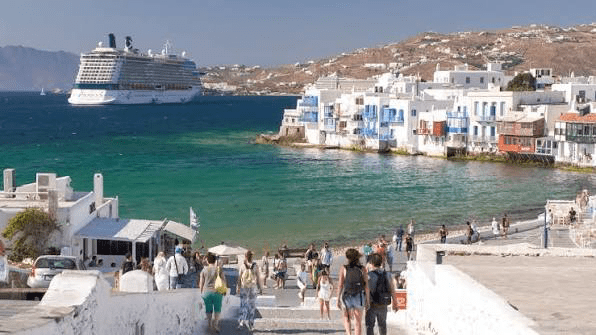
Accessible Accommodations
Finding hotels with step-free access, ramps, and roll-in showers is challenging but very possible if you stay away from the cliff-face.
- Astro Palace Hotel & Suites (Fira): Located slightly back from the caldera edge, this hotel features elevators, accessible rooms, and flat pathways to the centre of Fira.
- Santorini Palace (Fira): Offers step-free accessibility, a large accessible pool, and level access to main restaurants and squares.
- Aethrio Hotel (Oia): While Oia is generally stepped and rugged, Aethrio sits near the main pedestrian square and offers ground-floor rooms and flatter access to the village access to the village centre
- Anteliz Suites (Fira): Offers some accessible-friendly suites with step-free entries and elevators.
Browse Accessible Hotels in Santorini
Transportation
Getting around requires strategy and pre-planning, as local buses and some traditional taxis are not wheelchair accessible.
- Accessible Transfers: Contact private services like Santorini Easy Access Transfers or Welcome Pickups well in advance to arrange a ramp-equipped vehicle.
- Public Buses (KTEL): The main KTEL buses are large, air-conditioned coaches. While they can store wheelchairs/scooters in the luggage hold, boarding involves steps. They are best for those with mild mobility issues.
- Cable Car: The famous cable car from the Old Port to Fira town is accessible, but getting to the port itself requires taking a donkey or steep stairs (cruisers usually tender in, so use the port’s accessibility lifts).
Accessible Things to Do
You can still experience Santorini’s rich culture, food, and views without navigating the steep stairs.
- Explore Fira’s Main Town: The main pedestrian pathway through Fira is paved, wide, and largely step-free, offering excellent shopping, cafes, and caldera views.
- Winery Tours: Many modern wineries are entirely flat and wheelchair accessible. Consider visiting Estate Argyros or Santo Wines, both of which feature step-free tasting rooms, accessible restrooms, and panoramic views.
- Kamari Beach and Boardwalk: Skip the red/black sand beaches (which require walking over sand) and head to Kamari’s paved boardwalk, which is flat, lively, and offers great dining. Kamari is known for featuring Seatracsystems, which are automated, fixed-track chairs that allow wheelchair users to safely enter the ocean.
- Akrotiri Archaeological Site: This ancient Minoan site has been fitted with wooden boardwalks and ramps, making most of the ruins accessible for wheelchair users.
- Sunset Catamaran Cruises: Several operators offer wheelchair-accessible sunset sailing tours. The catamarans feature large deck spaces, though getting on and off the boat will require assistance from the crew.
Browse things to do in Santorini
Useful Links
- Check the Accessible Travel Greece – Santorini Forum for recent firsthand experiences, tips, and Q&A from other travellers with mobility limits.
- Research bus schedules and connections on the official KTEL Santorini website.
- Consult your travel agent or specialist organisations like Enable Holidays to build fully custom, vetted itineraries on the island.
Continue Planning Your Accessible Trip
- View accessible hotels in this destination
- Read the Accessible Accommodation Questions Checklist
- Read How to Choose the Right Accessible Destination
- Read Travel Insurance for Disabled Travellers
- View the Verification/Planning Services
Accessible Sorrento
Sorrento is one of the most accessible towns on the Amalfi Coast. Centered around Piazza Tasso and Corso Italia, the terrain is relatively flat with smooth sidewalks. Explore accessible hotels using Tripadvisor Accessible Hotels to easily book fully vetted accessible excursions and private transfers.
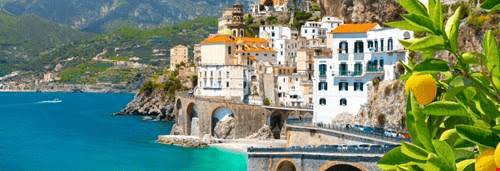
Terrain & Navigation
- Central Sorrento: Highly accessible. The historical centre and main streets (Corso Italia, Piazza Tasso) feature smooth, flat flagstones with minimal cobblestones.
- The Marina Elevators: The most practical way to reach the coast or ferries from the cliffside centre is by taking the public elevator in Villa Comunale Park. It avoids steep, sloped stairs and costs approximately €1.10 per ride.
- The Outskirts: Be aware that the terrain gets significantly steeper as you move away from the town centre or into the hills.
Verified Accessible Hotels
Booking well-vetted, central hotels is crucial in a cliffside town to prevent accessibility issues. Top highly-rated, centrally located, step-free options include:
- Antiche Mura Hotel: A spacious, historical property with flat-path access to restaurants and top-tier amenities.
- Grand Hotel Excelsior Vittoria: Luxurious, centrally located just off Corso Italia. It offers step-free accessibility, wide corridors, and staff assistance.
- Hotel Conca Park: Located near the centre, features beautiful flat grounds, accessible rooms, and stunning views of Mount Vesuvius.
Browse Accessible Hotels
Accessible Things to Do
- Villa Comunale Park: A flat, paved park perfect for taking in sweeping views of the Bay of Naples and Mount Vesuvius. It features the elevator down to Marina Piccola.
- Chiostro di San Francesco: Located in the city center, this 14th-century cloister is entirely on ground level, flat, and free to enter.
- Friendly Pompeii Route: The famous archaeological ruins are highly uneven, but you can request the “Friendly Pompeii” accessible itinerary at the entrance. It provides ramps, wooden boardwalks, and flat routes to significant sites like the Amphitheatre and main houses.
- Amalfi Coast Ferry Hopping: Local ferries are mostly wheelchair-accessible, offering roll-on, roll-off access to nearby towns like Amalfi and Positano.
Transportation
- Arrival: The closest major airport is Naples International Airport (NAP). Pre-book private, wheelchair-adapted vans with services such as Sorrento Silver Star Tours or Aldo Limos for a smooth 1-hour drive.
- Getting Around: Avoid the Circumvesuviana local train if you have limited mobility, as the train cars are older and often have high, non-accessible steps. Renting or utilizing private wheelchair-accessible vans is the safest way to travel between the Amalfi Coast towns.
Useful Links
- Book accessible regional excursions with https://getyourguide.stay22.com/accessibletravelling/iKiLQBLrj2
- View, compare, and verify central, wheelchair-friendly accommodations at
https://booking.stay22.com/accessibletravelling/trpzlJyRRv
https://tripadvisor.stay22.com/accessibletravelling/_Qxxv5vxCt
- Find specialised equipment rentals (mobility scooters, shower chairs) via Motion4rent in Italy.
Continue Planning Your Accessible Trip
- View accessible hotels in this destination
- Read the Accessible Accommodation Questions Checklist
- Read How to Choose the Right Accessible Destination
- Read Travel Insurance for Disabled Travellers
- View the Verification/Planning Services
Accessible Split
Exploring Split with limited mobility requires careful planning due to its ancient layout. For a seamless experience, book adapted transport using Disable Taxi or plan tours with Disabled Accessible Travel. Review ferry schedules via Croatia Ferries to find accessible vessels.
Terrain & Navigation
- Old Town & Diocletian’s Palace: The terrain is a mix of flat, polished limestone and cobblestones. Many internal palace areas feature uneven ground and steps.
- The Riva (Promenade): Completely flat, paved, and fully accessible with smooth pathways, flat outdoor seating, and ramps to waterfront spots.
- Marjan Hill: Features steep inclines and stairs that are difficult to navigate; stick to the accessible lower-level coastal paths.
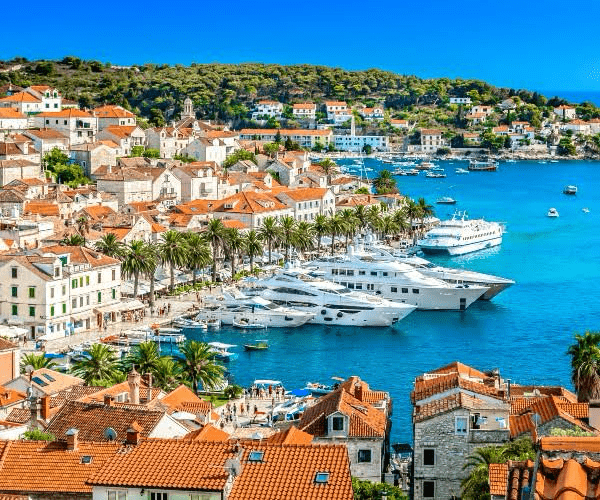
Verified Accessible Hotels
- Hotel Cornaro: A highly rated, centrally located hotel that provides zero-step access, elevators, and specially adapted accessible rooms with roll-in showers.
- Marvie Hotel & Health: Located slightly outside the dense centre, this modern wellness hotel features ADA-compliant rooms, wide doorways, and fully accessible bathroom grab bars.
- AC Hotel by Marriott Split: A contemporary option offering premium accessible rooms with roll-in showers and step-free property access.
Browse Accessible Hotels in Split
https://booking.stay22.com/accessibletravelling/trpzlJyRRv
https://tripadvisor.stay22.com/accessibletravelling/_Qxxv5vxCt
https://hotelscom.stay22.com/accessibletravelling/bGT679Qw2v
Accessible Transportation
- Arrival: Split Airport is accessible with adaptable facilities. If arriving by ferry, you will encounter varying degrees of accessibility. Check with the specific operator to ensure they have a ramp and lift.
- Public Transit: City buses (Promet) have low-floor accessibility, but they can get incredibly crowded, and bus stops aren’t always universally designed.
- Private Transit: Standard taxi apps and Ubers are widely available, but they rarely accommodate non-folding wheelchairs. For guaranteed accessible transport with wheelchair ramps, book in advance through disabled Taxi.
Accessible Things to Do
- The Riva Promenade: Enjoy the vibrant harbor-front atmosphere, accessible cafes, and level viewing points at Matejuška Port.
- Diocletian’s Palace Cellars: Enter strictly from the south via the Brass Gate (Porta Aenea) off the Riva promenade. This provides a completely step-free path into the historic cellars.
- The Archaeological Museum: Located near the Old Town, both the main exhibition building and its gardens offer excellent accessibility.
- Meštrović Gallery: Offers a wonderfully accessible ground floor and sculpture garden, though the upper levels are restricted by stairs.
Useful Links
- Disabled Accessible Travel – Split: Excellent for booking custom panoramic tours.
- Croatia Ferries: Use this search tool to review ferry schedules and companies when traveling to and from the port.
Browse and filter different small group or private accessible guided excursions in the region.
https://getyourguide.stay22.com/accessibletravelling/iKiLQBLrj2
Continue Planning Your Accessible Trip
- View accessible hotels in this destination
- Read the Accessible Accommodation Questions Checklist
- Read How to Choose the Right Accessible Destination
- Read Travel Insurance for Disabled Travellers
- View the Verification/Planning Services
Accessible Stockholm
Stockholm is one of the world’s most accessible capitals. Maximise your visit by using the SL Travel Planning Tool to check elevator statuses and routes and ensure you download localised accessibility guides from Visit Stockholm.
🗺️ Terrain & Navigation
Stockholm spans 14 islands. Most central areas (Norrmalm and Östermalm) are highly accessible with smooth, flat pavements and wide pedestrian zones.
- Gamla Stan (Old Town): Streets are historic setts and cobblestones. While flatter, paved paths exist, mobility can be bumpy.
- Södermalm: Hilly, with dramatic elevation changes. Stick to the flatter northern sections or Götgatan for easier wheeling.
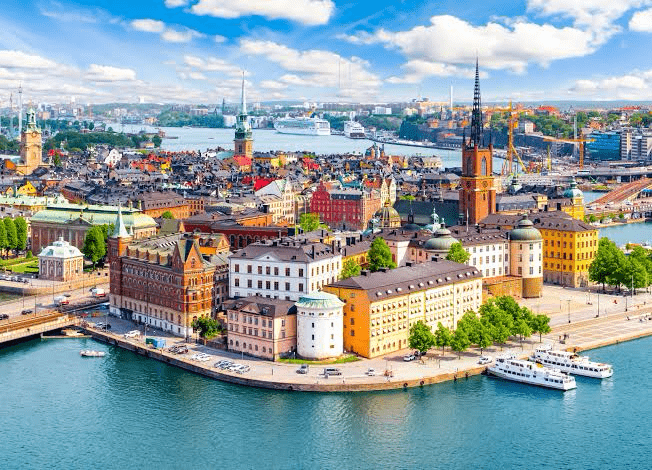
🏨 Verified Accessible Hotels
Central hotels are generally highly adapted, but always contact the property ahead to confirm roll-in shower measurements:
- Scandic Continental: Located near Central Station. Highly rated for level access, roll-in showers, and accessible common areas.
- Hotel Rival: Located in Södermalm. A boutique hotel with superb step-free access and ADA-compliant rooms.
- Hilton Stockholm Slussen: Offers step-free entrances and adapted rooms, perfectly positioned for harbour views.
- HOBO Hotel: Trendy option featuring modern, large rooms with roll-in showers and grab bars.
Browse hotels in Stockholm
🚇 Transportation
- Buses: The easiest way to travel. All blue inner-city buses have low floors, fold-out ramps, and dedicated wheelchair spaces.
- Metro (Tunnelbana): Most, but not all, of the 100 stations are elevator equipped. Always check the SL app for lift maintenance before traveling.
- Taxis: Accessible vans can be booked by calling Taxi Stockholm directly at +46 8-15-00-00 or found at taxi centres like Stockholm Central Station.
♿ Accessible Things to Do
- The Vasa Museum (Vasamuseet): Highly accessible with flat entryways, elevators to all floors, and adapted restrooms. The cobblestones directly outside can be rough, but a paved drop-off zone helps.
- ABBA The Museum: Fully step-free, making it easy to roll through the interactive, musical exhibits.
- The Royal Palace (Kungliga Slottet): Features ramped access and slow elevators to the upper floors. Companion entry is often free.
- Skansen Open-Air Museum: While there are slight inclines and some gravel, the main paths are paved or wooden and highly navigable. Manual wheelchairs are available to loan on-site.
- Archipelago Cruises: Companies like Strömma Kanalbolagetprovide accessible, step-free main decks on their modern tour boats.
Browse things to do in Stockholm
🔗 Useful Links & Resources
- Public Transport App: Download the SL App (App Store/Google Play) to track elevator status in real-time.
- Accessibility Checker: Use the user-generated map at Wheelmap to find verified accessible cafes and toilets.
- Swedish Accessibility Database: Plan specific venues and routes using Tillgänglighetsdatabasen.
Continue Planning Your Accessible Trip
- View accessible hotels in this destination
- Read the Accessible Accommodation Questions Checklist
- Read How to Choose the Right Accessible Destination
- Read Travel Insurance for Disabled Travellers
- View the Verification/Planning Services
Accessible Travel Guide: Sydney, Australia
Sydney is one of Australia’s better cities for accessible travel, especially around Circular Quay, Darling Harbour, Barangaroo, the Opera House area and major transport routes. It is not completely flat, though, and some older neighbourhoods have steep streets, kerbs, crowds and uneven paving.
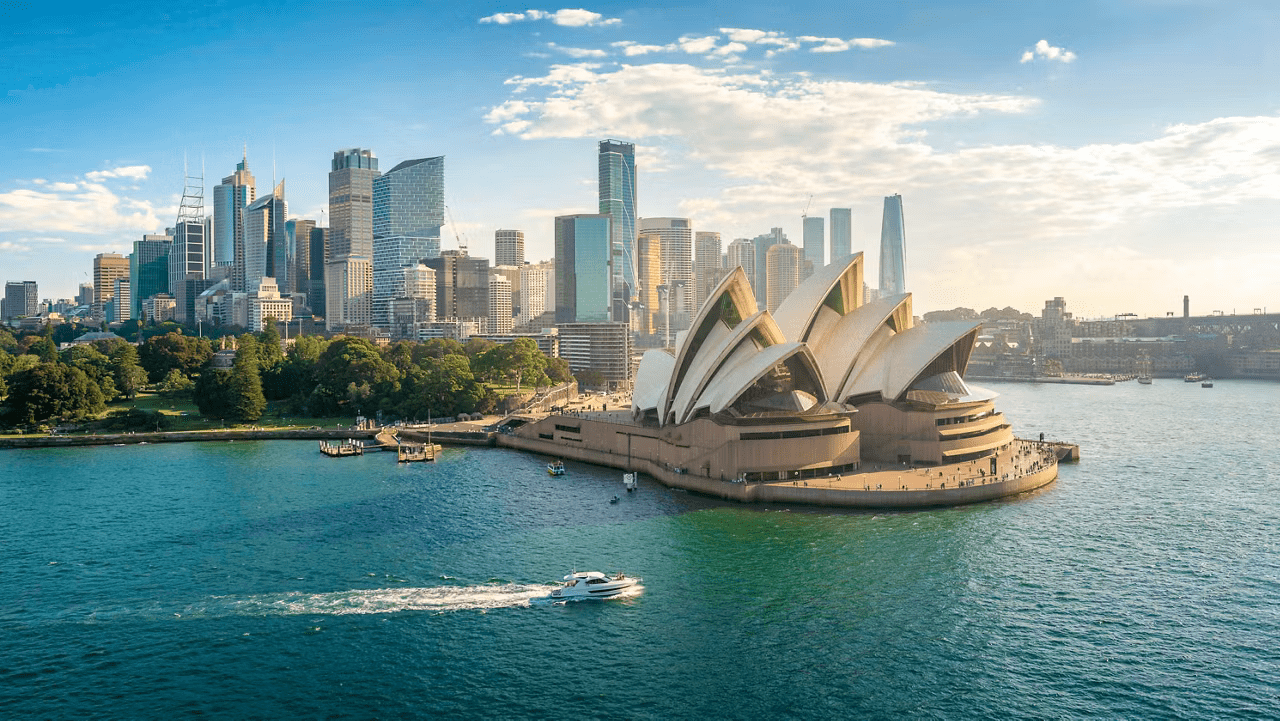
Terrain
The easiest areas are Circular Quay, Darling Harbour, Barangaroo, The Rocks foreshore, Royal Botanic Garden paths and parts of the CBD. The harbour front routes are generally the best for wheelchair users and people with limited walking tolerance.
The harder areas are The Rocks, because of cobbles, slopes and older streets, and some beach suburbs where access can depend on ramps, beach matting and distance from transport.
Accessible Transport
Sydney has accessible trains, metro, buses, ferries, light rail and wheelchair accessible taxis, but always check the exact route before travelling. Transport for NSW has an accessible travel section and trip planner.
Sydney Ferries are a fantastic way to see the harbour. Most vessels are accessible, but some older wharves can still have steps or access limitations, so check the wharf before relying on a route.
Sydney Light Rail has portable boarding ramps available on vehicles for wheelchair and scooter users.
Accessible Hotels to Check
Always contact the hotel directly before booking and ask for photos of the exact accessible bathroom.
Good options to investigate:
Mercure Sydney — accessible rooms list a roll-in shower, grab rails, higher toilet and low-level sink.
Kimpton Margot Sydney — king accessible room listed with roll-in shower.
Rydges Australia Square — listed by Wheel the World with roll-in shower, shower seat and accessible front desk.
Accessible Accommodation Sydney listings — useful for properties with step-free access, roll-in showers, grab rails and sometimes shower chairs, hoists or accessible pools.
Best hotel areas: Circular Quay, Darling Harbour, Barangaroo, CBD, The Rocks edge, Haymarket.
Browse Hotels in Sydney, Australia
https://booking.stay22.com/accessibletravelling/trpzlJyRRv
https://tripadvisor.stay22.com/accessibletravelling/_Qxxv5vxCt
https://hotelscom.stay22.com/accessibletravelling/bGT679Qw2v
Accessible Things To Do
- Sydney Opera House — offers mobility access tours, accessible routes and lift access for many areas.
- Circular Quay and Sydney Harbour — one of the best accessible areas for views, ferries, food and flat waterfront routes.
- Darling Harbour — good for SEA LIFE Sydney Aquarium, WILD LIFE Sydney Zoo and Madame Tussauds, with several wheelchair-friendly attractions nearby.
- Sydney Tower Eye — listed as fully wheelchair accessible with lifts and facilities.
- Royal Botanic Garden Sydney — accessible paths, accessible entrances and accessible toilets are noted by City of Sydney.
- Taronga Zoo — possible by ferry, but check routes carefully because the zoo is on a slope.
- Barangaroo Reserve — scenic harbour paths, but some gradients.
Browse things to do in Sydney
Get Your Guide
https://getyourguide.stay22.com/accessibletravelling/iKiLQBLrj2
Big Bus Tours
https://bigbustours.tpo.li/kzbkCrmW
Shore Excursions Group
http://www.shoreexcursionsgroup.com/?id=1916855&data=jane@accessibletravelling.com
Useful Links
Transport accessibility: Transport for NSW accessible travel
Official Sydney accessibility guide: Sydney.com accessibility
Sydney Opera House mobility access tour
Accessible Accommodation Sydney
Wheel the World Sydney hotels
City of Sydney accessible activities
Important Note
Sydney can be very rewarding for disabled travellers, but do not rely only on “accessible room” wording. Ask hotels: roll-in shower, shower chair, toilet grab rails, bed height, doorway width, lift access, step-free entrance, emergency evacuation procedure and photos of the exact bathroom.
Continue Planning Your Accessible Trip
- View accessible hotels in this destination
- Read the Accessible Accommodation Questions Checklist
- Read How to Choose the Right Accessible Destination
- Read Travel Insurance for Disabled Travellers
- View the Verification/Planning Services
Accessible Tampa, Florida Guide
For Accessibletravelling.com | Verified 2026 accessibility information
📌 Accessibility Overview
Tampa follows full ADA standards, making it one of the most accessible US cities. Wide, smooth pavements, flat downtown areas, and dedicated routes suit all mobility needs.
- Downtown Riverwalk: 2.6-mile paved, barrier-free trail connecting attractions, with benches every 100–150m
- Disabled Parking: State-issued ADA placard = free parking at meters & city garages; wide marked bays at all venues
- Facilities: Changing Places-style restrooms at airport, Riverwalk, museums, malls
- Assistance Dogs: Welcome everywhere; relief areas at airport, parks, attractions
- Sensory Support: Hearing loops, TTY, large-print, quiet hours at museums & ZooTampa
- Note: Older Ybor City has brick paving; avoid narrow lanes if using a power chair
📅 Best Time to Visit
Top pick: November–April | 18–26°C, low humidity, minimal heat fatigue
Good: May–June | Warm; go early/late
Avoid: July–September | Extreme heat/humidity, thunderstorms, hurricane risk
✈️ Airport Accessibility Summary
Tampa International (TPA)
- Fully ADA; SkyConnect level-entry, lifts everywhere
- Free assistance: Book 48hrs early via airline or +1 (813) 870-8770
- Curbside escort, wheelchair help, service animal areas
- TTY: +1 (800) 955-8771 | TSA Cares: +1 (855) 787-2227
🚆 Local Transportation
- HART Buses: Low floor, ramped, securement; Sunshine Line paratransit
- TECO Streetcar: Free, fully accessible; downtown ↔ Ybor
- Rideshare: Uber WAV / Lyft Access; book 24hrs ahead
- Water Taxi: Ramp boarding, wheelchair spaces
🏨 3 Accessible Hotels with Roll-In Showers
1. Tampa Marriott Water Street
- On Riverwalk; rooms with roll-in showers, transfer bench, handheld wand
- Accessible parking, pool ramp, vibrating alarms, hearing kits
2. Hyatt Regency Tampa Downtown
- Central; ADA rooms with roll-in wet rooms, lowered counters
- Step-free entry, accessible dining
3. Renaissance Tampa International Plaza
- Near airport; roll-in showers, visual alarms, accessible pool
Browse Accessible Hotels
Booking.com
Tripadvisor.com
Hotels.com
🎡 Accessible Things to Do
• Riverwalk, ZooTampa, Florida Aquarium, Tampa Museum of Art, Ybor City main streets, Busch Gardens (rent ECVs)
Browse Accessible Things to Do
https://getyourguide.stay22.com/accessibletravelling/iKiLQBLrj2
⚠️ Accessibility Challenges
- Summer heat/humidity = fatigue risk
- Brick paving in Ybor City
- Limited WAV vehicles; book early
- Hurricane season: June–November
🩺 Condition-Specific Travel Tips
🧠 Multiple Sclerosis (MS)
- Heat sensitivity: Visit Nov–Apr; pack cooling vest/neck wrap; stay indoors 11am–4pm
- Fatigue: Schedule 2–3 activities/day; use streetcar/taxi instead of walking; request early check-in/late checkout
- Mobility: All hotels have roll-in showers; use Riverwalk benches; bring ramp/portable stool if needed
- Medication: Carry in cool bag, prescription letter + doctor’s note; keep in carry-on
🧠 Bipolar & Schizophrenia
- Stability: Stick to routine; keep meds in original bottles + travel letter
- Sensory overload: Choose quiet hours at museums/aquarium; avoid crowded evenings in Ybor
- Heat/humidity: Can trigger mood shifts; stay in AC; limit outdoor time in peak heat
- Safety: Share itinerary with someone; save emergency contacts; request quiet room
🛡️ Immunocompromised
- Timing: Avoid summer mosquito season; Nov–Apr safer
- Precautions: Hand sanitizer, mask indoors if crowded; avoid standing water/mosquito areas
- Food/water: Bottled water only; eat fully cooked food; avoid buffets
- Vaccines: Confirm safe inactivated vaccines only; avoid live vaccines; carry CDC risk sheet
- Hygiene: Choose hotels with daily deep cleaning; request sanitised room
📞 Emergency & Useful Numbers
- Emergency: 911 | TTY: +1 (800) 955-8771
- HART Paratransit: +1 (813) 254-4278
- City ADA Office: +1 (813) 274-7761
- TPA Access: +1 (813) 870-8770
- National ADA Hotline: +1 (800) 514-0301
📚 Useful Accessibility Resources
• Visit Tampa Bay Access Guide
• AccessAble / WheelchairTravel.org
• CDC Travelers’ Health
• ADA National Network
✅ Verified June 2026. Ready to publish.
Continue Planning Your Accessible Trip
- View accessible hotels in this destination
- Read the Accessible Accommodation Questions Checklist
- Read How to Choose the Right Accessible Destination
- Read Travel Insurance for Disabled Travellers
- View the Verification/Planning Services
♿ In‑Depth Accessible Travel Guide – Tenerife, Canary Islands, Spain
Note: Links provided below are marked full content not currently accessible / unsupported page type where applicable.
📍 Destination Overview
Tenerife – “Island of Eternal Spring” – has excellent accessibility standards in main tourist hubs and coastal towns, while mountain/rural zones are more challenging. Resorts in South: Costa Adeje, Playa de las Américas, Los Cristianos are best‑adapted, flat/level, wide promenades, smooth pavements. North centres Santa Cruz, La Laguna, Puerto de la Cruz also well‑served; inland/volcanic/coastal‑cliff terrain is steep/uneven.
🏨 Accessible Hotels – with roll‑in showers
All confirmed roll‑in/wet‑room showers, ≥150 cm turning circle, grab rails, ≥80 cm doors, lifts, emergency points, accessible pools/public areas.
✅ South – Best Resort Base
- Mar y Sol Hotel, Los Cristianos – specialised accessible hotel, pool hoists, therapy centre, close to accessible beach
- Iberostar Selection Anthelia, Costa Adeje – 4‑star+, direct beach access, adapted suites, pool access, good facilities
- H10 Costa Adeje Palace – reliable chain, wide layout, roll‑in options, promenade‑side
- Hard Rock Hotel Tenerife, Adeje – modern, fully compliant, accessible parking & leisure
- Ona Palm Beach, Playa de las Américas – popular, flat site, good value accessibility
✅ North / City & Cultural Areas
- Silken Saaj Maar, Puerto de la Cruz – adapted layout, near Lago Martiánez
- La Laguna Gran Hotel – UNESCO‑town location, fully accessible
- Hotel Tigaiga, Puerto de la Cruz – established, reliable, adapted rooms
💡 Booking tip: Explicitly ask “ducha a ras de suelo / roll‑in shower”; confirm pool hoists/beach proximity if needed.
Browse Hotels in Tenerife
booking.com
tripadvisor.com
hotels.com
📅 Best Time to Visit
- November – April: ideal – warm 20–24 °C, stable sun, milder slopes/beach movement, less intense heat
- May – June & September – October: great balance, fewer peak crowds, good for Teide + coastal mix
- July – August: very busy, crowded promenades/beaches; inland/hills feel harder
✈️ Airport Accessibility Summary
- Tenerife South (TFS) – main international hub, fully adapted, free PRM assistance – book ≥ 48 hrs via airline/airport
- Tenerife North (TFN) – smaller, domestic/island flights, equally accessible facilities
- Both have lifts, accessible toilets, help desks; TITSA buses & taxis directly serve terminals
🚌 Local Transport Accessibility
- TITSA Buses (Guaguas) – main network largely low‑floor/ramp‑equipped, designated spaces, Ten+ card system
- Tranvía Metropolitano – Santa Cruz ↔ La Laguna 100 % level‑entry/barrier‑free
- Taxis: standard fit folders only – book wheelchair‑adapted ≥ 24 hrs ahead via local fleet operators
- Routes 342 to Teide, 111 airport‑south resorts – check specific vehicle accessibility before travel
🧭 General Accessibility
- Coastal resorts & main towns: wide smooth promenades, good kerb‑cuts, RADAR‑style toilets
- Blue Badge fully recognised in Spain – free/reduced parking in marked zones
- Beach access: key sites (Playa las Vistas, Playa del Duque, Playa Teresitas) have wooden walkways, beach wheelchairs, ramp access
- Assistance dogs welcome everywhere
📌 Accessible Attractions Suggestions
- Teide National Park (UNESCO): accessible viewpoints, cable car with adapted cabins, paved main roads – avoid rough trails
- Playa las Vistas, Los Cristianos: top accessible beach – walkways, mobility aids, staff support
- Playa de las Teresitas, Santa Cruz: wide golden sand, ramped entry, calm waters
- Siam Park, Costa Adeje: priority access, wide paths, adapted facilities
- Loro Parque, Puerto de la Cruz: good access design, flat routes
- Auditorio de Tenerife & Palmetum, Santa Cruz: modern fully adapted public spaces
- Parque del Drago, Icod: main grounds usable, paved routes
Activities & tours link as requested – full content not currently accessible:
getyourguide.com
⚠️ Accessibility Challenges
- Steep inland & mountain terrain – Teide roads ok but trails rough/uneven
- Natural black‑sand beaches & rocky coasts – soft/unpaved hard for wheels
- Rural/Anaga area narrow roads + uneven surfaces
- Summer & Carnival periods = crowding restricts movement
♿ Mobility Scooter / Wheelchair Suitability
- Excellent: South resort promenades, Los Cristianos / Costa Adeje / Playa de las Américas main areas, Santa Cruz centre, La Laguna flat core
- Caution/limited: Puerto de la Cruz slopes, hills above coast, Teide side‑tracks, natural beaches
- Local hire widely available in resorts
🆘 Emergency Numbers
- 112 – universal emergency service (Spain/EU)
📚 Useful Accessibility Resources
- Official Canary Islands / Tenerife Tourism Accessibility Info – visit tenerife.es / webtenerife.com
- TITSA Public Transport accessibility & journey planner
- Metropolitano Tranvía accessibility
- Adapted transfer/equipment services – local mobility providers & Limitless Travel / Roll On Adventures
- Spanish Blue Badge & parking regulations – regional Canarian mobility portal
♿ In‑Depth Accessible Travel Guide – Tokyo, Japan
Note: Links provided – full content not currently accessible / unsupported page type where marked; booking link loads but requires destination input.

📍 Destination Overview
Tokyo is largely flat, highly developed, and one of Asia’s most accessible major cities, upgraded extensively for the 2020 Paralympics. Wide pavements, tactile paving everywhere, and excellent public transport make it very navigable; older districts and shrine/temple grounds have surface variations. Best base areas: Shinjuku, Shibuya, Ginza, Ueno, Asakusa, Odaiba.
🏨 Accessible Hotels – with roll‑in showers
All meet Japan Universal Design / Barrier‑Free standards: roll‑in/wet‑room showers, ≥150 cm turning circle, grab rails, ≥80 cm wide doors, lifts, emergency call buttons.
✅ Central & Convenient
- Keio Plaza Hotel Tokyo, Shinjuku – fully adapted rooms, wide circulation, near station
- The Prince Park Tower Tokyo – spacious layouts, step‑free, good views
- Hotel Gracery Shinjuku – modern, reliable accessibility, central location
- Mitsui Garden Hotel Ginza Premier – flat district, easy shopping/access
- Tokyo Skytree Hotel / Solamachi Area – fully integrated, barrier‑free complex
✅ Well‑Connected / Airport‑Side
- Haneda Excel Hotel Tokyu – airport‑adjacent, seamless transfers
- Shinagawa Prince Hotel – major rail hub, fully accessible facilities
💡 Booking tip: Ask explicitly “roll‑in shower / barrier‑free room”; confirm door widths, turning space, and ramp assistance at booking.
Browse Accessible Hotels in Tokyo
booking.com – site loads, requires destination search
tripadvisor.com
https://tripadvisor.stay22.com/accessibletravelling/_Qxxv5vxCt – unsupported / inaccessible
hotels.com
https://hotelscom.stay22.com/accessibletravelling/bGT679Qw2v – unsupported / inaccessible
📅 Best Time to Visit
- March–April & October–November: ideal – mild 12–22 °C, cherry‑blossom/autumn‑leaf seasons, comfortable rolling, lighter crowds than peak
- May & September: stable weather, fewer crowds
- July–August: hot/humid + heavy peak crowds = harder movement
- December–February: cool/crisp; mostly dry, rare ice/snow – maintained routes safe
✈️ Airport Accessibility Summary
- Haneda (HND) – closer, fully adapted terminals, free PRM assistance – book ≥ 48 hrs via airline
- Narita (NRT) – main international hub, equally well‑equipped, lifts, multipurpose toilets, rental services
- Both connect to city via low‑floor/accessible trains & limousine buses; staff assistance available
🚌 Local Transport Accessibility
- Subway / JR / Monorail / Trams – excellent: ~ 98 % Tokyo Metro & 100 % Toei stations elevator‑equipped; Yamanote loop fully supported
- Station routines: staff deploy portable ramps on request – always ask at gate/information desk; designated spaces marked on platforms & trains
- Buses: Toei fleet all low‑floor/ramp‑equipped
- Taxis: standard fit folders only; Japan Universal Design taxis (blue‑coloured) have built‑in ramps – book ≥ 24 hrs ahead
- Mobility scooter rules: max 70 cm × 120 cm for train access; legal as pedestrian device ≤ 6 km/h
🧭 General Accessibility
- Terrain: mostly flat core; gentle embankments & river edges only
- Paving: wide, smooth in modern areas; tactile paving almost everywhere
- Parking: international Blue Badge recognised in Japan system – reduced/waived fees in marked bays
- Toilets: multipurpose barrier‑free toilets standard in stations, malls, major sites
- Assistance dogs welcome across public places
📌 Accessible Attractions Suggestions
- Tokyo Skytree & Solamachi: fully barrier‑free, fast lifts, wide decks
- Sensō‑ji Temple, Asakusa: main entrance ramp, wide paths – avoid side gravel sections
- Meiji Jingu Shrine: ramped main approach, accessible culture centre & restrooms
- Imperial Palace East Gardens: wide paved routes, gentle grades
- Odaiba District: Yurikamome line fully accessible, waterfront promenades
- Ueno Park & Museums: most gallery buildings adapted, lifts, wide doors
- Tsukiji Outer Market / Toyosu Market: wide paths, ramped access
- Shinjuku Gyoen & Yoyogi Park: well‑maintained smooth trails
Browse Accessible Attractions in Tokyo
getyourguide.com
⚠️ Accessibility Challenges to Be Aware Of
- Extreme peak‑hour crowds (7:00‑9:30 / 17:00‑19:30) = harder space & boarding
- Only selected station exits have elevators – often longer routes
- Temple/shrine precincts & traditional gardens may have gravel or uneven ground
- Narrower sidewalks in older residential districts
- Scooter size limits strict on trains
♿ Mobility Scooter / Wheelchair Suitability
- Excellent: all main tourist districts, major avenues, station precincts, Odaiba, river/park promenades
- Caution/limited: gravel approaches, narrow alleyways, some traditional market lanes
- Local hire widely available – compact models work best for public transport
🆘 Emergency Numbers
- 110 – Police
- 119 – Fire & Ambulance
- 112 – also works via mobile networks in Japan
📚 Useful Accessibility Resources
- Official Tokyo Barrier‑Free Portal
- JNTO Accessible Travel Info
- Tokyo Metro & Toei Transport Accessibility Guides & Route Planners
- Accessible Japan – English‑language reviews & tips
- WheeLog! crowdsourced accessibility map app
Accessible Travel Guide to Toulon, France
Toulon is a Mediterranean port city in the south of France, between Marseille and the French Riviera. It has a large harbour, waterfront promenades, beaches, boat links, museums, cafés and views from Mont Faron. It can be a good destination for disabled travellers, but it is important to plan carefully because some areas are flat and easy, while others are steep or uneven.
Terrain
The easiest areas are around Toulon harbour, the marina, the port, the city centre and the Mourillon seafront. These are the best places to stay or explore if you want flatter routes, cafés, transport links and easier access to the waterfront.
The more difficult areas are the older side streets and routes heading uphill away from the harbour. Mont Faron is scenic but steep, so it needs planning rather than treating it as an easy walk or roll.
Transport
Toulon’s public transport is run by Réseau Mistral. It includes buses and waterbuses across the Toulon Provence Méditerranée area. The tourism site says maritime shuttles connect Toulon with La Seyne-sur-Mer and Saint-Mandrier for the price of a bus ticket.
Réseau Mistral says all buses have electric ramps and boat-buses have manual access ramps for wheelchair users, with reserved spaces, audio announcements and adapted passenger information.
The waterbus can be a lovely accessible-friendly option but always check boarding on the exact route before travelling.
Accessible hotel options to check
1. Holiday Inn Toulon – City Centre
This is one of the strongest accessible hotel candidates I found. IHG’s own room page refers to an ADA/wheelchair accessible roll-in shower.
Good for: city centre access, accessible room facilities, roll-in shower possibility.
2. B&B HOTEL Toulon Centre Gare
Good option near the train station. Third-party listings show accessibility features such as roll-in shower, shower chair, toilet grab rails, lowered sink, lift access and accessible parking. Because this is not from the hotel’s own accessibility page, I would verify directly before booking.
3. OKKO Hotels Toulon Centre
OKKO says its hotels include rooms designed for guests with reduced mobility, available on request. Acceslibre lists OKKO Hotels Toulon Centre as having 5 wheelchair-accessible rooms and flat walk-in/Italian-style showers.
Good for: central location, modern hotel, accessible-room availability to request.
4. ibis Styles Toulon Centre Port
This has a very useful port location and is worth checking, especially for cruise or ferry travellers. I would not rely on it for a roll-in shower unless the hotel confirms it directly in writing.
What to ask before booking any hotel
Ask:
“Can you confirm the accessible room has a true step-free roll-in shower, shower seat, grab rails beside the toilet, enough wheelchair turning space, step-free access from entrance to room, lift access, and accessible parking or drop-off? Please can you send photos of the exact bathroom I will be allocated?”
Browse Hotels in Toulon
https://booking.stay22.com/accessibletravelling/trpzlJyRRv
https://tripadvisor.stay22.com/accessibletravelling/_Qxxv5vxCt
https://hotelscom.stay22.com/accessibletravelling/bGT679Qw2v
Things to do
Toulon Harbour and Marina
This is one of the easiest and most enjoyable areas. It is good for a gentle roll or walk, cafés, restaurants, boat views and a relaxed first day.
Mourillon Beaches
The Mourillon beach area is one of the best places to research for accessible beach time. Check seasonal facilities such as beach mats, accessible toilets, beach wheelchairs, parking and lifeguard assistance.
Waterbus trip
The boat-bus across the harbour can be a scenic way to explore without too much walking. Check access on the day and avoid very busy times if you need more space.
Mont Faron
Mont Faron gives beautiful views over Toulon, but it is steep and needs planning. Check cable car and attraction access before going, especially wheelchair size limits, step-free access and toilet facilities.
Provence Landing Memorial
Located on Mont Faron, this is a meaningful historical site, but because of the hill location, check accessibility before visiting.
City centre cafés and markets
The flatter central streets near the port are best for cafés, shopping and people-watching. Some older streets may have uneven paving or narrow pavements.
Best area to stay
For most disabled travellers, I would choose either:
- Near the harbour/port — best for atmosphere, cafés, waterbus, restaurants and flatter sightseeing.
- Near Toulon Centre Gare — best if arriving by train and wanting easier onward transport.
Browse Accessible Things to do in Toulon
Get Your Guide
https://getyourguide.stay22.com/accessibletravelling/iKiLQBLrj2
Big Bus Tours
https://bigbustours.tpo.li/kzbkCrmW
Useful Links
Toulon Provence Méditerranée tourism:
For official tourism, accessibility and visitor information.
Réseau Mistral:
For buses, boat-buses, routes, timetables and accessibility information.
Acceslibre:
French accessibility database for checking hotels, restaurants and attractions.
Final accessible travel advice
Toulon can work well if you base yourself near the harbour or station, use buses and waterbuses carefully, and verify hotels directly. The key thing is not to assume “accessible” means roll-in shower or full wheelchair access. Always ask for photos, measurements and written confirmation before booking.
Continue Planning Your Accessible Trip
- View accessible hotels in this destination
- Read the Accessible Accommodation Questions Checklist
- Read How to Choose the Right Accessible Destination
- Read Travel Insurance for Disabled Travellers
- View the Verification/Planning Services
Accessible Valencia, Spain
Plan your accessible trip to Valencia using the Visit València Accessibility Guide for verified routes and the Accessible Spain Travel directory to book specialised accommodations and mobility equipment rentals.
Terrain & Navigation
- Topography: Valencia is exceptionally flat, making it highly navigable for wheelchair users and those with limited mobility.
- The Historic Centre (Ciutat Vella): Features wide, smooth, pedestrianised marble and stone walkways in high-traffic tourist zones (Plaza de la Reina and Plaza del Ayuntamiento). Some secondary, older streets in the Barrio del Carmen may have uneven cobblestones, but major intersections have flush drop-curbs.
- The Turia Gardens (Jardín del Turia): A sunken former riverbed park that spans the city. It features flat, paved pathways, ramps, and elevator access from the street level, making it the premier route for walking or rolling across the city.
Verified Accessible Hotels
- Hotel Ilunion Aqua 4: Located near the City of Arts and Sciences. Part of the ILUNION hotel chain, renowned for strict accessibility standards, featuring fully adapted roll-in showers, grab bars, and accessible common areas.
- Hotel Balneario Las Arenas: A luxury beachfront option that offers specific adapted rooms with zero-entry showers, wide doorways, and step-free access to pool and spa facilities.
- Only YOU Hotel Valencia: Situated in the heart of the historic centre. It blends historic charm with modern accessibility, offering adapted premium rooms, elevators, and step-free entrances.
- Sohotel Ruzafa: Located in the trendy, flat neighborhood of Ruzafa. Offers adapted loft studios with roll-in showers and step-free access to local cafes and shops.
Browse Accessible Hotels in Valencia
booking.com
tripadvisor.com
hotels.com
Transportation
- Metro and Tram (Metrovalencia): Highly accessible. Almost all stations feature elevators, tactile paving, and wide automated gates. Trains offer level boarding with no gaps, and designated wheelchair spaces.
- City Buses (EMT): 100% of the municipal bus fleet is low-floor and equipped with manual ramps and a designated, secured wheelchair space.
- Adapted Taxis: Specialised services like Radio Taxi Valencia-have adapted minivans. It is highly recommended to book these in advance through your hotel or via their app.
- Equipment Rentals: If you require mobility aids, Accessible Spain Travel offers rentals for mobility scooters (e.g., Go-Go Elite Traveler), electric wheelchairs, and mobile hoists, delivered directly to your hotel.
Accessible Things to Do
- The City of Arts and Sciences: The complex is fully flat and step-free. The Oceanogràfic (Europe’s largest aquarium) features wide ramps, elevators, and accessible viewing areas. The Science Museum also has adapted restrooms and elevators.
- The Central Market (Mercado Central): One of Europe’s oldest running food markets. It features wide, smooth aisles, level entrances, and an accessible elevator connecting the main floor to lower levels.
- La Lonja de la Seda (Silk Exchange): A UNESCO World Heritage site located right across from the Central Market. The main Gothic Hall is completely step-free and features flat stone floors.
- Albufera Natural Park: Located just south of the city centre. While the natural hiking trails are unpaved, there are adapted boat tours available that accommodate wheelchairs for sailing on the lagoon.
- Playa de la Malvarrosa: Valencia’s main city beach features an excellent, continuous wooden boardwalk along the sand. During the summer season, the beach offers “Accessible Point” services, which provide amphibious wheelchairs, shaded areas, and accessible boardwalks directly to the water.
Browse things to do in Valencia
getyourguide.com
Useful Links
- Official City Tourism Board: Visit València
- Specialised Accessible Tour Operators: Volem València
- Local Equipment and Tour Providers: Accessible Spain Travel
Accessible Valletta, Malta
Valletta is highly historic but notoriously steep. To explore effectively with accessibility needs, stay in the flatter central grid or on the waterfront. Browse the Grand Hotel Excelsior or the central The Embassy Valletta Hotel. Use the Malta Public Transport system and the Valletta Ferry Services to navigate.
The Valletta Terrain
Valletta is built on a peninsula with a grid layout, but it is defined by its dramatic topography.
- The Slopes: The city is built on a ridge. Streets running East to West (towards the Grand Harbour or Marsamxett Harbour) have steep inclines and declines.
- The Steps: Many cross-streets feature stairs rather than ramps.
- The Center: The main spine of the city (Republic Street and St. George’s Square) is relatively flat and pedestrianized.
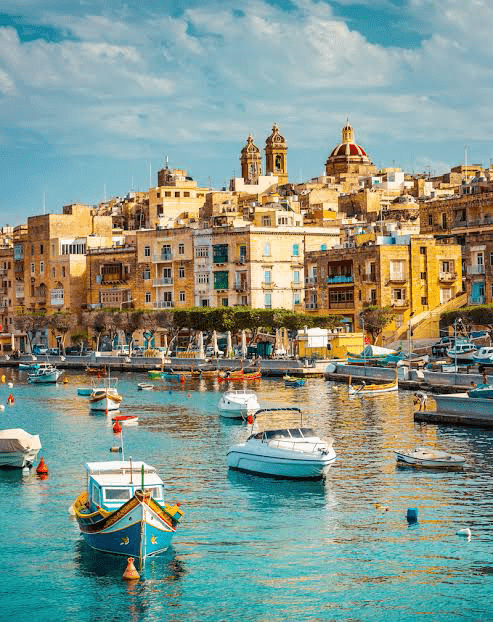
Verified Accessible Hotels
Central Valletta presents a challenge for accessibility due to historic architecture, but these properties offer specifically adapted rooms, elevators, and step-free access:
- Grand Hotel Excelsior: Located just outside the city walls. Offers fully accessible rooms, roll-in showers, and flat access to the city centre via the nearby lift.
- The Embassy Valletta Hotel: Located on Strait Street. Features adapted rooms, wide doorways, and full elevator access.
- Palais Le Brun: A boutique hotel in central Valletta with accessible room options and step-free entry.
- The Gomerino Hotel: Offers accessible rooms with wide entrances and roll-in showers.
https://booking.stay22.com/accessibletravelling/trpzlJyRRv
https://tripadvisor.stay22.com/accessibletravelling/_Qxxv5vxCt
https://hotelscom.stay22.com/accessibletravelling/bGT679Qw2v
Transportation & Navigation
- Accessible Taxis: eCabs Malta is the most reliable service. They offer wheelchair-accessible vehicles (WAVs) which must be booked in advance.
- Public Buses: The central bus terminus is just outside the City Gate. Most standard buses are low-floor and ramp-equipped.
- The Upper Barrakka Lift: Connects the Valletta Waterfront (cruises and ferries) to the Upper Barrakka Gardens (city center). It is fully wheelchair accessible and free going down; there is a very nominal fee going up.
- Ferries: The ferries to Sliema and the Three Cities are ramp-accessible.
Accessible Things to Do
- Upper Barrakka Gardens & Saluting Battery: Flat, paved pathways offer panoramic views of the Grand Harbour. The Saluting Battery viewing area is also step-free.
- St. John’s Co-Cathedral: Famous for its Caravaggio paintings and gold interiors. There is a wheelchair ramp at the entrance on Republic Street and an internal lift.
- The Malta Experience: An audiovisual show that details Malta’s history. The venue is completely step-free and wheelchair accessible.
- Valletta Waterfront (Pinto Wharf): A flat, pedestrianised promenade with numerous accessible restaurants and shops.
- Casa Rocca Piccola: A privately owned 16th-century palace. While some upper areas have stairs, the ground floor—including the WWII air raid shelters—is mostly accessible.
Browse things to do in Valletta
https://getyourguide.stay22.com/accessibletravelling/iKiLQBLrj2
https://bigbustours.tpo.li/siQVCZEQ
Useful Links & Resources
- Commission for the Rights of Persons with Disability (CRPDj official government body providing information on accessible services, transport, and parking permits across Malta.
- VisitMalta Accessibility: The official tourism board’s resource for planning an accessible holiday in Malta.
- Transport Malta: Information on Blue Badge parking schemes and public transport route maps
Continue Planning Your Accessible Trip
- View accessible hotels in this destination
- Read the Accessible Accommodation Questions Checklist
- Read How to Choose the Right Accessible Destination
- Read Travel Insurance for Disabled Travellers
- View the Verification/Planning Services
Accessible Venice Destination Guide
Verified September 2026
Venice is a historic city built across islands in the Venetian Lagoon. It is famous for its canals, palaces, churches, bridges and water transport.
Venice is more accessible than its hundreds of bridges might suggest, but it requires a different approach from most cities. Wheelchair users cannot simply follow the shortest walking route because a single stepped bridge can prevent access.
The most effective approach is to treat Venice as a collection of separate accessible areas—or islands—connected by ACTV waterbuses.
The City of Venice provides an accessible map and 14 barrier-free itineraries, covering areas including St Mark’s, Rialto, the Zattere, Cannaregio, Murano and Burano.
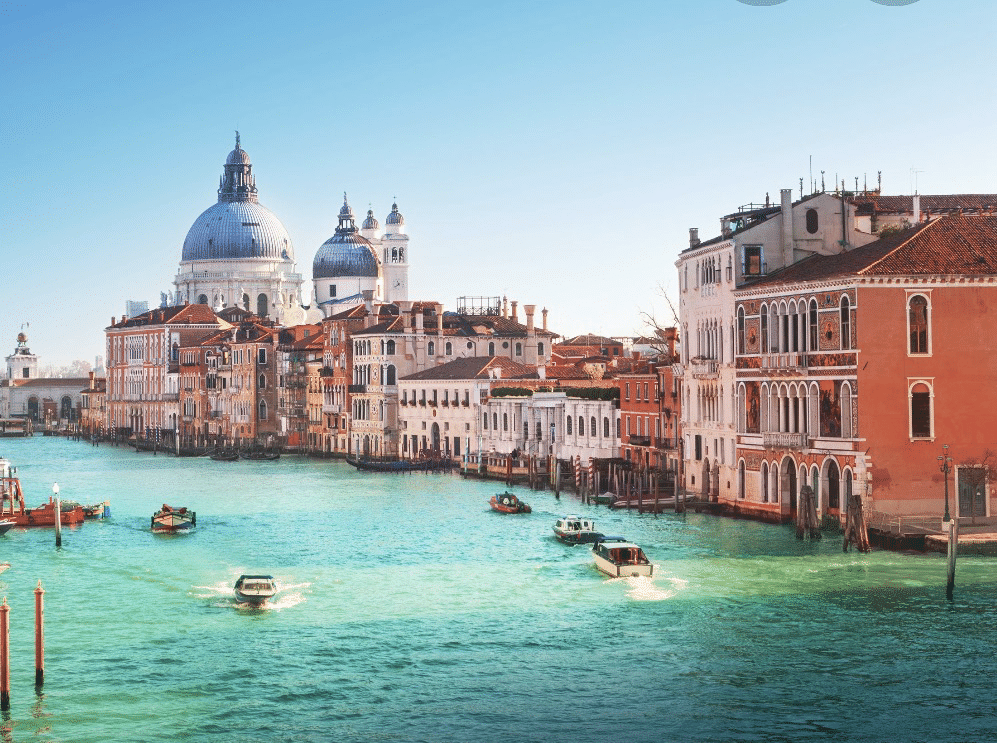
Is Venice suitable for disabled travellers?
Venice can be visited by many wheelchair users and people with restricted mobility, but detailed route planning is essential.
The historic centre has approximately 14 kilometres of accessible pedestrian routes. Public water transport allows visitors to reach many areas that would otherwise be blocked by stepped bridges.
Visitors may encounter:
- Stepped bridges
- Uneven paving
- Narrow streets
- Crowded squares
- High thresholds
- Limited accessible toilets
- Difficult boat boarding during extreme tides
- Long waits at busy waterbus stops
- Hotels without lifts
- Entrances opening directly onto canals
- Changes to routes during high water
Never assume that two nearby locations are connected by a step-free route. They may be separated by one or more inaccessible bridges.
Understanding accessible Venice
Much of Venice is divided into separate areas by canals. An area may be accessible once reached by waterbus, even if it is not connected step-free to the neighbouring district.
For example, the most suitable journey between two nearby places may involve:
- Returning to an accessible waterbus stop
- Taking a vaporetto to another stop
- Following an official barrier-free route
Before travelling:
- Download the official Accessible Venice map
- Select the correct ACTV stop
- Count bridges on the complete route
- Check whether each bridge has steps or a permanent ramp
- Avoid relying solely on standard walking directions
- Ask the hotel for the exact step-free arrival route
Do not rely on temporary bridge ramps. Their availability can change.
Getting to Venice
Venice Marco Polo Airport
Venice Marco Polo Airport is located on the mainland, approximately 13 kilometres from Venice’s historic centre.
Airport assistance
The airport provides free assistance for disabled passengers and people with reduced mobility.
Request the service through the airline when booking, or at least 48 hours before departure. Late requests may lead to delays or reduced assistance.
Airport facilities include:
- PRM call points
- Wheelchairs
- Ambulifts and accessible transfer vehicles
- A dedicated assistance lounge
- Accessible airport routes
- Call points at the airport marina
- Temporary wheelchairs if mobility equipment is delayed or damaged
The airport recommends arriving at a designated call point 120 minutes before a national or Schengen flight and 180 minutes before a non-Schengen flight. Different latest reporting times apply at the check-in desk, so confirm the requirements for your flight.
Tell the airline:
- Whether you can walk or use aircraft steps
- Whether you can transfer independently
- Whether you require an aisle chair
- Whether you need assistance to the aircraft seat
- Wheelchair or scooter dimensions and weight
- Battery type and handling instructions
- Whether you are carrying medical equipment
- Whether you require baggage assistance
Ask where and when your mobility equipment will be returned after landing.
Treviso Airport
Some low-cost flights use Treviso Airport, which is considerably farther from Venice.
Request airport assistance through the airline and investigate the complete accessible transfer to Venice before booking. A cheaper flight may involve a longer and more complicated onward journey.
Travelling from Marco Polo Airport
Accessible road transfer
A road vehicle can take passengers from the airport to Piazzale Roma, Venice’s principal road-transport terminal.
From Piazzale Roma, most passengers must continue by waterbus or an adapted water taxi.
Confirm:
- Ramp or passenger-lift availability
- Wheelchair dimensions and weight
- Whether you can remain in your wheelchair
- Wheelchair restraint arrangements
- Space for luggage
- The precise drop-off point
- Assistance with boarding onward transport
Public bus
ACTV buses connect the airport with Piazzale Roma and Mestre. Wheelchair users should confirm that the intended service uses a suitable vehicle and that the boarding stop is accessible.
ACTV identifies stops with the BUS FACILE sign where wheelchair users can board suitable buses safely.
Airport boat
Alilaguna operates boat services between Marco Polo Airport and selected parts of Venice.
Do not assume that every vessel, landing stage or boarding condition will suit a wheelchair user.
Confirm:
- Ramp availability
- Boarding gradient
- Wheelchair-space dimensions
- Whether the passenger can remain in their wheelchair
- Assistance provided
- Accessibility of the destination stop
- Luggage arrangements
- Effect of tide conditions
Water taxi
Standard water taxis commonly require passengers to step down into the vessel. They should not be assumed wheelchair accessible.
If a water taxi is required, locate a specialist adapted operator and obtain written confirmation of:
- Step-free boarding
- Wheelchair lift or ramp
- Wheelchair restraints
- Equipment dimensions
- Accessible landing point
- Assistance with luggage
The nearest landing stage to the hotel may still be separated from its entrance by a stepped bridge.
Arriving by train
Venezia Santa Lucia Station
Santa Lucia railway station is located in the historic centre beside the Grand Canal.
RFI provides its Sala Blu assistance service for disabled passengers and people with reduced mobility. Assistance can include a station wheelchair and help boarding or leaving the train.
Venezia Santa Lucia and Venezia Mestre are included within the Sala Blu assistance network. Requests can be made through the SalaBlu Online service or Sala Blu+ app.
Confirm:
- Assistance at both stations
- Platform access
- Boarding-ramp or lift arrangements
- Mobility-equipment dimensions
- The meeting point and arrival time
- Accessible onward transport
The area immediately outside Santa Lucia is busy. A vaporetto stop is nearby, but the bridge across to Piazzale Roma has steps and should not form part of an unverified wheelchair route.
Getting around Venice
ACTV waterbuses
ACTV waterbuses—known as vaporetti—are the main accessible transport around historic Venice.
ACTV states that its waterborne services provide designated spaces for wheelchair users. Official city information says landing stages are accessible, although ramps can become excessively steep during particularly high tides.
Before boarding:
- Tell staff that you require assistance
- Follow crew instructions
- Allow passengers to leave first
- Position the wheelchair safely
- Apply wheelchair brakes
- Check whether the stop is operating normally
- Avoid peak periods when possible
Crowding may limit available wheelchair space.
Official city information states that lines 1 and 2 on the Grand Canal can accommodate up to four wheelchairs at one time. Capacity on other vessels may differ.
Wheelchair-user ticket
At the time this guide was verified, ACTV offered a reduced 75-minute ticket for passengers using wheelchairs and holders of an EU Disability Card. A companion travelling with a wheelchair user could travel free.
The reduced ticket does not cover every route or Alilaguna airport boats. Eligibility, evidence requirements, price and route exclusions should be rechecked before travel.
Mobility scooters
Large mobility scooters may be difficult to manoeuvre on crowded landing stages or smaller vessels.
Confirm:
- Maximum permitted dimensions
- Weight limits
- Turning space
- Whether the scooter is accepted on the intended route
- Whether the user can remain seated
- Battery restrictions
Do not assume that rules applying to wheelchairs automatically apply to every mobility scooter.
ACTV buses, trams and People Mover
On the mainland, wheelchair passengers must use suitable ACTV vehicles and accessible stops.
ACTV states that trams, the People Mover and waterborne services provide designated wheelchair spaces. Lift access is available at People Mover stations.
Accessible areas and routes
St Mark’s area
The St Mark’s area can be reached by ACTV waterbus. The most suitable stop and route depend on tide conditions and the attraction being visited.
The square is relatively open but can be:
- Extremely crowded
- Uneven underfoot
- Flooded during high water
- Difficult to cross using raised temporary walkways
- Exposed to sun and weather
Arrive early and check tide forecasts.
Rialto
The Rialto Bridge has steps and is not independently wheelchair accessible.
However, parts of the surrounding Rialto area can be reached by waterbus. The City of Venice provides a designated barrier-free Rialto itinerary.
Do not attempt to cross the bridge unless a suitable current arrangement has been verified.
Zattere
The Zattere waterfront in Dorsoduro offers a longer waterside route and is included in Venice’s official barrier-free itineraries.
Check the correct waterbus stop and avoid accidentally selecting a route involving an inaccessible bridge.
Cannaregio
Parts of western Cannaregio can be explored using the official accessible itinerary. Other parts contain numerous bridges.
Plan the route before leaving the waterbus stop.
Giudecca
Giudecca can be reached by waterbus and has long sections of waterfront. Individual canals and bridges still divide the island.
Select accommodation close to the correct ACTV stop.
Murano
Murano is included within the official accessible itineraries. However, the island contains canals and bridges, so not every area or glass workshop will be step-free.
Ask workshops about:
- Entrance thresholds
- Internal steps
- Accessible toilets
- Seating
- Heat and noise during demonstrations
Burano
Burano can be reached by waterbus and is included in the city’s barrier-free route information.
Some streets may be manageable, but bridges and crowds can restrict movement. Confirm the appropriate landing stage and route.
Lido
The Lido has roads, buses and flatter areas, making it different from the historic centre.
It may be worth considering for travellers who prefer:
- Road transport
- Larger accommodation
- Fewer canal crossings
- Access to beaches
- A quieter base
Daily waterbus journeys will be required to visit central Venice.
Major attractions
St Mark’s Basilica
Disabled visitors and their companions are admitted free upon presenting suitable disability documentation.
During visitor opening periods, staff direct disabled visitors to the most suitable entrance. For services or prayer, wheelchair users and visitors with mobility impairments can use the ramped Porta dei Fiori, on the left side of the Basilica.
An elevator and stairlift are available for access to the upper-floor museum. Confirm current operation before visiting.
Doge’s Palace
Doge’s Palace is a historic building with different floors, narrow routes and heritage restrictions.
Before booking, confirm:
- Step-free entrance
- Lift dimensions
- Accessible toilets
- Which rooms are wheelchair accessible
- Whether the Bridge of Sighs route is included
- Companion arrangements
- Emergency-evacuation procedures
Not every section of a historic attraction can necessarily be made step-free.
Piazza San Marco museums
Accessibility varies between the museums surrounding St Mark’s Square.
Contact each museum separately and ask about entrances, lifts, toilets and any inaccessible galleries.
Ca’ d’Oro
The City of Venice states that Ca’ d’Oro has a 12-centimetre entrance step where staff can assist. A lift serves the exhibition floors, and a wheelchair-accessible toilet is available.
Confirm that the lift and staff assistance will be available.
Churches
Many churches have historic steps or raised thresholds. Portable ramps may be available, but they should not be assumed.
Ask:
- Which entrance is accessible
- Whether a portable ramp is required
- Ramp gradient and weight limit
- Whether every chapel can be reached
- Accessible-toilet availability
Galleries and museums
Modernised museums may have lifts, but the route to the museum can still include bridges.
Check both:
- Accessibility inside the building
- The step-free route from the correct waterbus stop
Gondolas and smaller boats
Traditional gondolas normally require passengers to step down into a low, moving vessel. Standard gondola rides should not be assumed accessible to wheelchair users.
If an operator advertises an adapted experience, confirm:
- Boarding equipment
- Whether the passenger remains in their wheelchair
- Wheelchair restraints
- Maximum equipment dimensions
- Safe transfer procedure
- Accessible embarkation point
Smaller boat tours can have similar barriers.
Acqua alta—high water
Acqua alta is the periodic high-tide flooding that affects parts of Venice, particularly between autumn and spring.
High water can create serious barriers for disabled visitors:
- Waterbus ramps can become too steep
- Some stops may close
- Routes may be divided or redirected
- Temporary raised walkways may be narrow
- Wheelchair routes can become flooded
- Hotel entrances may be affected
ACTV changes its waterbus services according to official tide levels. During exceptional tides, the entire public water-transport service may be suspended.
Before leaving the hotel:
- Check the official tide forecast
- Check ACTV service notices
- Ask whether the planned route is passable
- Carry waterproof protection for mobility equipment
- Protect medication and electronics
- Do not enter floodwater if the surface cannot be seen
- Prepare an indoor or local alternative
Where to stay
The most important question is not simply whether the hotel is accessible. You must also confirm whether it can be reached without crossing a stepped bridge.
Near an ACTV stop
A hotel close to an accessible waterbus stop can reduce the need to cross bridges.
Ask the hotel to provide:
- Name of the correct ACTV stop
- Exact step-free route
- Number of bridges
- Whether any bridge has steps
- Photographs or a marked map
- Instructions for arriving during high water
Near Piazzale Roma
This area may be practical for road transfers and buses, but routes into historic Venice can include bridges.
Check the exact hotel location carefully.
Mestre
Mestre is on the mainland and may offer:
- Road access
- Larger hotels
- Modern lifts
- Accessible taxis
- Easier luggage handling
- Lower prices
Daily train, bus or tram journeys will be required to visit Venice.
Lido
The Lido may suit visitors wanting a quieter base with road transport and fewer bridges. Confirm waterbus access and the route between the hotel and landing stage.
Questions to ask your accommodation
Request measurements, photographs and a marked step-free arrival route.
Confirm:
- Bridge-free route from the waterbus stop
- Step-free entrance
- Door thresholds
- Lift dimensions and weight limit
- Bedroom doorway width
- Turning space
- Bed height
- Space beside and underneath the bed
- Bathroom doorway width
- Roll-in or level-access shower
- Shower-seat type
- Grab-rail positions
- Toilet height and transfer space
- Emergency pull cord
- Breakfast-room access
- Mobility-equipment charging
- Emergency-evacuation arrangements
- Procedures during high water
Many historic Venetian buildings have small lifts. Never assume that a wheelchair or scooter will fit.
Accessible toilets
Accessible public toilets are available at selected locations. Venezia Unica provides current information about their locations and eligibility for free access.
Plan toilet stops before starting an itinerary because bridges may prevent reaching the nearest facility.
Confirm:
- Opening times
- Door width
- Transfer space
- Attendant assistance
- Payment requirements
- Whether disability documentation is accepted
- Hoist or adult changing-bench provision, if required
Do not describe a standard accessible toilet as a Changing Places facility unless all required equipment has been verified.
Food and drink
Many Venetian cafés and restaurants occupy small historic buildings.
Potential barriers include:
- Entrance steps
- Narrow doors
- Closely arranged tables
- Toilets on another floor
- Limited indoor turning space
- Raised outdoor seating platforms
Before booking, ask:
- Is the entrance completely step-free?
- Is an accessible toilet available?
- Is the toilet on the same level?
- Is there sufficient space around the table?
- Can a wheelchair user remain in their own chair?
- Is quieter seating available?
- Is the restaurant reached without bridges?
Do not assume outdoor seating confirms accessible toilet facilities.
Sensory and hidden-disability considerations
Venice can become extremely crowded around St Mark’s, Rialto and major waterbus stops.
Helpful strategies include:
- Visit major attractions early
- Travel outside peak commuting periods
- Choose quieter districts
- Carry noise-reducing headphones
- Download maps and tickets
- Use a communication card
- Request quieter waiting areas
- Avoid planning too many attractions
- Allow additional boarding time
- Plan alternative routes
Waterbus engines, boat movement, bells, crowds and narrow streets may be difficult for people with sensory sensitivities, vertigo, anxiety or motion sickness.
Fatigue and chronic-illness planning
Venice can be tiring even when distances appear short.
Consider:
- One main attraction per half-day
- Accommodation close to a waterbus stop
- A bridge-free return route
- Regular indoor rest stops
- Flexible tickets
- Avoiding midday heat
- Carrying water and medication
- Allowing extra time for waterbuses
- Scheduling a recovery period
- Using water transport instead of crossing bridges
Suggested accessible three-day itinerary
Day one: St Mark’s area
Take an ACTV waterbus to the most suitable operating stop.
Visit St Mark’s Square and one confirmed accessible attraction. Avoid adding Rialto unless the transport route has been planned separately.
Day two: Dorsoduro and Zattere
Travel by waterbus to the correct Zattere stop.
Follow the official accessible itinerary and visit one pre-checked museum or gallery.
Day three: Murano or Burano
Choose one island rather than trying to visit several.
Confirm the correct landing stage, accessible route, toilets and return sailings before departure.
Venice Access Fee
The 2026 Venice Access Fee trial ended on 27 July 2026. From that date, visitors no longer needed to pay or obtain an exemption for the remainder of the 2026 scheme.
The City of Venice may introduce future arrangements, so visitors should check the official Access Fee website before travelling.
When the scheme operates, exemptions and evidence requirements may apply to disabled visitors and companions. Always follow the current official instructions rather than relying on previous-year information.
Emergency and healthcare information
The general European emergency number is 112.
For an ambulance in Italy, visitors can also call 118.
GHIC and EHIC
UK visitors should carry a valid UK Global Health Insurance Card—GHIC—or eligible European Health Insurance Card—EHIC for medically necessary state-provided healthcare in Italy.
A GHIC or EHIC does not replace comprehensive travel insurance and may not cover:
- Private healthcare
- Medical repatriation
- Additional accommodation
- Changes to travel arrangements
- Every healthcare charge
UK government guidance recommends checking that the destination can provide the required healthcare and arranging insurance that covers existing medical conditions.
Before travelling:
- Declare existing conditions to the insurer
- Carry a medication list
- Keep medicines in their original packaging
- Carry prescriptions or medical letters
- Record allergies and medical conditions
- Identify nearby pharmacies
- Save emergency contacts
- Carry the accommodation address
Before travelling to Venice
☐ Request airport assistance at least 48 hours before departure
☐ Confirm airline mobility-equipment procedures
☐ Book an accessible airport transfer
☐ Download the official Accessible Venice map
☐ Identify the correct ACTV waterbus stops
☐ Check every planned bridge
☐ Obtain a bridge-free route from the hotel
☐ Confirm waterbus and mobility-scooter arrangements
☐ Arrange Sala Blu assistance if travelling by train
☐ Check attraction entrances, lifts and toilets
☐ Check the official tide forecast
☐ Check ACTV disruption notices
☐ Carry a valid GHIC or eligible EHIC
☐ Arrange comprehensive travel insurance
☐ Prepare an alternative high-water itinerary
Official information and useful links
- Venezia Unica: Accessible Venice
- City of Venice: Barrier-Free Itineraries
- City of Venice: Accessible Venice Map
- ACTV: Accessible Mobility
- Venice Marco Polo Airport: PRM Assistance
- RFI: Sala Blu Railway Assistance
- City of Venice: Tide Forecasts
- ACTV: High-Water Service Information
- St Mark’s Basilica: Accessibility
- Venice Access Fee: Official Information
- GOV.UK: Italy Health and Travel Advice
These sources were checked during the preparation of this guide. Accessibility arrangements can change, so readers should confirm essential information directly before travelling.
Final accessibility reminder
Accessibility arrangements, transport, equipment and opening times can change. High water, strikes, temporary works, closed landing stages or unavailable lifts may affect an otherwise accessible route.
Always confirm essential arrangements directly with the airline, airport, accommodation, transport provider and attraction before booking and again shortly before travelling.
The term “accessible” does not guarantee that a location or service will meet every person’s individual requirements.
AccessibleTravelling.com™
Travel with Confidence™
Information verified September 2026
Accessible Vienna
Explore Vienna’s accessible highlights using the Vienna Tourist Board for comprehensive mobility planning or use the WienMobil Appto track real-time elevator status and barrier-free routing.
Terrain & Navigation
- Topography: The city centre (Innere Stadt) is largely flat, but historic cobblestone streets can be bumpy. The city slopes gently upward towards the Vienna Woods.
- Curb cuts: Almost all major intersections and crosswalks feature flush, accessible curb cuts.
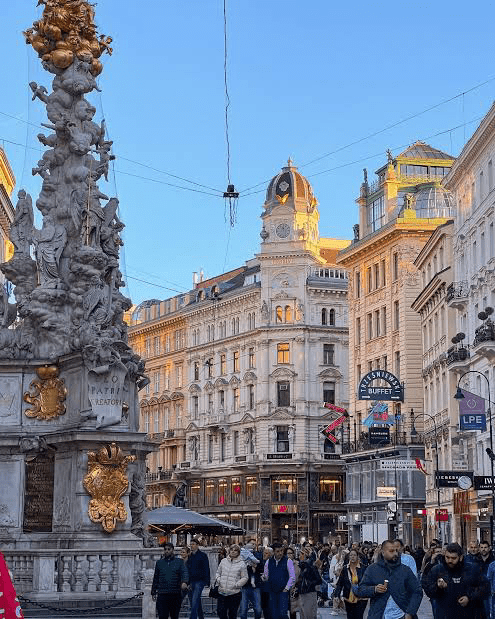
Verified Accessible Hotels
- Luxury: Sofitel Vienna — Features fully adapted, roll-in shower rooms, step-free access to its top-floor restaurant, and wide corridors.
- Boutique: The Harmonie Vienna— Offers certified barrier-free allergy-friendly rooms with customised accessibility features.
- Mid-Range: Austria Classic Hotel Wien — Popular for being wheelchair-friendly, located near main transit lines with level entrance access.
(For tailored assistance and a comprehensive list, you can contact the Vienna Hotels & Infoteam at +43 1 24 555).
Browse Accessible Hotels in Vienna
https://booking.stay22.com/accessibletravelling/trpzlJyRRv
https://tripadvisor.stay22.com/accessibletravelling/_Qxxv5vxCt
https://hotelscom.stay22.com/accessibletravelling/bGT679Qw2v
Public Transportation
Vienna boasts one of the most accessible transit systems globally.
- U-Bahn (Subway): Every metro station is equipped with elevators and tactile guidance strips. Level boarding is generally standard.
- Trams & Buses: Virtually all buses and the majority of trams are low-floor vehicles, featuring folding ramps for wheelchair users.
Accessible Things to Do
- Schönbrunn Palace: Step-free access is available for the Grand Tour, and the sprawling gardens feature paved, level pathways. Audio guides accommodate visual and hearing impairments
- Kunsthistorisches Museum: Fully wheelchair-accessible with ramps and elevators. They offer specialised tours including tactile experiences, sign language, and simple language.
- The MuseumsQuartier: This vast cultural district has smooth, paved courtyards and offers step-free access to all major exhibition halls like the Leopold Museum and the MUMOK.
- Prater Giant Ferris Wheel: Features a specific boarding carriage that can accommodate wheelchairs, allowing for panoramic views of the city.
Browse things to do in Vienna
https://getyourguide.stay22.com/accessibletravelling/iKiLQBLrj2
Useful Links & Resources
- Official Travel Planner:Accessible Austria Travel Guide
- Local Mobility Services: ÖBB Mobility Service for train station assistance.
- Accessible Toilets: Search locations using the Euro-Key Locator for barrier-free public restrooms.
Continue Planning Your Accessible Trip
- View accessible hotels in this destination
- Read the Accessible Accommodation Questions Checklist
- Read How to Choose the Right Accessible Destination
- Read Travel Insurance for Disabled Travellers
- View the Verification/Planning Services
Accessible Westminster, London Guide
For Accessibletravelling.com | Verified accessibility information
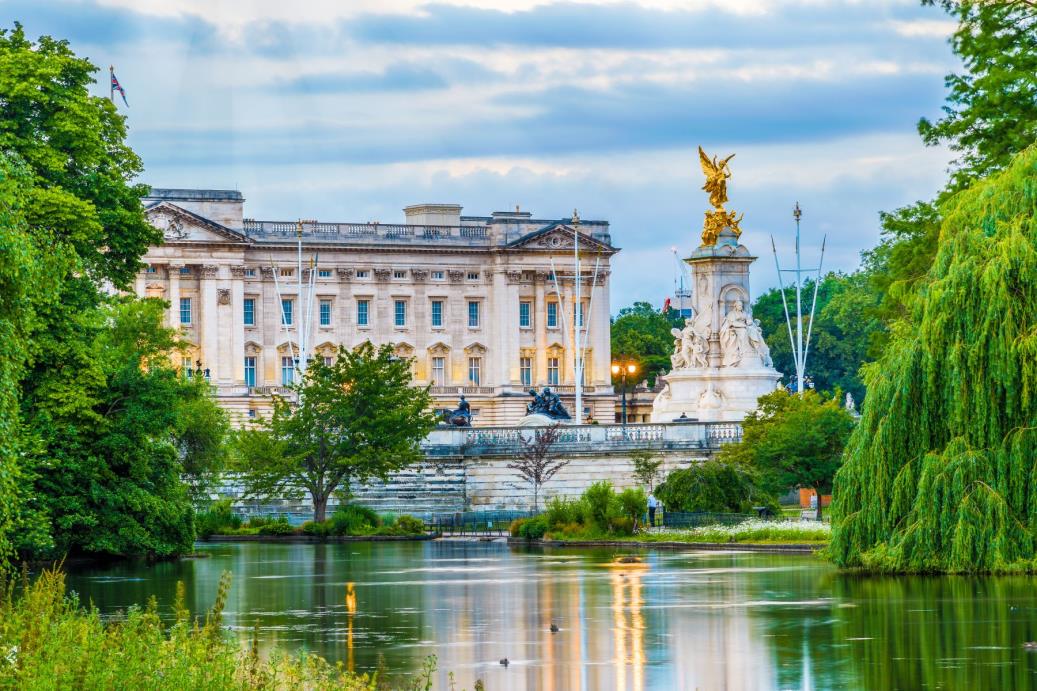
Accessibility Overview
Westminster is one of London’s most historic and well-connected central districts, home to iconic landmarks including the Houses of Parliament, Westminster Abbey, and Buckingham Palace.
- Wide, smooth pavements across most main routes, with tactile paving at road crossings
- Designated Blue Badge parking bays located throughout the district (some require prebooking)
- Accessible toilets and Changing Places facilities available at major attractions, stations, and royal parks
- Assistance dogs are welcome at all venues, with water stations provided at many sites
- Hearing loops, large-print guides, BSL interpretation, and sensory adjustments offered at key public buildings
- Note: Some older historic spaces retain narrow doorways or restricted access — always confirm arrangements in advance
Best Time to Visit
Top pick for low energy & comfort: April–June / September–October
- Mild temperatures 12–20°C, lower rainfall, and far fewer crowds
- Shorter queues, more space to rest, and longer daylight hours for flexible sightseeing
- Peak season alternative: July–August — longer opening hours, but plan early-morning visits and midday rest breaks to avoid heat and crowds
- Avoid: November–February — shorter days, cold/wet weather, and reduced accessible routes at some venues
Airport Accessibility Summary
Heathrow (LHR) — main international gateway
- Free assisted travel available; book 48 hours in advance via your airline or +44 (0)20 8757 2700
- Includes meet-and-greet, step-free routes, lift access, and support with boarding/baggage
- Heathrow Express (15 mins to Paddington) and Elizabeth Line direct to Westminster are fully accessible
Gatwick (LGW)
- Assisted travel service available on request; Gatwick Express to Victoria (30 mins) has dedicated wheelchair spaces
London City (LCY)
- Small, easy-to-navigate terminal with fully step-free access; connect to Westminster via the DLR
Luton / Stansted
- Use accessible Thameslink or Stansted Express services; allow extra travel time for connections
Local Transportation
London Underground
- Step-free stations nearby: Westminster, Green Park, Victoria, Waterloo
- Always check TfL’s step-free map before travelling — many central stations still have stair-only access
- All lifts have audio announcements and tactile signage
Buses
- All modern red buses are low floor with ramps and dedicated wheelchair spaces
- Drivers will wait for you to board or alight safely; pay via contactless, Oyster, or Freedom Pass
Taxis
- All licensed black cabs are fully accessible with ramps; no extra charge for wheelchairs or mobility aids
- Book accessible private hire in advance via Addison Lee or local firms
Walking & Rest
- Flat, barrier-free Thames Path links Westminster to the South Bank
- Benches provided every 100–200m along main streets and royal parks
3 Accessible Hotels with Roll-In Showers
All confirmed with roll-in showers, grab rails, wide doorways, and emergency pull cords.
1. Park Plaza Westminster Bridge
- Directly opposite the Houses of Parliament
- 53 dedicated accessible rooms with large roll-in showers, transfer seats, and ample turning space
- Step-free access throughout, accessible pool with hoist, vibrating fire alarms, and hearing loops
2. The Guardsman
- 10 minutes’ level walk from Buckingham Palace
- Boutique accessible rooms with full roll-in showers and fold-down shower seats
- Ceiling hoist available on request; fully assistance-dog friendly
3. The Londoner
- Short walk from Westminster and Leicester Square
- 18 accessible rooms including 2 with ceiling track hoists; all with roll-in wet rooms
- On-site Changing Places facility and fully accessible spa
Browse Accessible Hotels
Booking.com
TripAdvisor.com
Hotels.com
Accessible Things to Do
- Palace of Westminster & Big Ben: Most tour routes fully step-free; lift access available; free companion ticket
- Westminster Abbey: Level access via north entrance; loan wheelchairs, audio description, and hearing loop
- Buckingham Palace State Rooms: Step-free routes; accessible toilets; request assistance when booking
- Churchill War Rooms: Fully adapted with wide corridors; sensory guides and quiet visiting slots
- Tate Britain: Free entry; lift access to all floors; large-print guides and regular relaxed openings
- Thames River Cruises: Multiple operators run fully accessible boats with ramp boarding
Browse Accessible Things to do
https://getyourguide.stay22.com/accessibletravelling/iKiLQBLrj2
Accessibility Challenges
- Occasional narrow doorways or heavy manual doors in historic buildings
- Unplanned lift outages at Tube stations — check TfL updates before travelling
- Very busy at peak times, which can make navigation difficult
- Limited seating on busy shopping thoroughfares
- Blue Badge bays fill quickly — pre-book parking where possible
Emergency & Useful Accessibility Numbers
- Emergency (police/ambulance/fire): 999 | Textphone: 18001 999
- NHS non-urgent advice: 111 | Textphone: 18001 111
- 24/7 mental health crisis support: 0800 0234 650
- TfL Accessibility Team: 0343 222 1234 | Textphone: 020 7918 3015
- Westminster Council Access Service: 020 7641 6000
- Parliament Visitor Access: 020 7219 0516 | Textphone: 18001 020 7219 0516
- Westminster Abbey Access: 020 7222 5152
Useful Accessibility Resources
- AccessAble: Detailed, venue-by-venue accessibility guides for Westminster
- TfL Step-Free Map: Official map of all fully step-free stations and routes
- Changing Places Register: Find full-access toilets with hoists and changing benches
- Visit London Access Hub: Curated accessible travel advice for the whole city
Continue Planning Your Accessible Trip
- View accessible hotels in this destination
- Read the Accessible Accommodation Questions Checklist
- Read How to Choose the Right Accessible Destination
- Read Travel Insurance for Disabled Travellers
- View the Verification/Planning Services